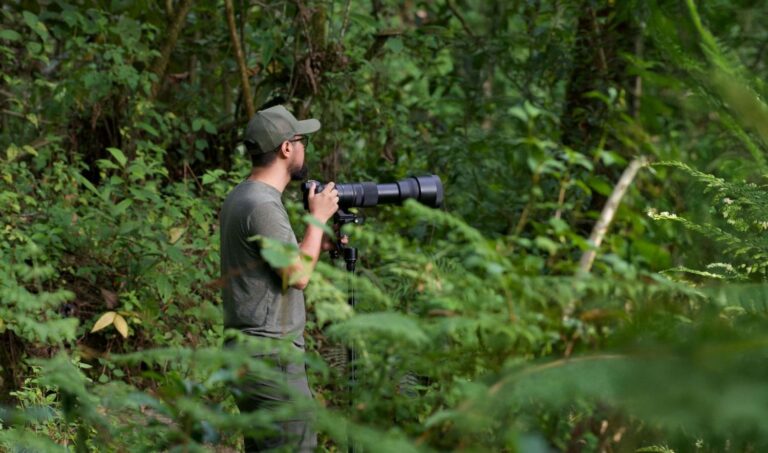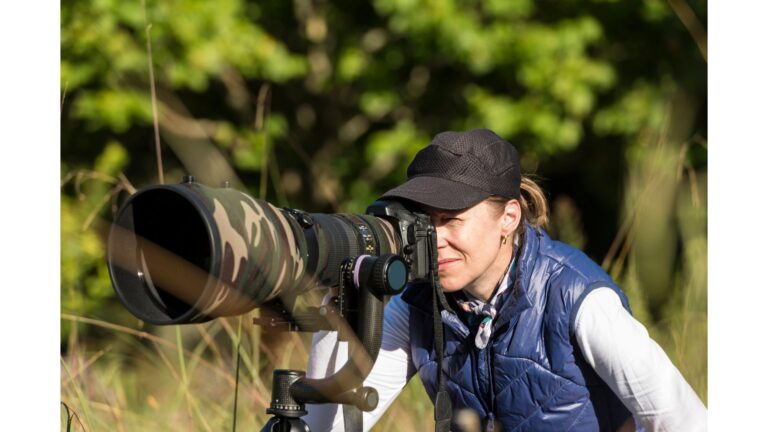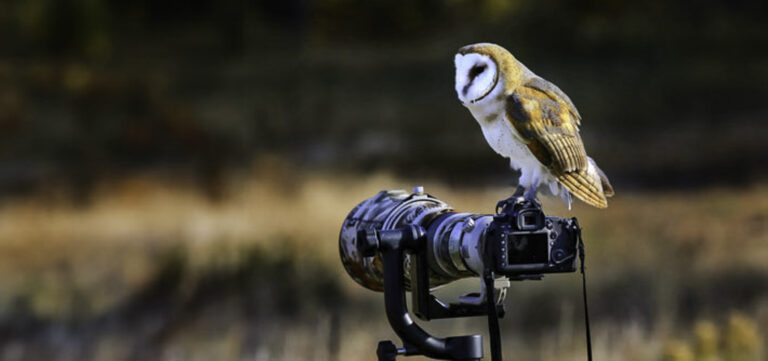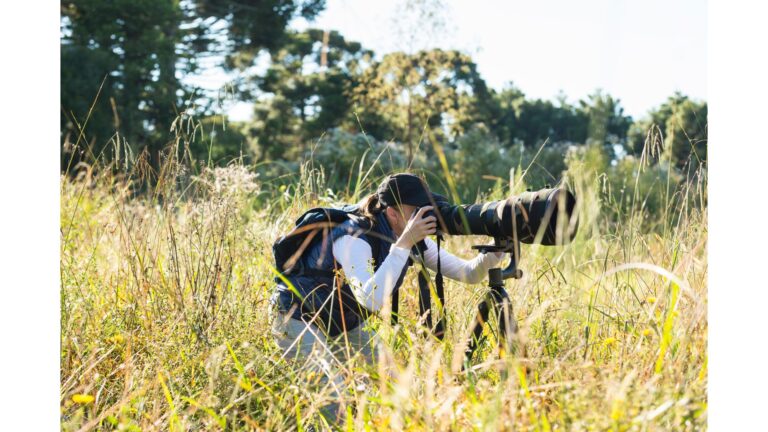
Wildlife Photography Gear: Your Guide to Field-Ready Photography
There’s a moment every wildlife photographer lives for. The one when everything aligns-the light, the subject, the shot. Your heart rate spikes. Your finger finds the shutter. In a fraction of a second, you’ve captured something extraordinary. But that moment doesn’t happen by accident.
Welcome to PhotoWild Gear, written by wildlife photographers for wildlife photographers. This isn’t just another gear review site. Think of us as your field guide to everything you need to thrive in the wild. From the cameras and lenses that capture the shot to the clothing, footwear, and gear that get you out there, keep you there, and bring you home safely afterward.
More Than Just Cameras and Lenses
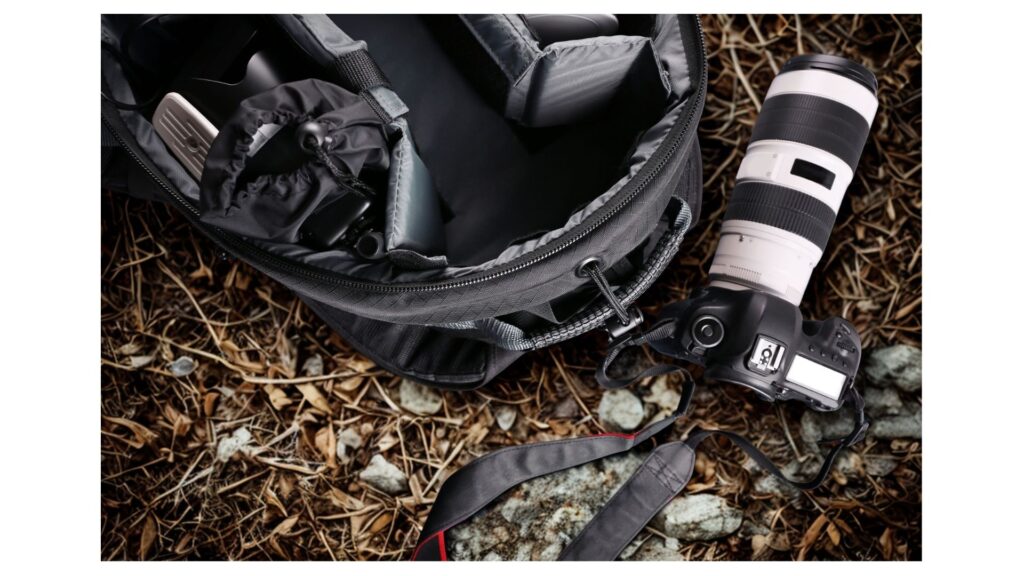
Every photographer knows the basics – camera body, lens, tripod, and camera straps. However, the photographers who consistently come home with stunning images know something else: the gear that surrounds your camera matters just as much as the camera itself.
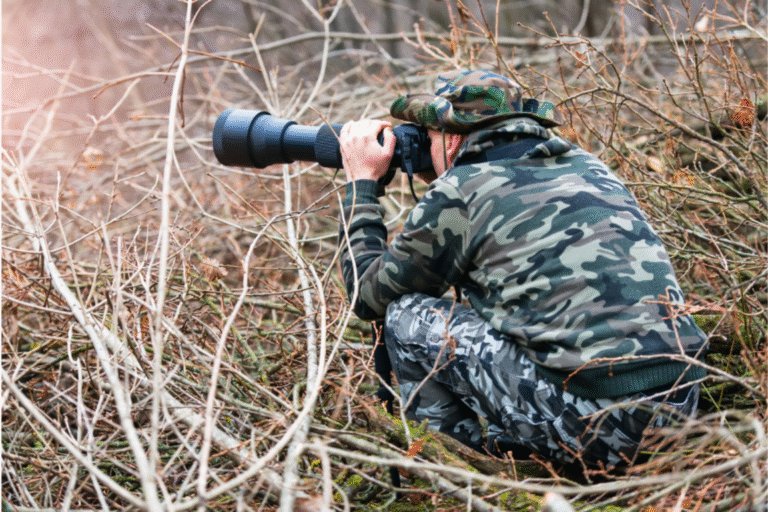
You can have the most expensive mirrorless body on the market. However, if you’re soaking wet, didn’t bring a change of clothing, or are shivering because your layers weren’t right for the conditions, or you’re spooking your subject because you skipped the camo, the shot is gone before you ever raise your camera.
As a result, true success in wildlife photography comes from a complete, well-rounded kit. Specifically, one that helps you blend into your surroundings. Staying comfortable and safe in extreme conditions. Moving quietly and efficiently through challenging terrain and ultimately returning home with images that tell a powerful story. And that’s exactly what we’re here to help you build.
From Vision to Reality: The Power of Preparation
That great shot you got – that satisfying “wow” when you look in the viewfinder and can’t wait to get home to see it in your editing software? It probably lasted a couple of seconds. The animal moved into frame, the light was right, and your finger knew exactly what to do, because you’d already done the work to be ready for it.
People see the final image, but not everything it took to get that shot. They don’t know the time it took to get there, perhaps early, before the sun rises, to get in position. Not the pack list, food, water, etc. The ticks and mosquitoes in summer, nor the layers that kept you out there long enough for the moment to happen in winter. The settings you’d already dialed in by feel before you even raised the camera. All of it is invisible in the final image, but it is the reason the image exists at all.
There’s an old saying I picked up early in my corporate career: success is 99% preparation, 1% presentation. It got me through more meetings than I can count, and I’d rather be prepared and not need it than need it and not be prepared. Swap “presentation” for “the shutter click,” and it’s just as true out here.
The difference between a missed moment and a masterpiece almost never comes down to that final 1%. It comes down to whether you did the 99% before you even left the house.
Preparation Goes Beyond the Camera Bag
However, preparation goes beyond packing your camera bag. It means knowing your environment before you arrive. Understand the terrain. Study the weather patterns. Learn the behavior of the animals you hope to photograph. Also, make sure your settings are dialed in before the action starts. Don’t fumble with menus when a black bear emerges from the tree line. That has happened to me; perhaps it’s happened to you, too. By the time I focused the camera, it was gone!
The most seasoned wildlife photographers will tell you the same thing. The shot you dreamed about rarely happens the way you imagined it. The light changes. The animal moves. The rain comes in sideways. Nevertheless, talent alone won’t save you. Preparation will. Adaptability will. The right gear will.
That’s exactly what PhotoWild Gear is here for. Heading to Yellowstone for the first time? We’ve got you. Seasoned backcountry shooter looking to sharpen your kit? We’ve got you covered there, too.
Why Gear Matters in the Wild
Wildlife photography across the U.S. isn’t a single experience. It’s a hundred different ones. One week, you’re belly-down in a Florida swamp, waiting for a great blue heron. The next, you’re braced against a Wyoming wind, tracking a wolf pack across a snow-covered valley. And then, almost before you’ve caught your breath, you’re hiking into the Sonoran Desert at dawn, chasing the perfect light on a roadrunner before the heat becomes unbearable.
As a result, each environment demands something different from your gear. Regardless of all that, the wild doesn’t care about your budget, your experience level, or how far you drove to get there.
On top of that, sudden weather shifts can roll in without warning; a clear morning in Yellowstone can turn into a driving rainstorm by noon. Meanwhile, skittish subjects vanish in seconds if your gear makes noise, reflects light, or requires too much setup time. In addition, variable lighting, from golden hour to harsh midday sun, demands flexibility from both your camera and your support systems.
Ultimately, the bottom line is this. Your gear needs to work with the environment, not against it. The photographers who consistently come home with the shots are the ones whose kit was just as ready as they were.
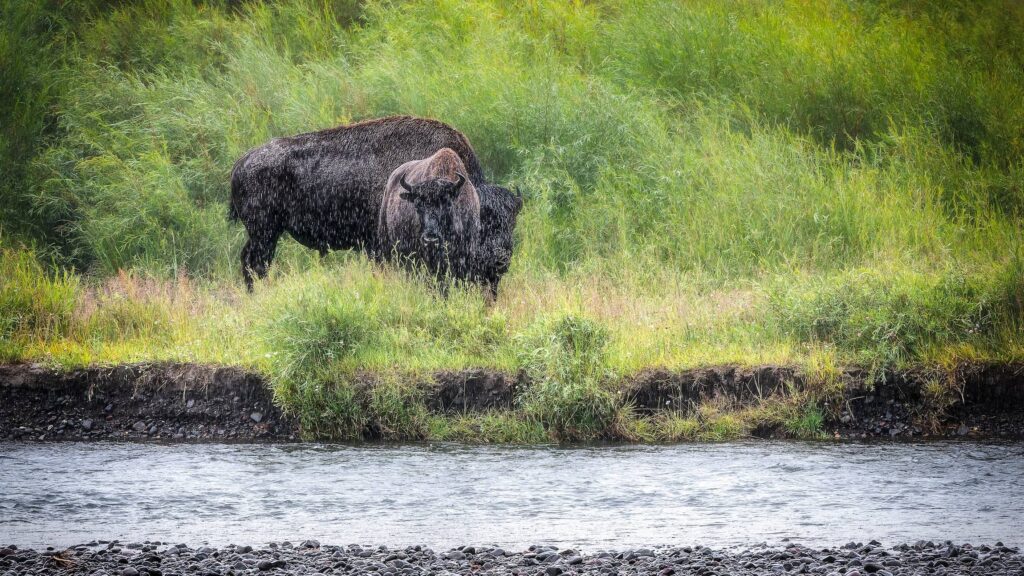
Yellowstone in the rain where the wild buffalo roam
The Three Pillars of Wildlife Photography
After years in the field, from the rainforests of the Pacific Northwest to the wide-open plains of the Great Plains, we’ve found that the best wildlife photography gear consistently delivers on three non-negotiable qualities. We’ve also learned that none of it means anything without a critical foundation beneath it all. Together, we call it the three pillars of wildlife photography, built on an ethical and safety foundation.
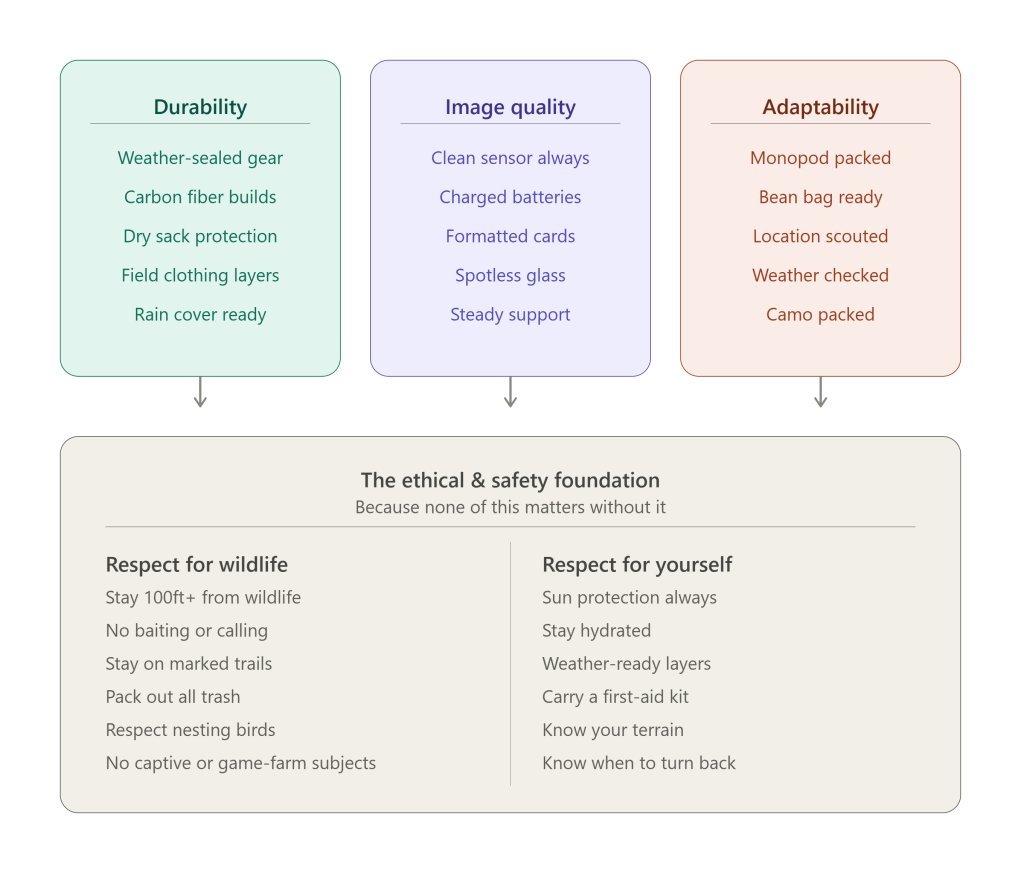
The Three Pillars
Durability – Built to Survive What Nature Throws at It.
Your gear will get wet. It will get dusty. It will be knocked around on rough trails and stuffed into tight spaces. Wildlife photography isn’t a studio sport; it’s a contact sport with the elements. The gear in your bag needs to withstand rough terrain, extreme temperatures, and unpredictable weather without missing a beat. Carbon fiber tripods that laugh at the wind. Weather-sealed camera bodies that shrug off rain. Dry sacks that protect your investment during unexpected river crossings. Durability isn’t a luxury; it’s a requirement.
Image Quality – Because Almost Sharp Isn’t Sharp
Out in the field, the difference between a good shot and a gallery-worthy one often comes down to one thing: sharpness. A slightly soft image of a bald eagle in flight is just a photo. A tack-sharp image, with every feather in focus, is a masterpiece. The right glass, the right support system, and the right settings, all working together, ensure that when the moment comes, your gear captures every detail the way your eye saw it.
Adaptability – Because Wildlife Doesn’t Wait
A bison can go from grazing peacefully to charging in seconds. A bald eagle perched in a pine tree can dive without warning. Wildlife moves fast, unpredictably, beautifully, and entirely on its own schedule. Your gear needs to respond even faster. Quick-release tripod heads, versatile monopods, responsive autofocus systems, and intuitive controls you can operate with cold or gloved hands. Adaptability is what keeps you in the game when the action starts.
The Ethical & Safety Foundation
Three pillars mean nothing if they’re not built on something solid. And for wildlife photographers, that foundation is two things working together: respect for the animal, and respect for yourself.
The wild is not a studio. The animals you photograph are not props. They are living creatures in their natural habitat, and your presence, however careful, has an impact. The best wildlife photographers understand this deeply. They know that the shot is never worth the stress, the disturbance, or the harm to the animal in front of them.
Stay at a respectful distance, a minimum of 100 feet from most wildlife, further from nesting birds and bears with cubs. Never bait, call, or manipulate animal behavior to get a better shot. Stay on marked trails and respect park boundaries. Pack out everything you pack in. Never approach a nest, den, or resting animal. If an animal changes its behavior because of your presence, you are too close.
Always Shoot Wild
And this matters just as much before you ever leave the house: shoot wild, always. That means no game farms, no captive setups where animals are penned for photographers to walk up and shoot. A photo of a “wild” wolf in a chain-link enclosure isn’t wildlife photography; it’s a portrait session with a prop. If the animal didn’t choose to be there, it isn’t an ethical shot.
Ethics without safety is only half the equation. A safe photographer is an ethical photographer. Rushed, overheated, dehydrated, or underprepared people make worse decisions in the field, for themselves and for the wildlife around them. Sun protection and hydration belong in your bag on every shoot, not just the obviously hot ones. Weather-appropriate layers keep discomfort from turning into a rushed, risky call. Know your terrain before you set out, and know when to turn back.
I’ll also say this. Some photographers are comfortable sharing exact locations, and that’s their call. Personally, I don’t geotag or name the specific spot when I post a shot on social media. I’ve seen popular locations get overrun once word gets out, with nests abandoned, feeding grounds disturbed, and habitat worn down to dirt under a line of tripods. I’d rather share the species and the general region and keep the exact spot unannounced. It’s a personal line I draw.
Respect the wildlife and habitat. Respect yourself. And always shoot wild.
Field Readiness Score
What’s your Field Readiness Score?
Rate your current gear on each pillar — 1 is starting out, 10 is field-ready pro.
Durability
How well does your gear handle rain, dust, rough terrain, and temperature extremes?
Image quality
Does your glass and support system consistently deliver sharp, gallery-worthy results?
Adaptability
Can you reposition, react, and reconfigure fast enough when wildlife moves unexpectedly?
You have a solid base to work from. Focus on upgrading your weakest pillar first — even one targeted gear upgrade can dramatically improve your results in the field.
photowildgear.com — the three pillars of wildlife photography
Support Systems: Your Unsung Heroes
Ask any seasoned wildlife photographer what single piece of gear has saved more shots than anything else, and you might be surprised by the answer. Not the camera body. Not the lens. It's the thing that holds them both steady as a bald eagle dives at 100 miles per hour.
Your support system is the unsung hero of every great wildlife image, and it's the piece of the kit that most beginners underestimate until they miss that once-in-a-lifetime shot because of camera shake.
Breaking down your options:
Carbon Fiber Tripods
Support: When stability matters most, nothing beats a quality carbon fiber tripod. Think about it. A sunrise over a misty meadow, a nesting pair of eagles, a bear fishing at a salmon run. These are the shots where a rock-solid foundation makes all the difference. Carbon fiber is lighter than aluminum yet stronger than steel. As a result, it handles the punishment of backcountry terrain without punishing your back on the hike in. Set it up. Lock it down. Focus entirely on the animal in front of you. Ultimately, this is the gear that turns good shots into gallery pieces.
Gimbal Heads
The Game Changer for Action: If you've ever tried to track a bird in flight with a standard ball head, you know the frustration. Too stiff. Too slow. Fighting you every step of the way. However, a gimbal head changes everything. By balancing your lens at its center of gravity, it lets even the heaviest telephoto glass float effortlessly. As a result, following fast-moving subjects becomes fluid and natural. For bird photographers especially, a gimbal head isn't a luxury. It's a necessity.
Monopods
Speed and Mobility: When the action moves fast, you need to keep up. In that moment, a monopod is your best friend. One leg instead of three means setup in seconds. Repositioning takes a heartbeat. You also gain the freedom to chase your subject through dense brush or across uneven terrain. You sacrifice some stability compared to a tripod. However, what you gain in speed and mobility more than makes up for it. A herd of bison suddenly starts moving. A fox breaks into a sprint across an open field. With a monopod, you're already moving.
Bean Bags
The Secret Weapon: Don't underestimate the humble bean bag. Draped over a vehicle window, a fence post, or a rock, it provides a surprisingly stable, completely silent shooting platform for eye-level and low-angle shots. No setup time, no noise, no vibration. Wildlife photographers who shoot from vehicles, especially in national parks where animals are habituated to cars, swear by them.
Ground Pods
Get Low, Get the Shot Some of the most compelling wildlife images are taken at ground level. Nose to nose with a fox. Eye-to-eye with a nesting bird. Belly-down in the grass waiting for a pronghorn. These are the shots that stop people mid-scroll.
A ground pod or low-profile support is your best friend here. It keeps your camera rock steady at the animal's eye level. The result? Intimate, immersive images that truly connect the viewer with the wild.
The best wildlife photographers don't just carry one support system. They carry the right one for the situation. A carbon fiber tripod for the planned shoot. A monopod for the chase. A bean bag for the vehicle. A ground pod for the low angle. Master your support systems and you'll be amazed at how many shots you stop missing.
This post contains Affiliate Links. If you make a purchase through one of these links, I may earn a small commission at no extra cost to you.
As an Amazon Associate, I earn from qualifying purchases.
Safety Is Essential
The wild is breathtaking, but it's also unpredictable. Remote locations mean limited access to help. When something goes wrong miles from the nearest trailhead, your safety gear isn't optional. It's the difference between a story you tell around the campfire and one that ends very differently. Every wildlife photographer heading into the backcountry should have a kit that covers four essential bases:
First Aid
For day trips, the Adventure Medical Kit Ultralight/Watertight .7 is the gold standard. It's compact enough to forget it's in your bag, comprehensive enough to handle what the trail throws at you. The kind of first aid kit you actually bring, because there's no excuse not to. It slides right into a side pocket and disappears until you need it. It's good insurance for a long day in the field.
What's inside:
- Truly ultralight: built for packs, not car camping
- Waterproof DryFlex inner bag: keeps supplies dry no matter what the weather throws at you
- Covers the real risks: bandages, gauze, and meds for common trail injuries, plus moleskin for blisters and forceps for ticks
- Field-ready essentials: antiseptic wipes, ointment, sting relief, applicators, all in one grab-and-go kit
For serious backcountry shoots, you can always step up to the Adventure Medical Kits Trauma Pak Pro. This isn't your average blister-and-bug-bite kit. If you're heading deep into the backcountry alone, this kit belongs in your bag. Hopefully you never need it. But if you do, you'll be glad it's there.
What's inside:
- QuikClot hemostatic gauze - kaolin-based, accelerates clotting to stop severe bleeding fast
- Trauma tourniquet - simple enough to use correctly under pressure, even if you've never trained with one
- Compact design - fits in a pocket or pack pouch, no excuse to leave it behind
- Essential tools - nitrile gloves, duct tape, trauma pad
- Step-by-step instructions - Trauma First Aid Instructions: step-by-step procedures, enhancing this IFAK kit's utility in emergencies
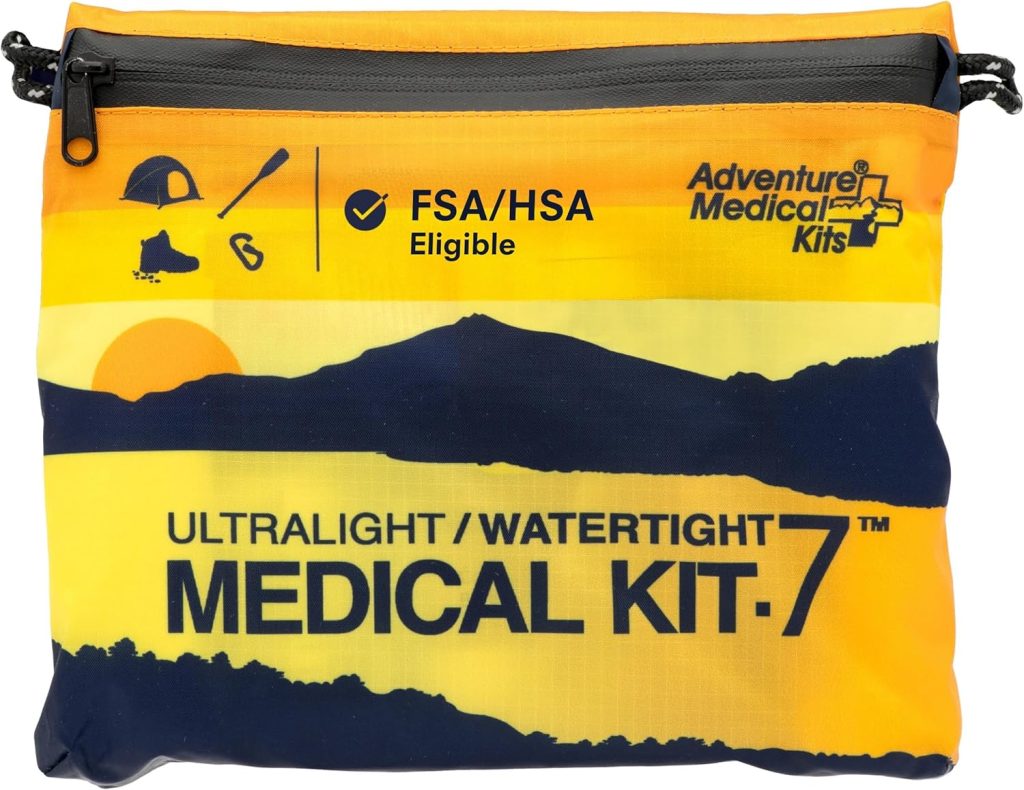
Adventure Medical Kit Ultralight/Watertight .7
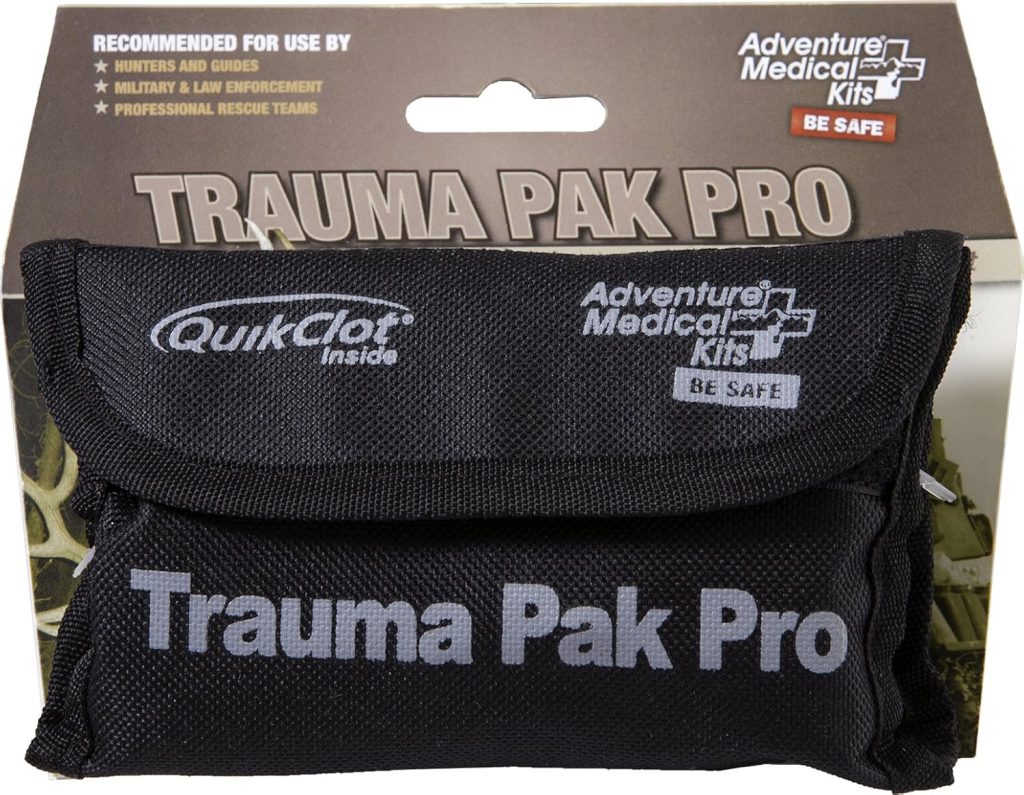
Adventure Medical Kits Trauma Pak Pro
Wildlife Encounters
Bears, mountain lions, and other large predators are part of the landscape in America's wildest places. The Mace Animal Defense Spray, EPA Registered Max Strength OC, is one of the most trusted deterrents on the market. Carry it where you can reach it in seconds, not buried in your pack.
About:
- Long-Range Protection: This Mace bear deterrent spray provides protection from a safe distance with a powerful fogger pattern that covers up to 40 feet (12m) of range, giving you more time to react to a charging bear with up to 9 seconds of total spray time.
- Max Strength Formula: Made with 20% OC wildlife safe formula for maximum heat and potency, helping deter attacks and giving you time to retreat to safety.
- Always be prepared: Essential for hiking, camping, and hunting. Its potent formula and long range spray coverage offers reliable protection so you can always be prepared for wildlife encounters.
- Easy to Use: Designed with a finger loop handle for easy carrying and quick deployment in critical moments. To use, pull off the orange safety wedge and press down on the actuator.
- Includes Holster: Durable, heavy-duty nylon spray holster keeps your bear deterrent canister secure and within reach. Hook-and-loop closure allows for quick and easy access.
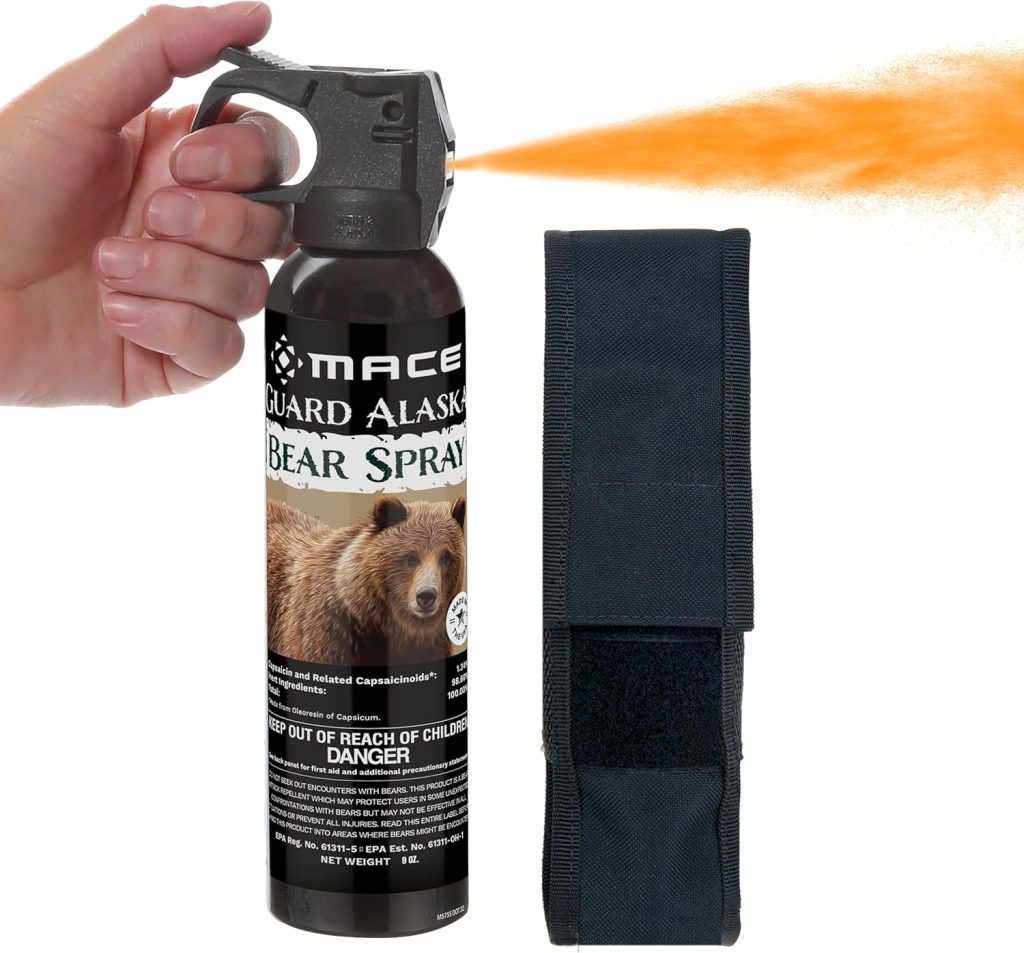
Mace Animal Defense Spray
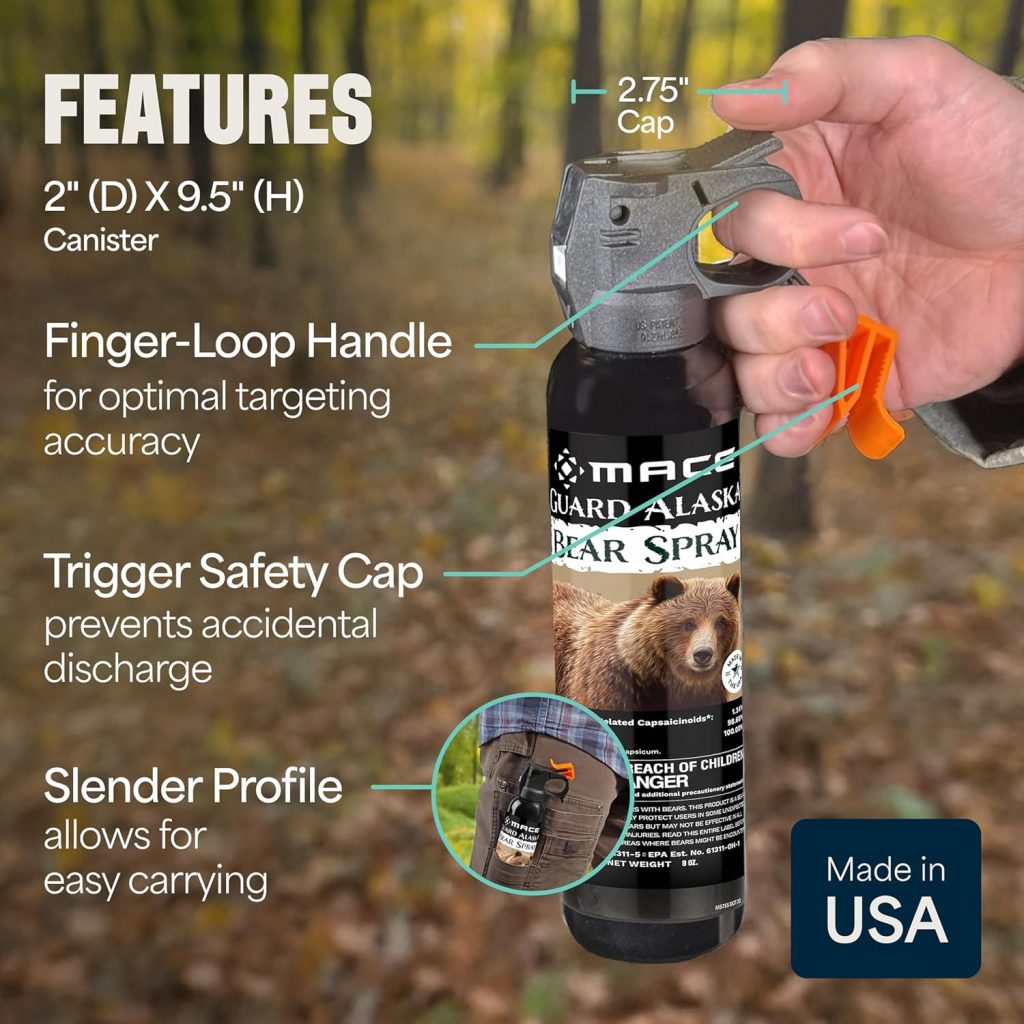
Mace Animal Defense Spray
Emergency Communication
If you shoot wildlife in remote spots, dawn hikes into the backcountry, hours from cell service, this is the one piece of gear that's easy to skip and hard to regret packing.
The inReach Mini 2 is Garmin's smallest satellite communicator, and it does one job exceptionally well: keeps you connected when nothing else can. Trigger an SOS, and you're linked to Garmin's 24/7 response center. Send a "running late, all good" text to someone waiting on you. Check the weather before you commit to that ridge. All without a shred of cell signal.
Why it earns a spot in your bag:
- Tiny and tough - 4" x 2", 3.5 oz, water-resistant, built to military spec
- Long battery life - up to 14 days in standard tracking mode
- TracBack routing - retraces your steps if you lose the trail
- Global coverage - Iridium satellite network, works anywhere
- Two-way messaging - text or email, even mid-shoot
This bundle includes the charging cable, adapters, a cleaning cloth, and a portable battery pack, everything you need to get it running out of the box.
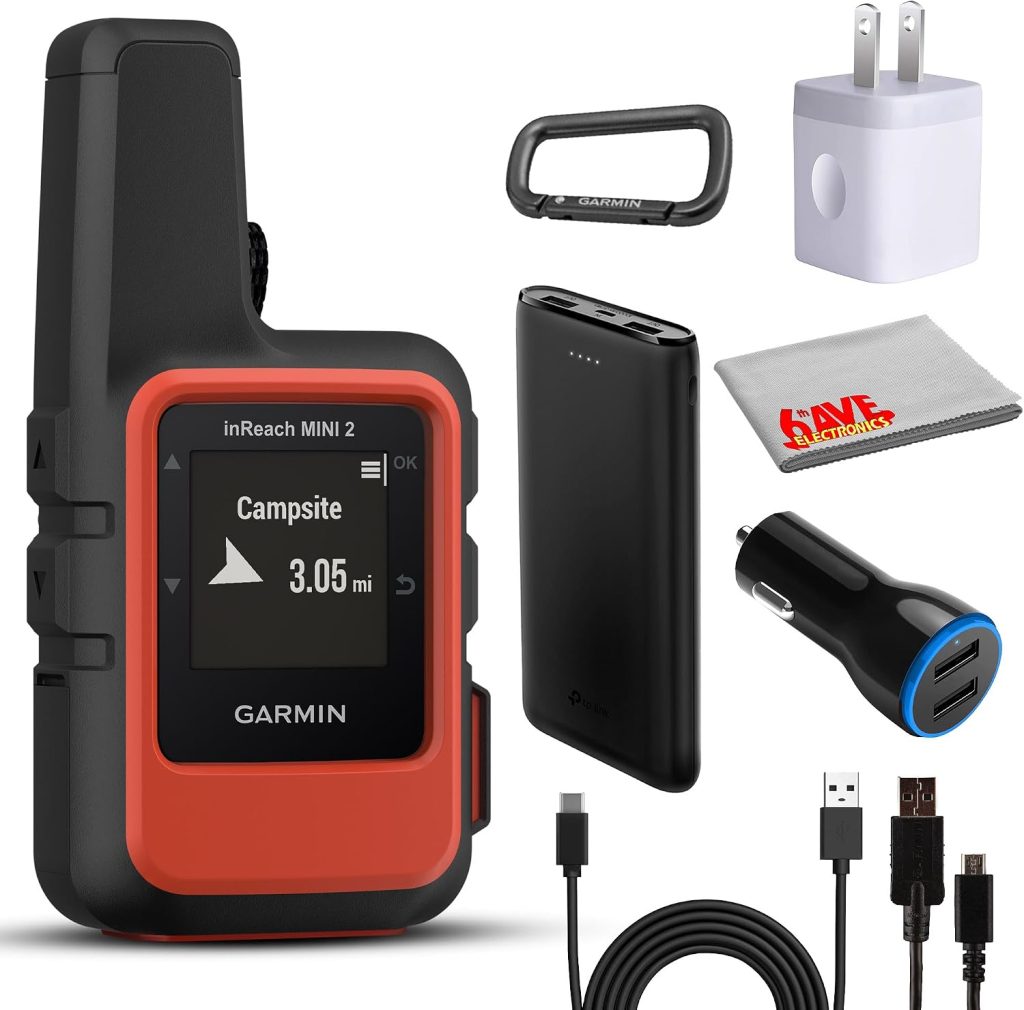
Garmin inReach Mini 2 Satellite Communicator (Flame Red) Bundle
Hydration
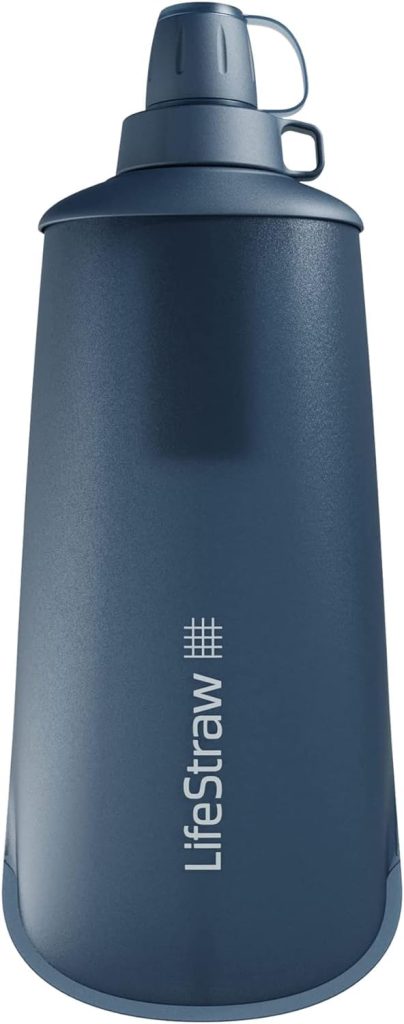
Dehydration is one of the most common and preventable dangers in the field. The Sawyer Squeeze is the best overall water filtration solution for day shoots. For lightweight backcountry options, the LifeStraw Peak Squeeze delivers fast, clean water wherever you find a source. Always carry Aquamira Water Treatment Tablets as a backup. If your filter freezes, breaks, or gets lost, these small tablets could save your life.
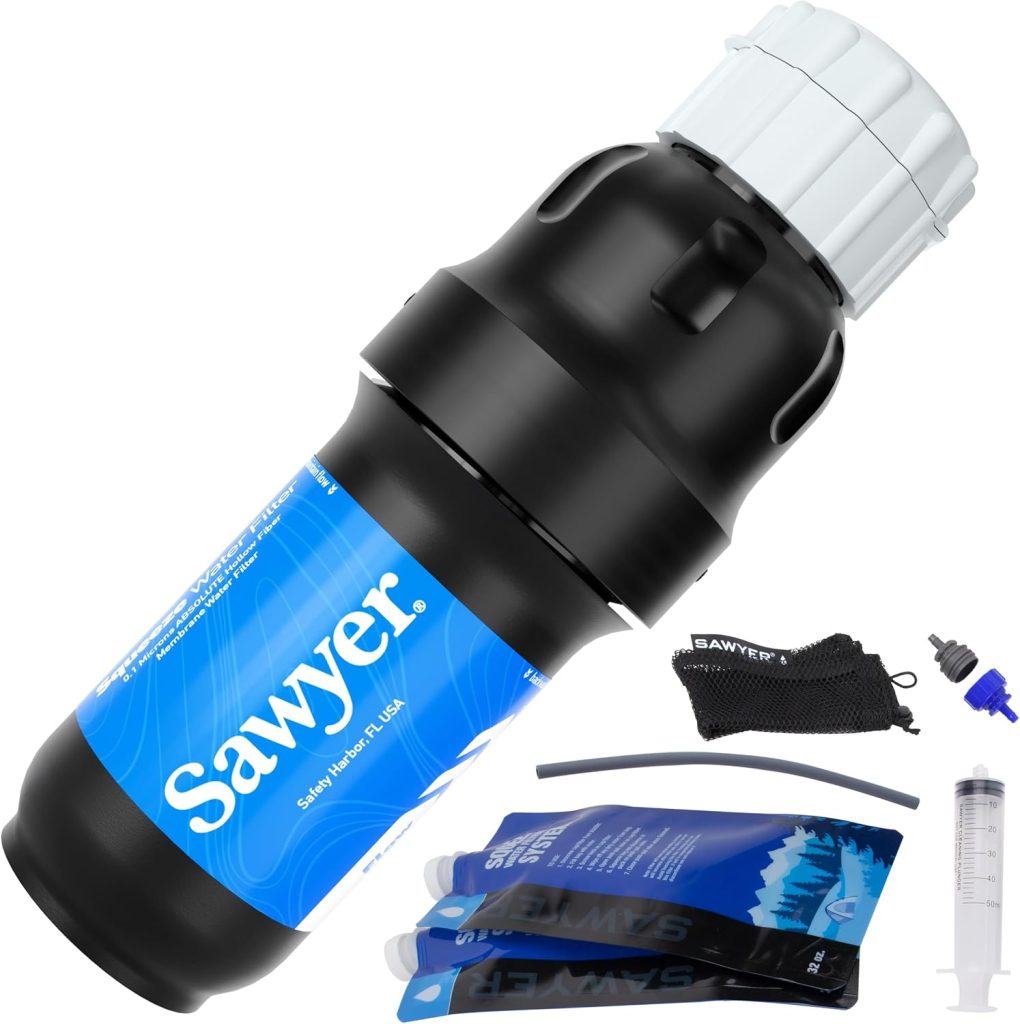
Sawyer Squeeze Water Filtration System
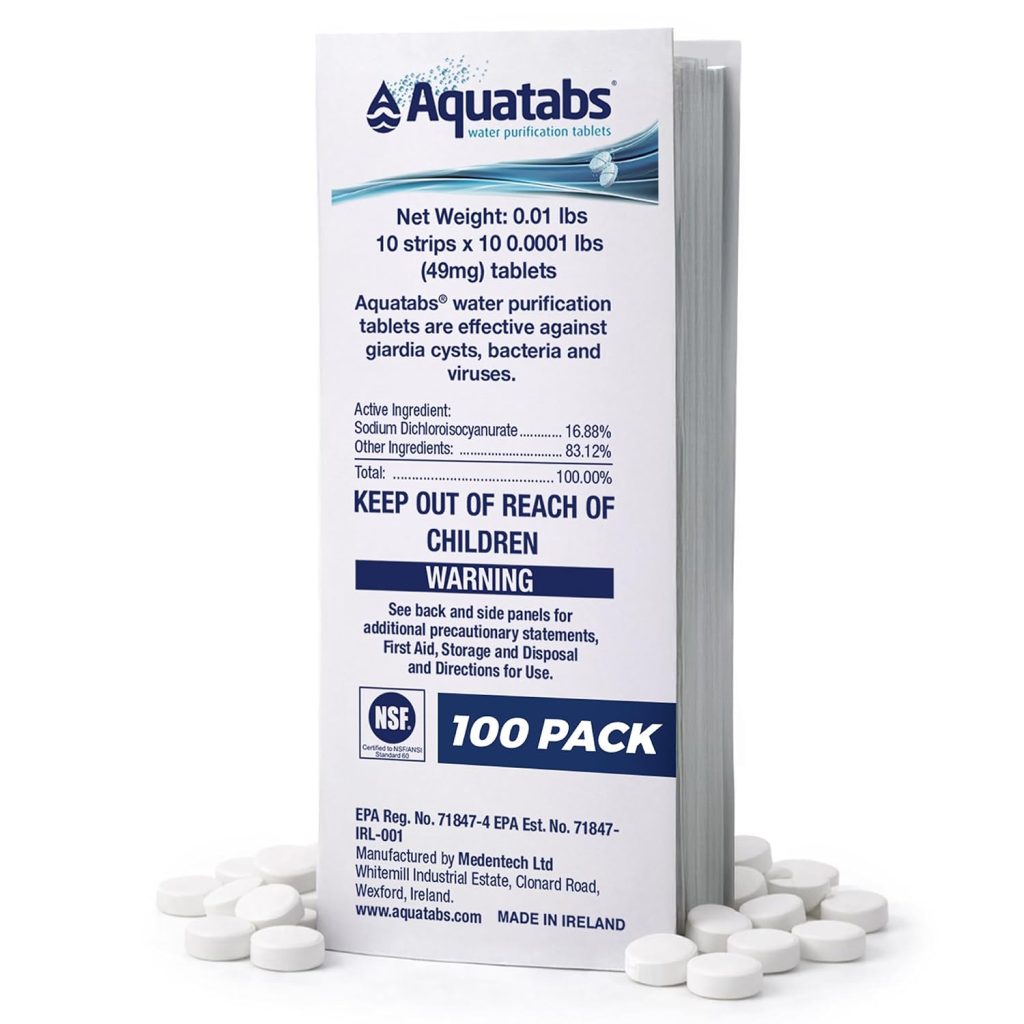
Aquatabs 49mg Water Purification Tablets (100 Pack)
Gear Protection
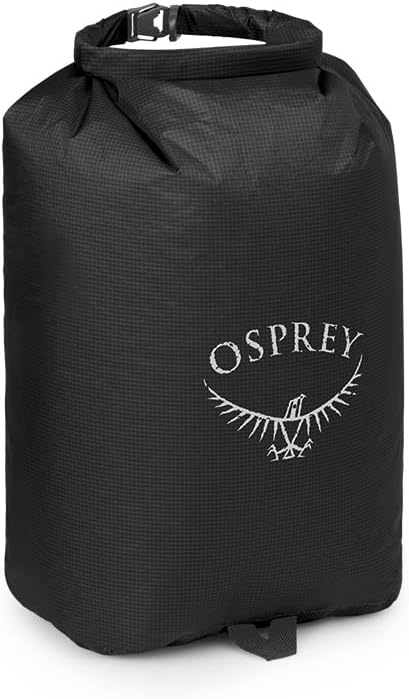
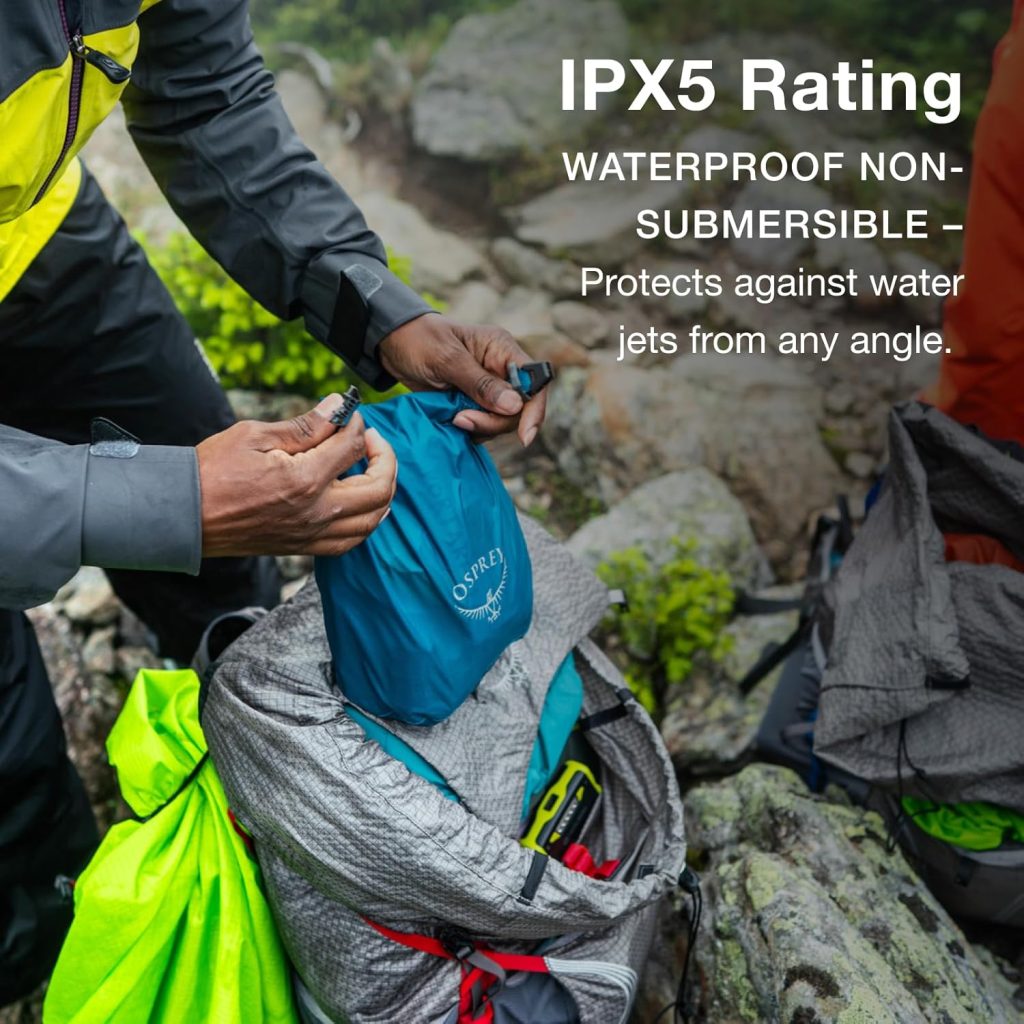
None of your camera gear matters if it's soaking wet. Osprey Ultralight Waterproof Dry Bags are consistently rated the top choice for keeping equipment safe from rain, river crossings, and unexpected weather. Get multiple sizes. The Osprey Ultralight Waterproof Dry Sack (12L), for wildlife photographers like yourself, here's how it can be especially useful:
Key Benefits for Wildlife Photographers:
- Protects sensitive gear - Keep cameras, lenses, memory cards, and batteries dry in rain, mist, splashes near ponds/streams, or dewy early-morning shoots
- Lightweight (only 1.6 oz) - Adds virtually no weight to your pack, great for long treks to find wildlife
- Roll-top waterproof seal - Meets IPX5 standard, so it handles rain and splashes confidently (not submersible though)
- Rectangular shape - Packs efficiently inside a camera bag or backpack alongside other gear
- Color-coded organization - Available in multiple colors, so you can quickly identify what's inside (e.g., one for electronics, one for snacks/safety gear)
- D-ring attachment - Clip it to your pack or hang it to dry after a wet session
- Keeps memory cards & batteries dry - Especially important for protecting irreplaceable footage from your wildlife and bird camera setups
- The Osprey Ultralight Waterproof Dry Sack comes in a great range of sizes and colors:
- Available Sizes - 3L, 6L, 12L, 20L, 30L, 35L
- Available Colors - Black, Electric Lime, Mars Orange, Tundra Green, Waterfront Blue
The 12L (the one you're viewing here) is ideal for protecting camera gear, spare batteries, and memory cards during wildlife photography outings. The color-coding across multiple sizes makes it easy to organize different equipment sets. For example, one color for electronics, another for snacks, or safety gear.
One of our future blog posts will delve into all the best gear protection for wildlife photographers.
Osprey Ultralight Waterproof Dry Bags
Osprey Ultralight Waterproof Dry Bags
Camouflage, Hides, and Stealth Tactics
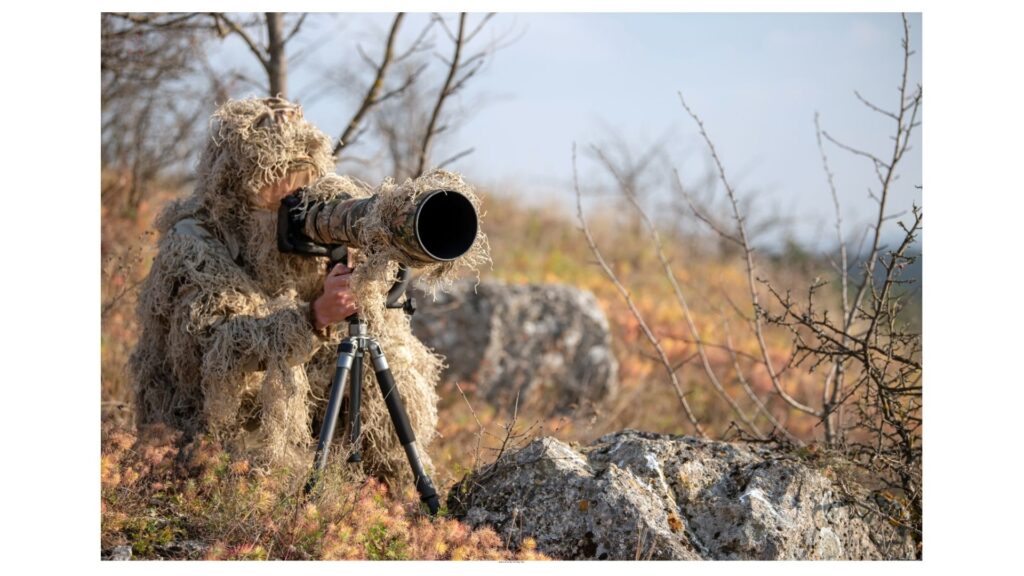
Wildlife doesn't cooperate with photographers who announce their presence. The rustle of a jacket, the flash of a pale face, or the unnatural outline of a human silhouette against the treeline. In fact, any of these can send your subject bolting before you've raised your camera.
The most compelling wildlife images are captured by photographers who have learned to disappear.
The Art of Disappearing
Camouflage clothing, ghillie suits, and pop-up hides don't just reduce your visibility. They also change the behavior of the animals around you. When you become part of the environment, wildlife acts naturally. As a result, they feed, interact, play, and go about their lives without the tension a visible human presence creates. And it's in those unguarded, natural moments that the truly unforgettable images live.
However, camo is only part of the equation. For instance, moving silently matters just as much; every footstep, every gear adjustment, every breath counts when you're within range of a skittish whitetail or a nesting great horned owl. Similarly, staying downwind is critical; animals trust their nose far more than their eyes. And above all else, be patient. Ultimately, the wild rewards those who wait, and the photographers who understand this consistently come home with images that stop people in their tracks.
To help you get started, we've put together a full guide to camouflage gear matched to every US ecosystem, from woodland patterns for the Pacific Northwest to marsh camo for the Florida Everglades. 🔗Link to camouflage guide
Gearing Up for Success: The Right Clothing for the Wild
Your camera gear gets all the attention. However, ask any experienced wildlife photographer what they wish they'd invested in sooner, and the answer is almost always the same: better field clothing.
What you wear directly affects what you shoot. Cold, wet, and uncomfortable photographers make rushed decisions, cut shoots short, and lose the patience great wildlife photography demands. As a result, the right clothing keeps you in the field longer, moving more freely and focused entirely on the animal in front of you, not on how miserable you are.
Here's what your field wardrobe needs to cover:
Layering System - The foundation of all field clothing. First, a moisture-wicking base layer pulls sweat away from your skin. On top of that, an insulating mid layer traps warmth when temperatures drop. Finally, a quiet, waterproof outer layer shields you from wind and rain without the telltale swish-swish sound that sends wildlife running. Additionally, every layer should be breathable. Overheating on a long hike is just as dangerous as getting cold while waiting in a blind at dawn.
Gloves - Often overlooked until your fingers are too cold to turn a camera dial. Nevertheless, this is one of the most important pieces of kit you can carry. Therefore, look for gloves with dexterous fingertips or convertible mitten flaps. In other words, you need warmth without sacrificing control. Adjusting settings, changing cards, and swapping batteries all need to happen fast and accurately in the field.
I've experienced "wooden" fingers in the field, completely numb and unable to feel the dials, missing shots because my hands simply wouldn't cooperate. There was nowhere to warm up. No car nearby. No shelter. Just me, the cold, and a camera I could barely operate. It's something you don't forget, and it's completely avoidable with the right gloves.
Backup clothes - for those just-in-case moments, kept in the trunk. I've had it happen. I ended up in the mud up to my waist and wished I had spare clothes with me. Thankfully, another photographer had spare clothes. They were too big, but better than being covered in mud, miles away from home. Now I don't travel anywhere without my backup gear. It includes everything: jeans, jacket, shoes, socks, gloves, etc.
Cold Weather & Sun and Insect Protection
Winter
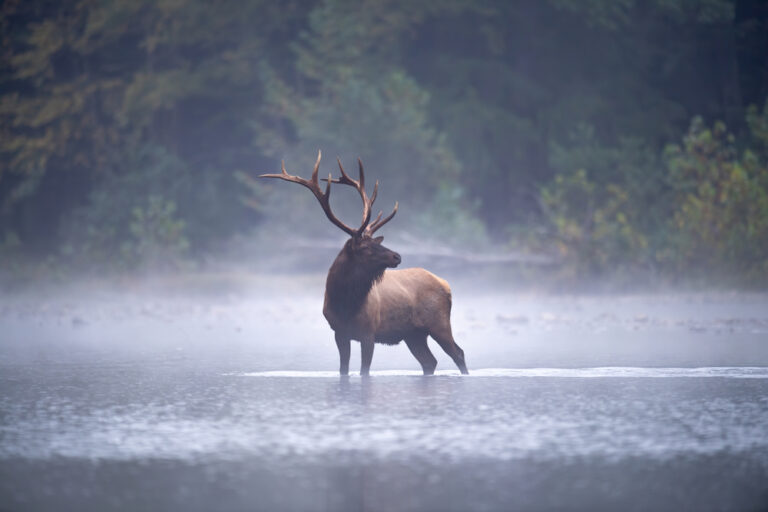
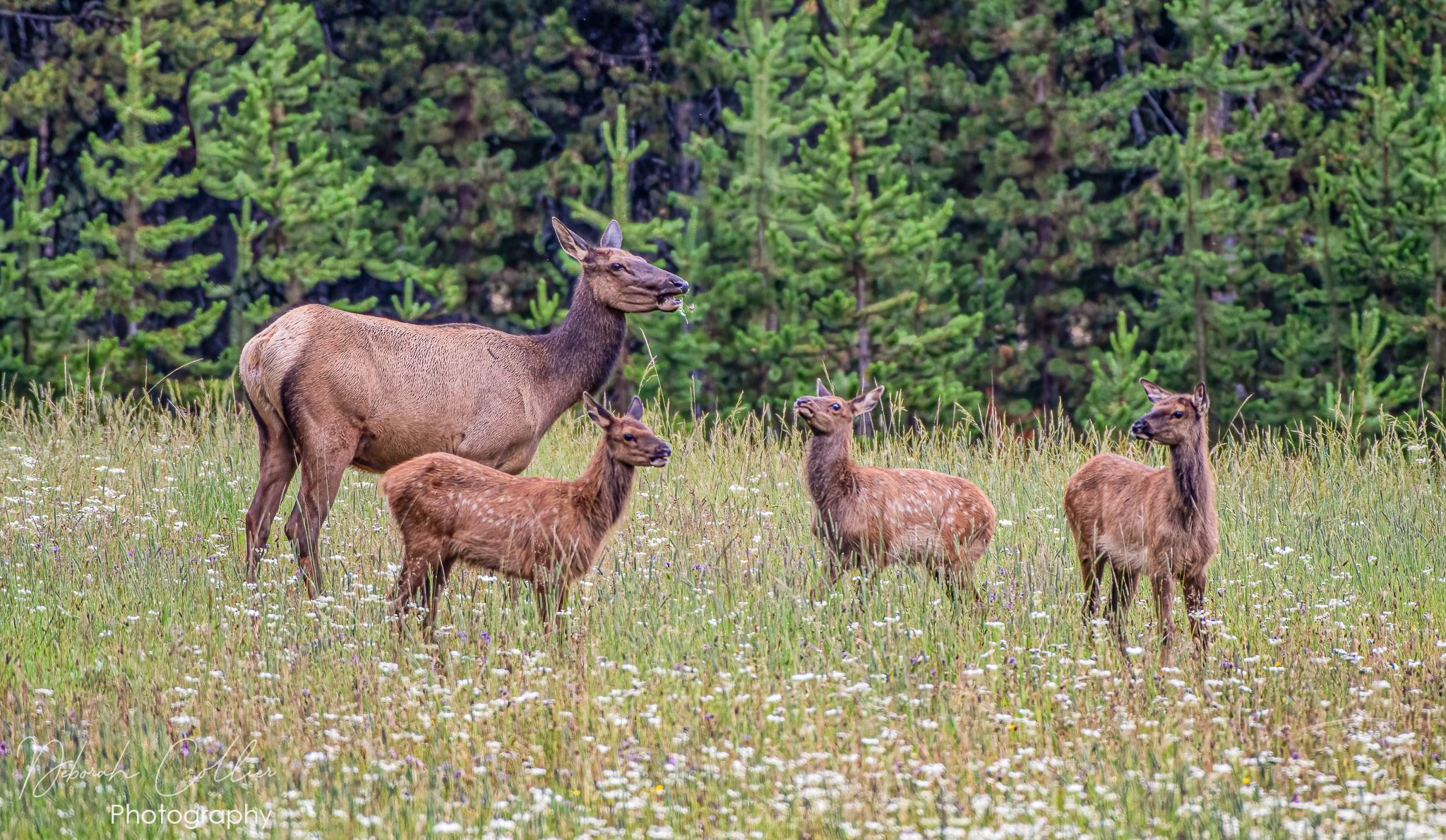
Winter Gear - When winter opens up incredible photography opportunities, you need to be ready. Wolves in Yellowstone snow. Bald eagles on frozen rivers. Elk in frost-covered meadows. However, none of those shots happen if you're too cold to stay out. Insulated jackets, thermal base layers, and hand warmers aren't comfort items in these conditions. They're safety items. Also, don't overlook your head and ears. In fact, heat escapes fastest from an uncovered head.
Not only are frozen ears painful, but they're also a serious distraction when you're trying to stay focused on a wolf pack moving through the tree line in the snow. That said, I'd argue that a good, insulated hat and ear protection are just as important as any other piece of gear you pack. We will cover this in great detail in our clothing blog.
Winter Gear - When winter brings incredible photography opportunities, you need to be ready. Wolves in Yellowstone snow. Bald eagles on frozen rivers. Elk in frost-covered meadows. However, none of those shots happen if you're too cold to stay out. Insulated jackets, thermal base layers, and hand warmers aren't comfort items in these conditions. They're safety items. Also, don't overlook your head and ears. In fact, heat escapes fastest from an uncovered head.
Not only are frozen ears painful, but they're also a serious distraction when you're trying to stay focused on a wolf pack moving through the tree line. That said, I'd argue that a good, insulated hat and ear protection are just as important as any other piece of kit you pack. We will cover this in detail in our clothing blog.
Summer
Don't underestimate this one. In fact, sun exposure is one of the most overlooked hazards in wildlife photography. Whether you're glassing open prairie in July or shooting on a snowfield, UV exposure adds up fast. Snow reflects UV off every surface, making winter shoots just as dangerous as summer ones.
I learned this the hard way after a full day of shooting with nothing but a cap for protection and sunscreen I applied before I left home but forgot to pack. Now sunscreen goes in the bag right next to my spare batteries.
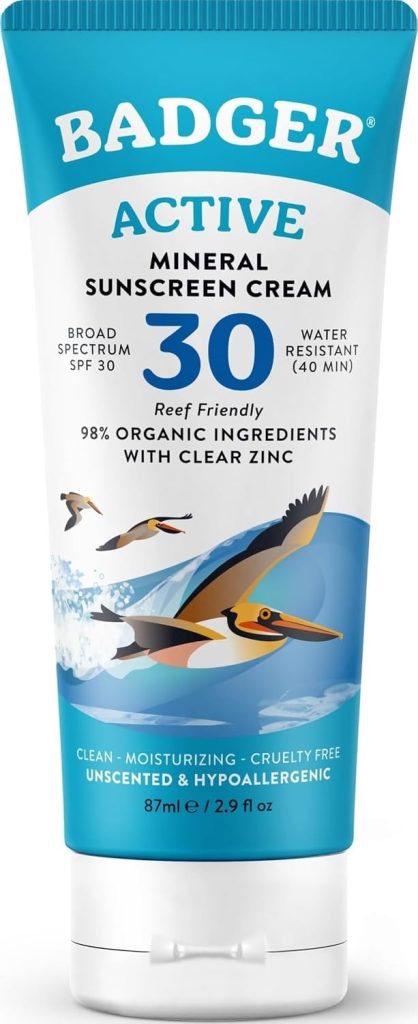
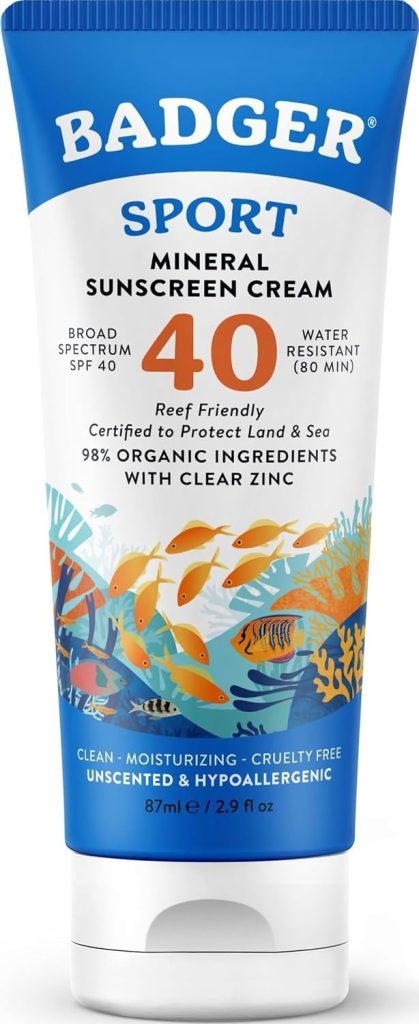
For wildlife photography, I prefer mineral sunscreens over chemical ones. Mineral formulas sit on top of your skin and start working immediately, which matters when you're grabbing gear and running for first light instead of waiting 20 minutes for a chemical sunscreen to absorb. I also stick to unscented formulas. There's no need to announce yourself to every deer in a half-mile radius before you've even gotten your camera up.
Sunscreen
Don't underestimate this one. In fact, sun exposure is one of the most overlooked hazards in wildlife photography. Whether you're glassing open prairie in July or shooting on a snowfield, UV adds up fast. Furthermore, snow reflects UV off every surface, making winter shoots just as dangerous as summer ones.
I learned this the hard way after a full day of shooting with nothing but a cap for protection and sunscreen I applied before I left home but forgot to pack. Now sunscreen goes in the bag right next to my spare batteries.
For wildlife photography specifically, I look for mineral sunscreens over chemical ones. Mineral formulas sit on top of your skin and start working immediately, which matters when you're grabbing gear and running for first light instead of waiting 20 minutes for a chemical sunscreen to absorb. I also stick to unscented formulas. There is no need to announce yourself to every deer in a half-mile radius before you've even gotten your camera up.
Sunscreen Protection
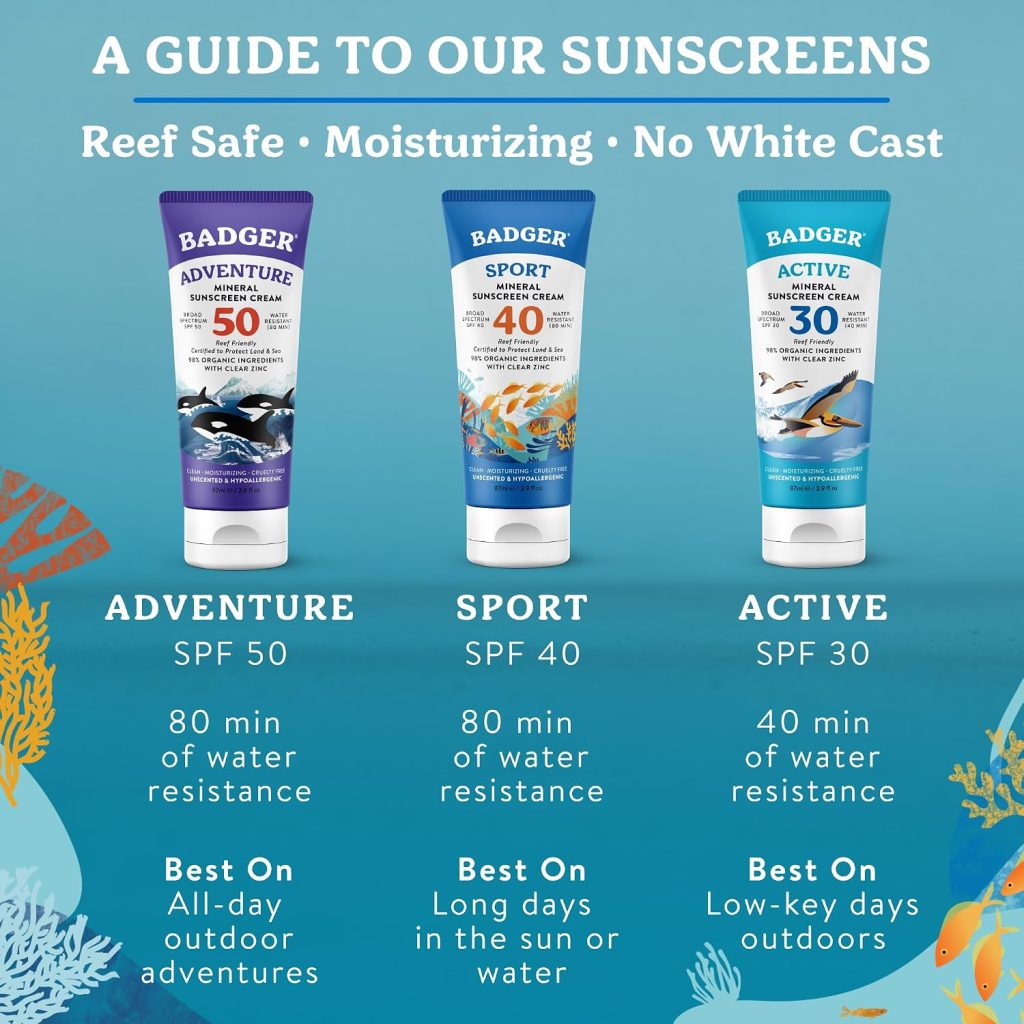
My go-to is Badger Sport Mineral Sunscreen SPF 40. It's reef-safe, 98% organic, unscented, and holds up well through a sweaty morning of hiking to a blind. For longer days out, such as sunrise-to-noon sessions on open terrain with zero shade, I use the Badger Adventure Mineral Sunscreen SPF 50. Same clean ingredient list, just more protection for when you know you're not getting out of the sun anytime soon.
It's not just me. The New York Times named the Badger Adventure SPF 50 one of their top sunscreen picks for 2026, calling out its fragrance-free mineral formula and moisturizing feel. So if you're skeptical of a wildlife blog giving skincare advice, at least you're in good company.
Both go on with a bit of a white cast at first (that's the zinc oxide doing its job), but it blends in within a few minutes. A small price to pay for skin that isn't peeling by August. There are other strengths as well. Visit the Badger store on Amazon to view their range of UV sunscreen protection products: Buy from Amazon: Badger Sunscreens, with natural ingredients, not tested on animals, organic, and unscented.
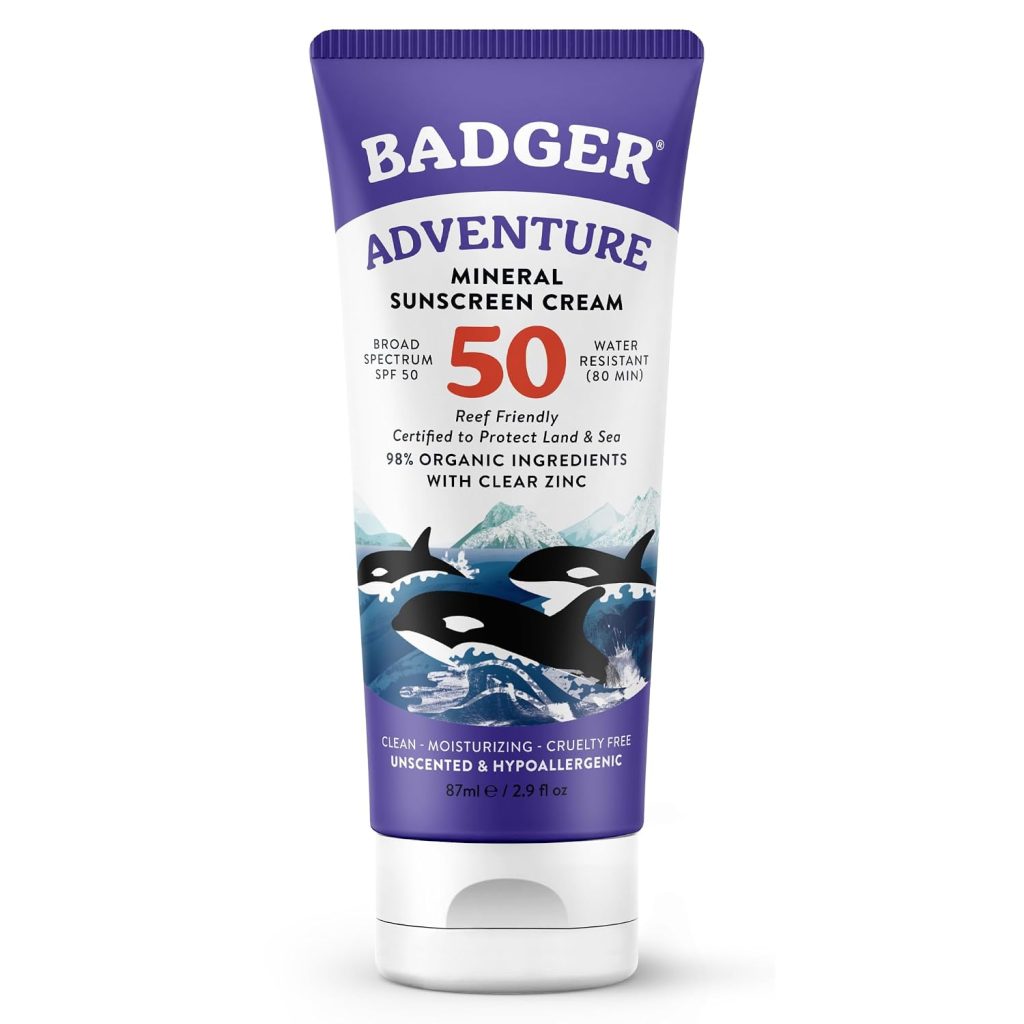
Badger Adventure Mineral
Sunscreen SPF 50
Buy from the Badger Store on Amazon
Insect Protection
If summer heat doesn't get you, the bugs will. Ticks, chiggers, and mosquitoes are a genuine field hazard, not just an annoyance, and I learned that the hard way after a chigger and mosquito encounter that left me itching for two weeks. One tip worth knowing now: skip DEET around your camera gear. It's effective, but it can degrade plastics and rubber over time, and in the field, it eventually ends up on your gear. Picaridin does the same job without the risk.
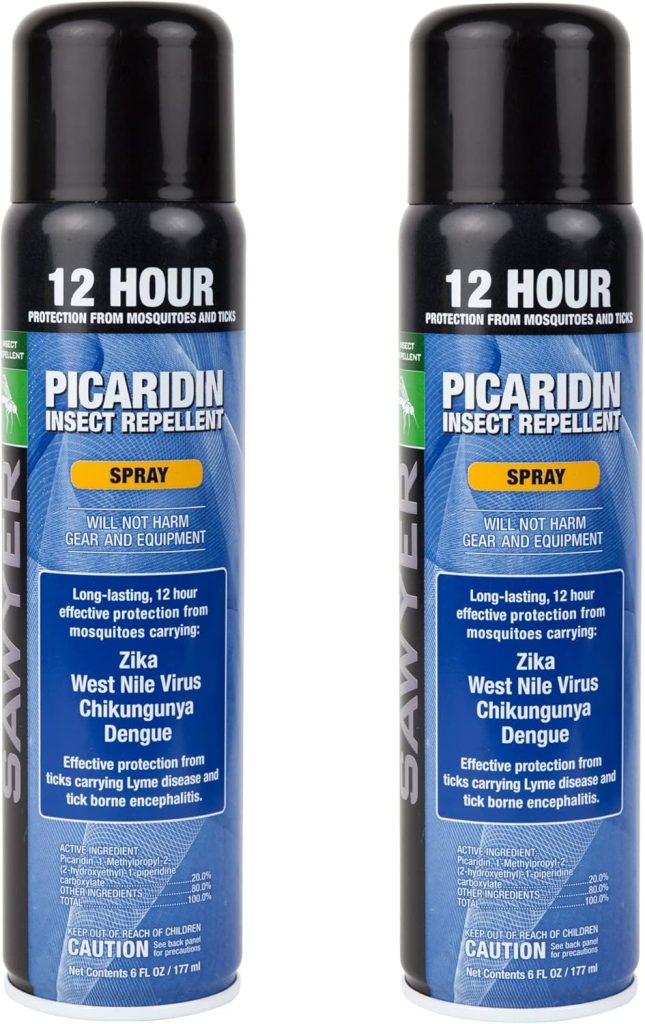
Shop on Amazon → Picaridin
For the full breakdown, what to wear, what to spray, and how to stay protected without alerting every animal in a mile radius to your presence, check out our seasonal wildlife photography clothing guide.
What This Blog Series Covers
Three years ago, we started PhotoWild Gear with one goal: to build the most comprehensive, honest, and practical resource for wildlife photographers in America. While we've come a long way, we're not done yet, not even close. In fact, we're just getting started.
We'll cover everything from gear and safety to seasonal guides, location spotlights across all 50 states, vehicles, clothing, techniques, and much more. New content is added regularly, so bookmark this page and follow along as we build the ultimate resource for wildlife photographers in the US.
Here's a taste of what's coming:
- Seasonal clothing guides, what to wear from summer heat to winter cold, and everything in between
- Footwear built for hours on your feet across rugged, unpredictable terrain
- Gloves that keep your hands working when it's freezing at dawn
- Concealment and scent-control gear, including emerging technology most photographers haven't heard of yet
- Camera bags and gear protection built for the trail, not the studio
- Water photography gear, rash guards, wetsuits, water shoes, and everything for shooting wildlife in and around the water
- Location spotlights and travel tips for finding wildlife across all 50 states
- The best vehicles for backcountry access
- Wildlife photography tours worth taking
- ...and more!
Bookmark this page. The best is yet to come.
Up Next
Getting Equipped: Essential Wildlife Photography Gear. From must-have essentials to optional extras that make your images stronger, we break it all down. → Read the next guide