Ultimate Guide to Wildlife Cameras
If you’re new to this, you already know that the sheer number of camera options can be overwhelming. If you’ve been shooting wildlife for years, the question may be whether that new camera body is actually worth the upgrade.
Either way, spec sheets don’t tell you much until you’ve used the gear in the field. In real conditions, you’re chasing a subject that has zero interest in cooperating. That’s what this guide is. Field-tested opinions from photographers who’ve carried this gear through all sorts of harsh conditions wildlife photography demands of you. The kind of insight that helps you figure out what you actually want, not just what’s popular.
Maybe you’ve already made up your mind on a brand because of a photographer you follow on social media. Maybe you’ve been brand-loyal for years and nothing will change that. Or maybe you have no clue where to start. Either way, by the time you finish this guide, you’ll be better informed.
What You’ll Find in This Guide
This is the most comprehensive wildlife camera guide we’ve put together. It’s been fully updated for 2026, featuring the latest camera releases from Nikon, Canon, Sony, and OM System. Whether you’re buying your first wildlife camera or upgrading a kit you’ve outgrown, this guide covers everything you need to make a confident, informed decision.
We’ll cover camera types and which ones actually perform best in the field. We’ll break down the brands and explain the features that matter most for wildlife photography. Specifically, autofocus tracking, burst rate, weather sealing, and more. Moreover, we will do it in plain language that makes sense to beginners and seasoned shooters alike.
By the end of this guide, you’ll know exactly what to look for. Which cameras are worth your money in 2026, and which ones to avoid. As a result, you’ll walk into your next purchase with confidence, not confusion.
The Enchantment of Capturing America’s Wildlife
There is nothing quite like it. The alarm goes off at 4 a.m., and somehow, despite every reasonable instinct, you’re excited. You drive in the dark, then hike in the pre-dawn quiet. You set up in the cold, with nothing but anticipation and a flask of coffee for company. And then it happens.
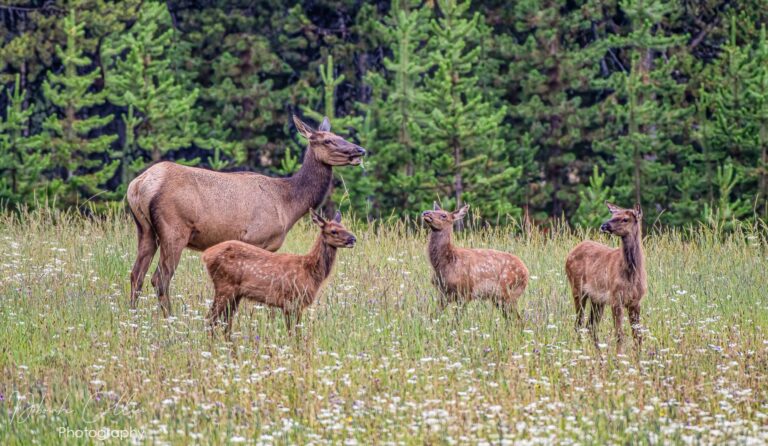
A bald eagle drops from a pine tree and skims the river’s surface, snatching a fish in a move so fast and precise it barely seems real. A bull elk steps onto the meadow’s edge just as the first golden light breaks over the ridge. A black bear emerges from the brush twenty yards away. It looks directly at you, then, as if deciding you’re not worth the trouble, goes back to foraging.
These are the moments wildlife photography exists for. Furthermore, these are the moments that demand a camera that can keep up. A camera that can track fast movement, handle low light, fire fast enough to catch the decisive frame, and survive whatever weather the wild throws at it.
America’s wildlife is endlessly extraordinary. From the bison herds of Yellowstone, the alligators of the Everglades, the puffin colonies of Maine, and the condors of the Grand Canyon, there has never been a better time to photograph them. There has also never been a better selection of cameras for it.
Camera Types – What Actually Works in the Field
Mirrorless vs. DSLR – The Answer for 2026
Let’s settle this debate once and for all, because in 2026 the answer is clearer than it has ever been.
All major manufacturers have now removed DSLR models from their recommended wildlife camera lists. Canon, Nikon, and Sony are focusing entirely on mirrorless development. DSLR systems will receive less support going forward and are no longer being actively developed. As I discovered when I switched to the Nikon Z8, mirrorless isn’t just newer; it’s genuinely better for wildlife photography in almost every measurable way.
However, that doesn’t mean your DSLR is suddenly useless. In fact, the used DSLR market has become a genuine treasure trove. A decade ago, a full-frame body with a fast telephoto lens could cost more than a car. Today you can build a capable DSLR kit for a fraction of what you’d pay for a new mirrorless system. Therefore, if you’re just starting out and budget is a real constraint, a quality used DSLR is still a perfectly viable entry point into wildlife photography.
Nevertheless, for anyone buying new in 2026, mirrorless is the only direction to head.
Why Mirrorless Wins for Wildlife
The advantages stack up quickly. Mirrorless cameras offer 20-30 fps or faster continuous shooting, advanced eye and subject-tracking autofocus, silent electronic shutters, and lighter, more compact bodies. These features DSLRs simply cannot match.
The silence alone changed everything for me. That mechanical click of a DSLR announces your presence to every animal within earshot. Furthermore, birds flinch at the rapid-fire clicks of a DSLR but remain completely relaxed when you switch to a silent shutter. I experienced exactly this with bison in Yellowstone. Animals that would have reacted to my old DSLR simply carried on, completely unaware I was shooting.
The Nikon Z8 is arguably Nikon’s best all-around camera. It’s a pro powerhouse with whip-fast AI-powered autofocus. It can pick out and lock onto specific wildlife subjects, sending your hit rate through the roof. It’s the camera I shoot with and, consequently, the one I recommend most enthusiastically to serious wildlife photographers.
The One DSLR Advantage Worth Mentioning
DSLRs offer an optical viewfinder with uninterrupted clarity and no lag. When tracking birds of prey in flight, that uninterrupted optical view makes it easier to follow erratic movement. Additionally, DSLRs have significantly better battery life than most mirrorless bodies. However, modern mirrorless EVFs have dramatically closed the gap. Carrying extra batteries is a habit every wildlife photographer should have, regardless of camera type.
Full Frame vs. APS-C – Which Sensor Is Right for You?
This is one of the most common questions we get. The answer depends entirely on what you’re shooting and how much you’re spending.
Full-frame sensors offer better low-light performance, greater dynamic range, and shallower depth of field. However, APS-C sensors produce a narrower field of view. The crop factor makes smaller or more distant subjects appear larger in the frame. The quality of APS-C sensors has improved significantly, and advanced mirrorless APS-C cameras can now outperform older full-frame DSLRs.
Furthermore, for wildlife photography in particular, the crop factor is often an advantage rather than a limitation. A 400mm lens on an APS-C body effectively becomes a 600mm equivalent, bringing distant subjects significantly closer without spending a cent more on glass. Consequently, for bird photographers and anyone shooting small or distant subjects, an APS-C body like the Canon EOS R7, with its 32MP sensor, 1.6x crop factor, and animal-subject recognition inherited from the high-end EOS R3, is genuinely outstanding for birds and other distant wildlife.
For wildlife photography, the sweet spot for resolution is 30-50 megapixels. This gives you a large enough image to crop while still allowing high burst speeds without blackouts. The ideal burst rate for most wildlife scenarios is 15-20 fps. Anymore and you have a lot more culling to do; any less and you may miss the decisive moment.
Our recommendation:
- Budget conscious or APS-C → Canon EOS R7 or Nikon Z50 II – exceptional reach, fast AF, great value
- Full frame all-rounder → Nikon Z8 or Canon EOS R5 Mark II – the sweet spot of resolution, speed and low light performance
- No budget ceiling → Sony Alpha 1 II, Nikon Z9 or Canon EOS R3 – professional flagship performance
Crop Factor Explained – What It Means for Wildlife Photography
Crop factor is one of the most useful concepts to understand when choosing a wildlife camera. Fortunately, it’s simpler than it sounds.
Full-frame sensors are the baseline; a 100mm lens on a full-frame body delivers 100mm of reach. However, smaller sensors like APS-C and Micro Four Thirds effectively crop the image, so the same lens delivers more reach. This is calculated by multiplying your focal length by the crop factor.
In practice it works like this:
- APS-C – 1.5x crop – a 400mm lens becomes 600mm equivalent
- Canon APS-C – 1.6x crop – a 400mm lens becomes 640mm equivalent
- Micro Four Thirds – 2x crop – a 400mm lens becomes 800mm equivalent
For wildlife photographers on a budget who can’t yet invest in super-telephoto glass, a crop sensor body is a genuinely smart choice. It brings distant subjects significantly closer without spending more on lenses.
The trade-off is low-light performance. Full-frame sensors gather more light, producing cleaner images at higher ISO settings. Therefore, for dawn and dusk shooting, when wildlife is most active, full-frame offers a real advantage. Balance your reach requirements against your low-light shooting needs and choose accordingly.
Top Camera Brands for Wildlife Photography – 2026 Update
Brand loyalty runs deep in photography. Ask a Nikon shooter about Canon, and watch them smile politely. Talk to a Sony shooter about anything else, and they’ll tell you autofocus wins every argument. Ask a Canon shooter, and they’ll remind you that more professional wildlife photographers shoot Canon than any other brand.
The truth? In 2026, all three major brands, Nikon, Canon, and Sony, make extraordinary cameras built for the rigors of wildlife photography. OM System continues to carve out a loyal niche among photographers who prioritize a compact, lightweight system above all else. We’ll also touch on Leica and medium format for photographers curious about the outliers. Brand loyalty is less important than understanding what each brand does best and matching that to how and where you shoot.
Nikon – My Personal Choice for Wildlife Photography
I’ll be upfront: I shoot Nikon. I have since film. My first camera was a Nikon FG, so I’ve been with this brand for many years. Today it’s a Z8, and after switching from a DSLR, it remains one of the best camera decisions I’ve ever made. But this isn’t a loyalty pitch. To be clear, this is my choice, not necessarily yours. I haven’t personally shot with Canon, Sony, or OM System, but my wildlife photography friends do. They are just as passionate about their chosen brand as I am. They all have loyal followings of wildlife photographers and strong reputations in the field. There are many reasons to choose one brand over another.
This post contains affiliate links.
If you make a purchase through one of these links, I may earn a small commission at no extra cost to you.
As an Amazon Associate, I earn from qualifying purchases.
The Nikon Wildlife Lineup in 2026:
Nikon Z8 – The sweet spot. 45MP sensor, 20fps burst rate, blackout-free viewfinder, and Nikon’s best autofocus system, lighter and smaller than the Z9. This allows more space in the bag for a big glass. Our top recommendation for serious wildlife photographers. Check current price: Nikon Z8 on Amazon: Nikon Z8
Nikon Z9 – The flagship. Everything the Z8 offers, but in a larger, more robust body with a built-in battery grip. The Z9’s rugged build and familiar button layout make it an extension of the photographer’s hand. This is especially great for those accustomed to Nikon’s Pro DSLRs. Its robustness and reliability in harsh conditions are paramount for wildlife photographers working in challenging environments. Check current price: Nikon Z9 on Amazon: Nikon Z9
Nikon Z6 III – The smart value choice. It features a 24.5MP partially stacked CMOS sensor, pre-capture at up to 120 fps, and 493-point phase-detection autofocus. Essentially, it’s a smaller Z8 at a significantly lower price point. For photographers who don’t need 45 megapixels and crop heavily, the Z6 III is the smarter investment. Check current price: Nikon Z6 III on Amazon: Nikon Z6 III
Nikon Z5 II – The budget entry point. Essentially the same autofocus system as the Z6 III, Z8, and Z9. This makes it a great option for fast-paced wildlife shots at a much more accessible price point. Check current price: Nikon Z5 II on Amazon: Nikon Z5 II
Canon – The Professional’s Choice with Extraordinary Autofocus
Canon has long been the camera of choice for professional wildlife photographers, and in 2026, its mirrorless lineup is as strong as ever. The Canon EOS R5 Mark II is the current production flagship. As of early 2026, the original R5 has been discontinued in favor of the Mark II. Check current price: Canon EOS R5 Mark II on Amazon: Canon EOS R5 Mark II
The introduction of mirrorless cameras has completely changed the game of photography, especially in wildlife. The combination of ridiculous frame rates paired with mind-blowing autofocus systems makes it almost impossible to miss high-action moments. The Canon R5 Mark II exemplifies this perfectly.
The Canon EOS R5 Mark II features a 45MP stacked sensor, 1,054 autofocus points, 30fps burst shooting, and 8.5 stops of IBIS. Its intelligent autofocus system with auto subject-detection quickly locks onto animal and human faces and eyes. It also features Eye Control AF, which detects where your eye is looking in the viewfinder and moves the autofocus point to that spot. This is a genuinely game-changing feature for tracking fast-moving wildlife.
The Canon Wildlife Lineup in 2026:
Canon EOS R5 Mark II – A powerhouse for wildlife photographers who need speed, resolution and reliability in equal measure. Blackout-free 30 fps burst rate using the electronic shutter keeps you locked on your subject the whole time. Check current price on Amazon: Canon EOS R5 Mark II
Canon EOS R7 – The APS-C champion. The R7 is understandably popular given its higher pixel density and lower price. The crop factor gives it significant reach advantage for birds and smaller wildlife without investing in super-telephoto glass. Furthermore, for bird photographers specifically the R7 punches well above its price point. Check current price on Amazon: Canon EOS R7
Canon EOS R6 Mark III – The low-light specialist, refreshed. Released in late 2025, the R6 Mark III brings a new 32.5MP sensor (up from the Mark II’s 24.2MP), 40fps burst shooting, and half a second of pre-capture, while keeping the low-light strengths that made the R6 line a favorite for dawn and dusk wildlife shooting. If the light is good, grab the R5 Mark II. In low-light conditions, the R6 Mark III is the smarter choice. Check current price on Amazon: Canon EOS R6 Mark III
Canon EOS R6 Mark II – The low-light specialist. In low light, morning, and evening, when most wildlife photography happens, the R6 Mark II handles it better and produces less noise than the R5. If the light is good, grab the R5; in low light, the R6 Mark II is the smarter choice. Check current price on Amazon: Canon EOS R6 Mark II
Sony – The Autofocus King
Ask any photographer which brand has the best autofocus in 2026, and the answer is almost always the same: Sony. Sony’s AI-powered tracking system, with a dedicated AI processor separate from the main image processor, sets a standard that other manufacturers are still striving to match.
The Sony Alpha 1 II is built around a 50.1MP stacked CMOS sensor and an AI processing unit. This allows its autofocus system to recognize seven subject types and automatically select the appropriate one based on the scene. For wildlife photographers who shoot a wide variety of subjects, including birds, mammals, reptiles, and insects, Sony’s subject recognition is extraordinary.
The Alpha 1 II also delivers incredible dynamic range, making RAW files an absolute dream to work with in post-processing. It balances highlights and shadows perfectly, allowing detail to be pulled out without the image looking unnatural.
The Sony Wildlife Lineup in 2026:
Sony Alpha 1 II – The flagship. It combines Sony’s fastest stacked sensor with AI subject recognition, pre-capture capability, and 8.5 stops of IBIS. The ultimate Sony wildlife camera for those with the budget to match. Check current price on Amazon: Sony Alpha 1 II
Sony A7R VI – The resolution monster, now with speed to match. The A7R VI’s 66.8MP full-frame sensor opens creative doors few cameras can match. For wildlife photography, where getting physically close isn’t always an option, that resolution enables aggressive cropping without sacrificing detail or print quality. Unlike its predecessor, the A7R VI closes the gap that once held high-resolution Sony bodies back in wildlife photography. Burst shooting now reaches 30 fps with full AF/AE tracking, matching the flagship A1 II’s speed. It’s a genuinely compelling choice for photographers who want maximum resolution without sacrificing burst performance. Check current price on Amazon: Sony A7R VI
Sony A7 V – The versatile all-rounder. A 33MP full-frame sensor with Sony’s AI autofocus and improved 7.5-stop IBIS, at a significantly more accessible price than the flagships. For photographers who want Sony’s legendary autofocus without the flagship price tag, the A7 V is a compelling entry point. Check current price on Amazon: Sony A7 V
OM System – The Compact Specialist
OM System, formerly Olympus, occupies a unique position in the wildlife photography market. Their Micro Four Thirds sensor system has a 2x crop factor, meaning a 300mm lens behaves like a 600mm equivalent. As a result, reaching distant wildlife becomes significantly more affordable.
OM System bodies are also among the smallest and lightest serious wildlife cameras available. That’s a genuine advantage on long backcountry hikes, where every gram in the pack matters. Their weather sealing is class-leading, too, rated to withstand conditions that would compromise other manufacturers’ bodies.
The trade-off: Micro Four Thirds sensors are smaller than those of full-frame or APS-C, which means lower low-light performance. For dawn and dusk shooting, the golden hours when wildlife is most active, OM System bodies require more careful ISO management than their full-frame competitors.
OM System OM-1 Mark II and OM-3
The wildlife specialist. Extraordinary subject tracking, class-leading weather sealing, and a 2x crop factor that turns affordable telephoto glass into serious wildlife reach. Check current price on Amazon: OM System OM-1 Mark II
If the OM-1 Mark II is more camera than your budget allows, the OM-3 is worth a look. Check current price on Amazon: OM-3 It shares the same sensor and processor, just in a smaller, more affordable body. It has fewer pro-level extras like dual card slots. If you’re patient, an OM-1 Mark III is rumored for later in 2026, to coincide with their 90th anniversary of the OM camera lineage. Though early signs suggest it’ll be a refinement rather than a dramatic leap. Current OM-1 Mark II owners likely have little urgent reason to wait for it.
The Bottom Line – Which Brand Should You Choose?
In 2026, there is no wrong answer among the top brands. Here’s a feature and benefits summary:
- Choose Nikon if you want the best balance of resolution, speed, autofocus, and value. The Z8 stands out as one of the strongest all-rounders in this range.
- Choose Canon if you value the largest professional support ecosystem and want class-leading 30fps burst performance with extraordinary Eye Control AF.
- Choose Sony if autofocus tracking is your absolute priority, and budget allows for the Alpha 1 II Sony’s AI subject recognition is genuinely in a class of its own.
- Choose OM System if weight, compactness, and reach on a budget matter most, and you shoot primarily in daylight conditions.
Whatever brand you choose, invest in that system’s native lenses when you can. Native lenses are built specifically for that camera’s mount. The lens and body communicate directly; autofocus, aperture, and stabilization all happen through a connection the manufacturer designed and optimized. Adapted lenses (older glass from a different system, used via an adapter) still work, but there’s an extra translation step between two systems that weren’t designed to communicate. This shows up as a slight lag in autofocus speed and accuracy. For wildlife, where you’re often tracking fast, unpredictable movement, that lag is still worth avoiding in 2026 if native glass is an option.
Brand by Brand: What Each System Actually Offers
Here’s where the details matter. Below is a closer look at what each brand delivers to wildlife photographers in 2026. Starting with the system that’s been part of this journey the longest: Nikon.
Nikon – The Brand That’s Been with Me from Film to Field
Nikon’s mirrorless lineup is the strongest it’s ever been in 2026. The company is genuinely still evolving rather than coasting. In 2024, Nikon acquired RED, the cinema camera company behind gear used across Hollywood. That partnership has already begun to show up in its still-photography lineup. Most notably with the Nikon ZR, the first camera in Nikon’s new Z Cinema range. Nikon has released a pair of conventional photography bodies this year, the Z5 II and Z50 II, alongside the first RED-influenced “Red Zed” cameras built on the Z mount. Nikon Rumors
Rumors point to more coming before the end of the year, including a minimalist full-frame body without a viewfinder, aimed squarely at photographers who don’t need or want an EVF weighing down a lightweight setup. A Z9II is also expected, likely the only high-end release Nikon puts out this year.
One of the most underrated things about Nikon, though, isn’t a new release at all, it’s how they treat the cameras you already own. Nikon’s ongoing commitment to firmware updates means their cameras genuinely improve over time. A Z8 or Z9 purchased today will likely be a better camera in two years than it is right now, just through free updates alone. No new hardware required.
Nikon Z9 – The Flagship
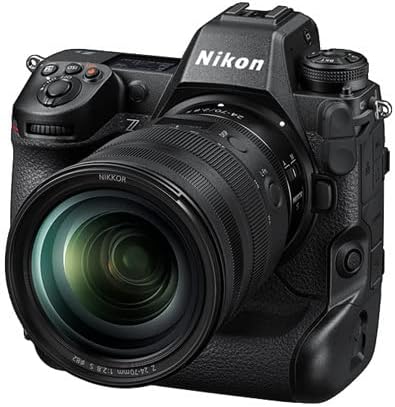
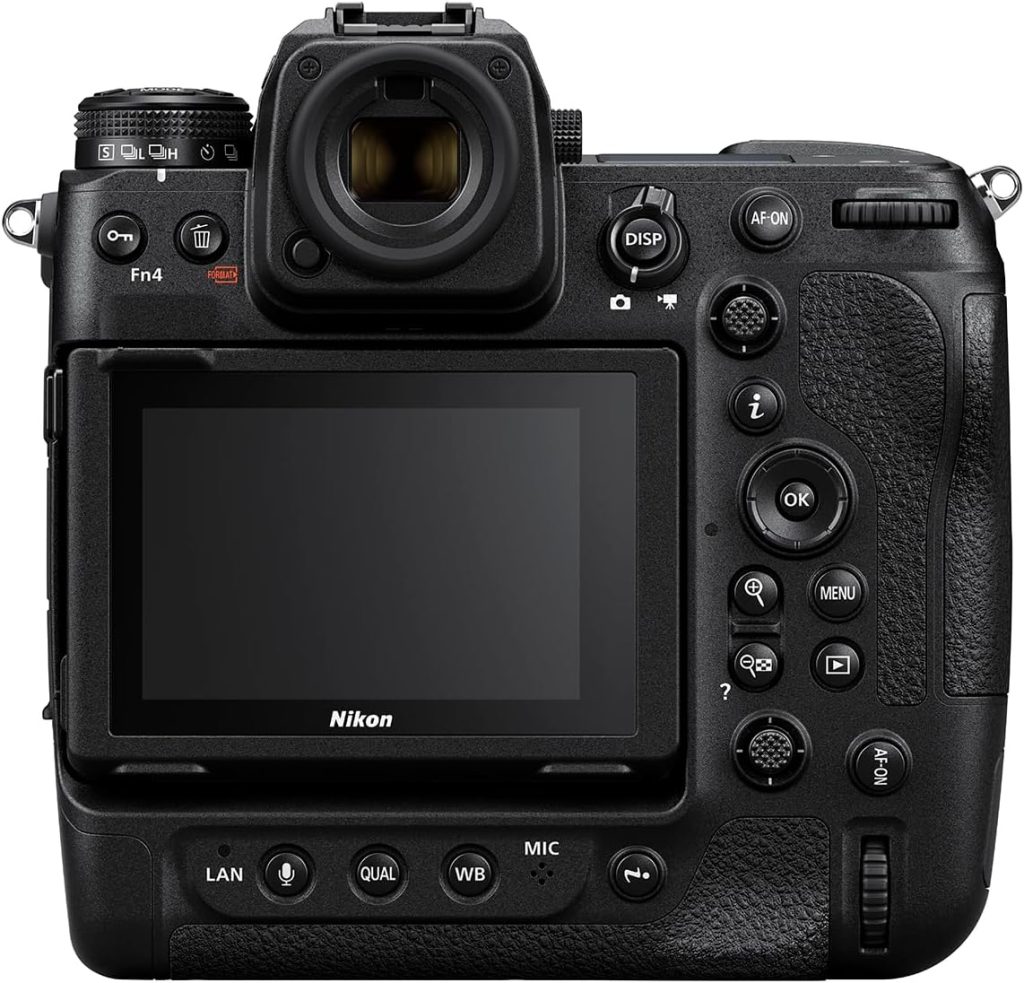
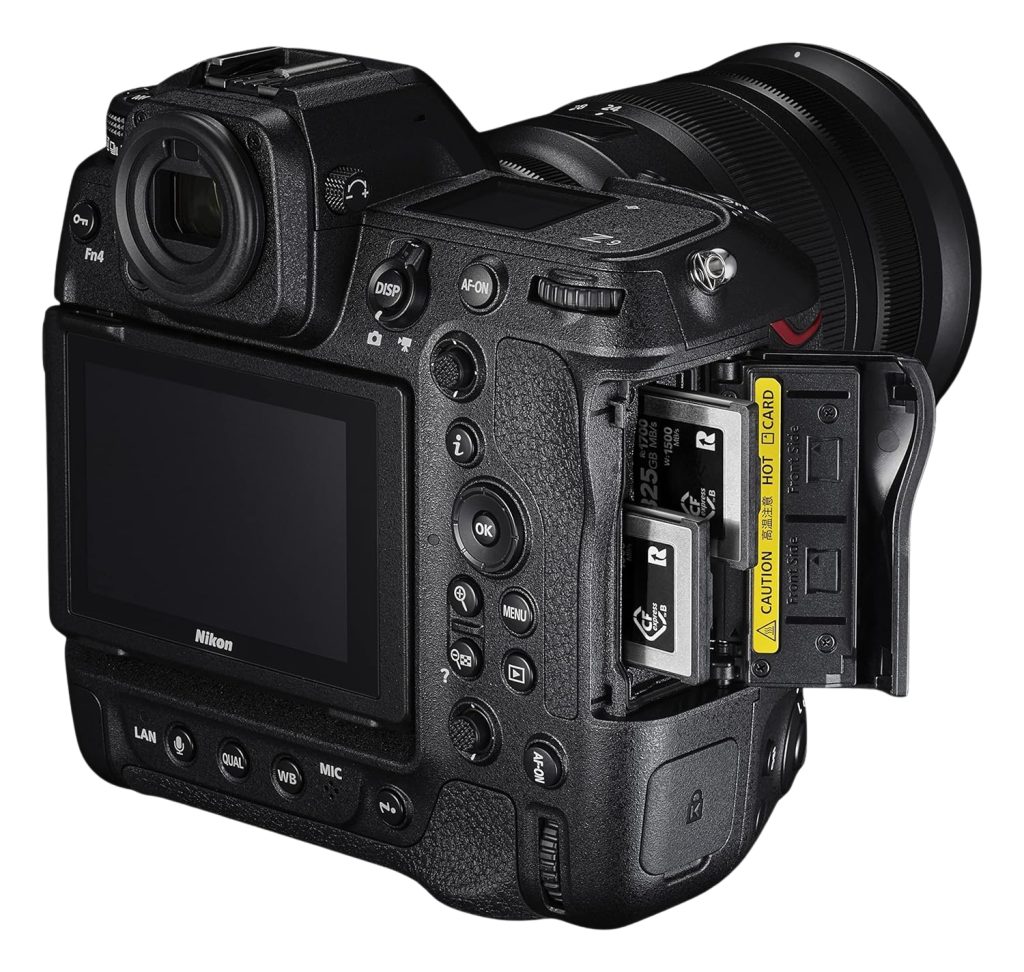
The Nikon Z9 is Nikon’s ultimate wildlife camera, a professional flagship built without compromise. When it launched, many considered it the camera that proved mirrorless had finally overtaken DSLR for serious wildlife work. It debuted with the world’s first truly blackout-free viewfinder and Nikon’s first 4-axis tilting touchscreen. These are the kinds of details that don’t show up in a spec sheet comparison but make a real difference after 12 hours in the field.
Key specs:
- 45.7MP full-frame stacked CMOS sensor
- 20fps RAW continuous shooting
- Unlimited buffer – over 1,000 RAW frames
- Deep-learning subject detection for birds, animals, vehicles, and more
- Weather-sealed magnesium alloy body
- Dual CFexpress Type B card slots
- 4-axis tilting touchscreen
- Integrated vertical grip with duplicated controls for portrait shooting
That grip isn’t just for balance, either. When you rotate the Z9 to shoot vertically, it’s ideal for portrait frames. Key controls like AF-ON and the AF joystick are duplicated right there on the grip. That way, you don’t have to awkwardly reach around a sideways camera mid-shot. Those vertical controls can also be locked, so you don’t bump them accidentally while shooting normally.
For photographers upgrading from Nikon DSLRs, the Z9’s familiar button layout and ergonomics make the transition feel natural. This means less time relearning the camera and more time shooting with it.
The trade-off is size and weight. This camera is bigger and heavier than the Z8. That matters if you’re hiking miles into position rather than shooting from a vehicle or a fixed blind. But for photographers for whom durability and reliability outweigh portability, the Z9 is built exactly for that job.
Nikon Z9 – Buy from Amazon
The Nikon Z8
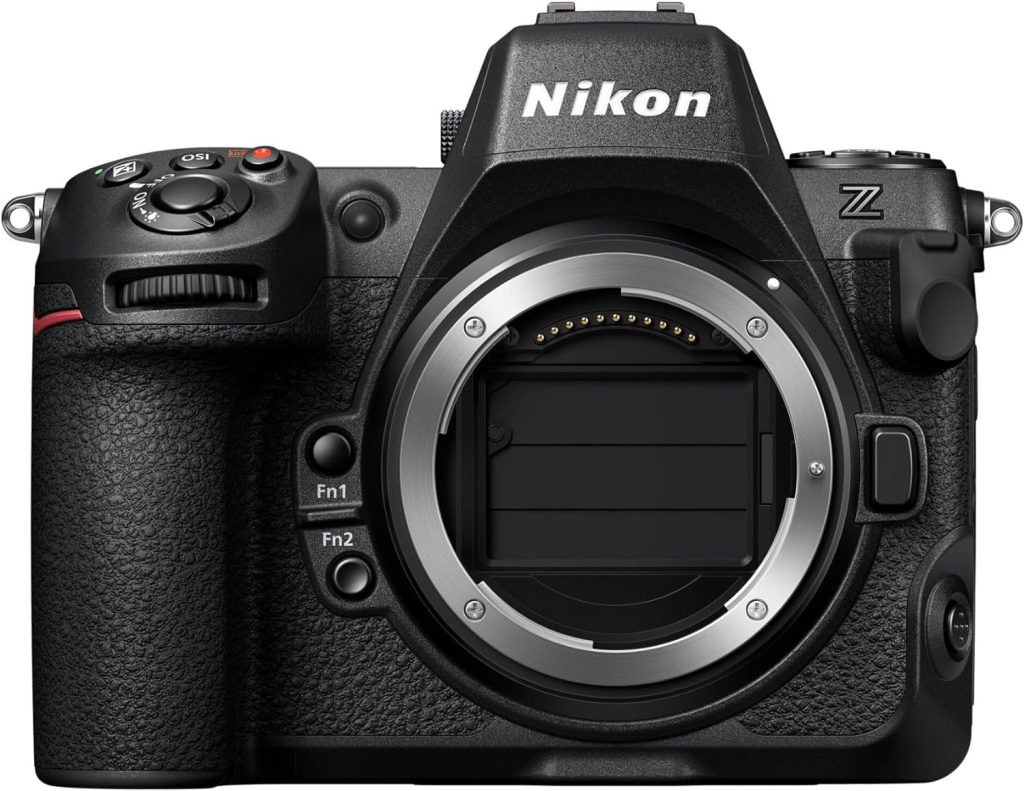
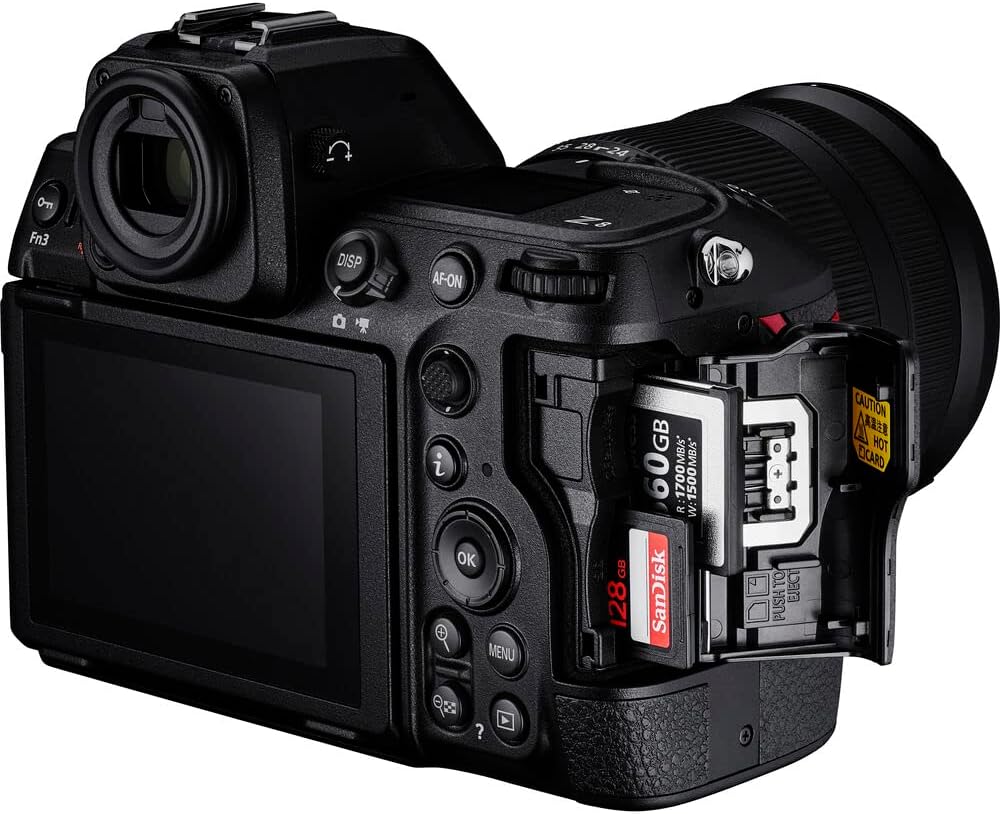
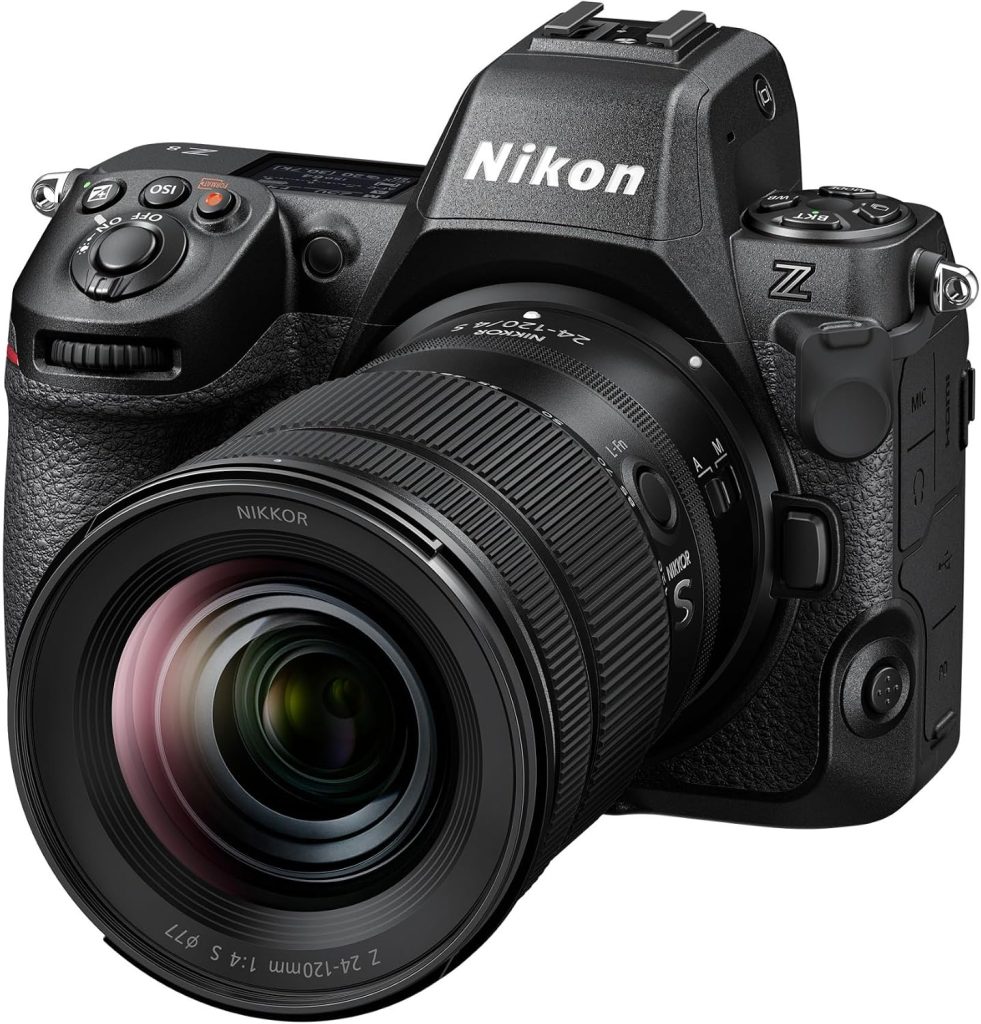
If the Z9 is Nikon’s ultimate camera, the Nikon Z8 is its smartest, delivering essentially identical image quality and autofocus performance in a significantly smaller, lighter body at a lower price point. As my personal camera of choice for every wildlife shoot, I can speak to its field performance with genuine authority.
The silent electronic shutter transformed how I approach wildlife photography. No mechanical click, no startling sound to spook skittish subjects. Other photographers in hides and blinds are no longer disturbed by the rhythm of my shooting, so I capture longer, more natural behavioral sequences from wildlife that simply doesn’t know I’m there.
Key specs:
- 45.7MP full-frame stacked CMOS sensor
- 20fps RAW continuous shooting
- Bird, animal and vehicle subject detection AF
- 6-stop IBIS
- Weather sealed body
- Dual card slots – CFexpress Type B and UHS-II SD
Nikon Z8 – Buy from Amazon
Nikon Z6 III – The Smart Value Choice
The Nikon Z6 III (Nikon Z6 III – buy from Amazon) sits in a sweet spot that many wildlife photographers overlook. It features essentially the same AI-powered autofocus system as the Z8 and Z9. This means bird and animal eye detection performs at the same extraordinary level, at a significantly more accessible price point.
The partially stacked 24.5MP sensor delivers excellent image quality and impressive low-light performance. Pre-capture at up to 120 fps ensures you never miss the first frame of fast action. For photographers who don’t need 45 megapixels and prefer a lighter, more compact body, the Z6 III is a smart investment.
Key specs:
- 24.5MP partially stacked CMOS sensor
- 120fps pre-capture
- 299-point autofocus (auto-area AF)
- Same subject detection as Z8 and Z9
- Weather sealed body
Nikon Z5 II – The Best Value Entry Point
Don’t let the entry-level positioning fool you. The Nikon Z5 II (Nikon Z5 II – buy from Amazon) punches well above its price point. It delivers the same core autofocus technology as its more expensive siblings in a body that costs around $1,700.
For photographers just starting out in wildlife photography who want Nikon’s legendary AF performance without the flagship price tag, the Z5 II is the most sensible starting point in the entire Nikon lineup. As your skills and budget grow, lenses and accessories purchased for the Z5 II work seamlessly on future Nikon Z upgrades. As a result, you’re investing in the Nikon ecosystem from day one.
Key specs:
- 24.5MP full-frame sensor
- 14fps burst rate
- Animal and bird subject detection AF
- Up to 7.5 stops of IBIS
- Weather sealed body
The Nikon D850 and D6 – The DSLR Legends Worth Knowing About
Before we move on from Nikon entirely, two DSLR bodies deserve a proper mention. Because in 2026, the used market for both represents extraordinary value for photographers entering wildlife photography on a budget.
Nikon D850 – The Legend That Refuses to Retire
The Nikon D850 has long been hailed as one of the most powerful DSLRs ever made. With its high-resolution 45.7MP sensor, robust weather-sealed body, and professional-grade autofocus, it’s still a workhorse camera, whether you’re shooting weddings, landscapes, wildlife, or commercial work. Even in a mirrorless-driven world, the D850 remains a favorite among photographers who crave reliability and dynamic range without compromise.
The D850 was Nikon’s flagship DSLR before the Z9 took over, and it shows. It features a 153-point autofocus system borrowed from Nikon’s flagship D5, making it well-suited for action, sports, and wildlife work. Add in 7 frames per second (expandable to 9 with a battery grip), 4K video, dual card slots, and one of the best optical viewfinders ever made, and you’ve got a complete package that’s hard to beat even today.
The secondhand market is filled with opportunities to score this legendary camera at a fraction of its original price. Used D850 bodies in excellent condition can typically be found for around $1,000-$1,600, depending on shutter count and condition, compared to $3,300 new when it launched in 2017. Interestingly, Nikon still sells the D850 new today too, currently around $1,997 body-only. A sign of just how enduring this camera has proven to be. For photographers who want full-frame Nikon quality without the mirrorless price tag, the D850 remains one of the smartest camera purchases available, used or new. Check the current price on Amazon: Nikon D850
What to check when buying a used D850:
The D850 is rated for 200,000 shutter actuations. A used model with under 50,000 clicks is considered low mileage and should give you years of service. Anything over 100,000 clicks is starting to creep into the camera’s expected lifespan, so adjust your price expectations accordingly. You can ask the seller for a screenshot of the shutter count using tools like: Check Shutter Count or ExifTool.
Buying from trusted used gear specialists like MPB, KEH, B&H, or Adorama’s used departments is strongly recommended. If you’re buying through eBay or Facebook Marketplace, proceed with caution. Only deal with well-reviewed sellers and always use buyer protection methods.
If you already own Nikon F-mount glass, the lenses that fit DSLR bodies, the D850 lets you use that glass natively without an adapter. Photographers upgrading from older Nikon DSLRs who aren’t ready to reinvest in Z-mount glass will find the D850 a natural and cost-effective step up.
If budget is a genuine constraint, the used Nikon market in 2026 offers extraordinary value. A used D850 in excellent condition represents some of the best dollars-per-image-quality available anywhere in photography. As professional photographers upgrade to mirrorless systems, the supply of quality used Nikon DSLRs continues to grow while prices continue to fall. Now is arguably the best time in history to enter wildlife photography on a Nikon DSLR budget.
Key specs:
- 45.7MP full-frame BSI CMOS sensor
- 7fps burst rate – 9fps with battery grip
- 153-point AF system from the Nikon D5 flagship
- ISO 64-25,600 – expandable to 102,400
- Weather sealed magnesium alloy body
- Dual card slots – XQD and SD
- Approximately 1,840 shots per battery charge
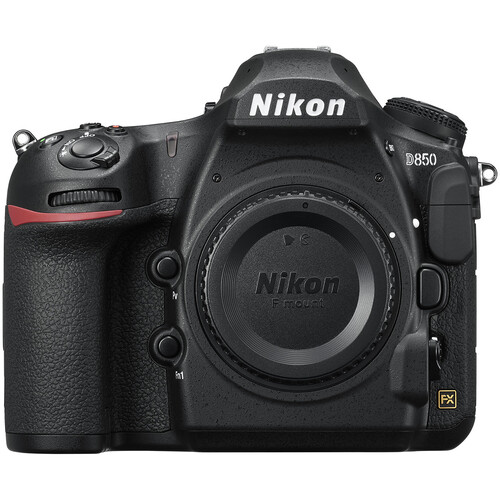
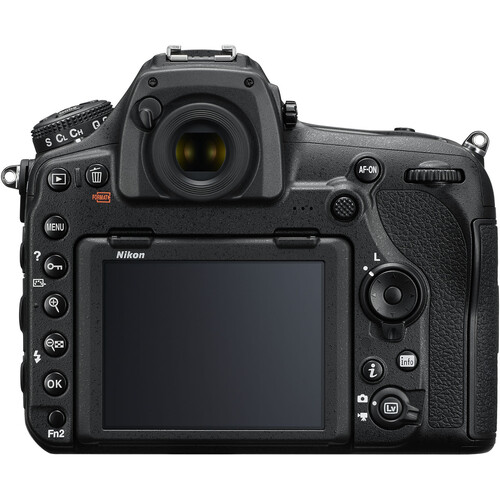
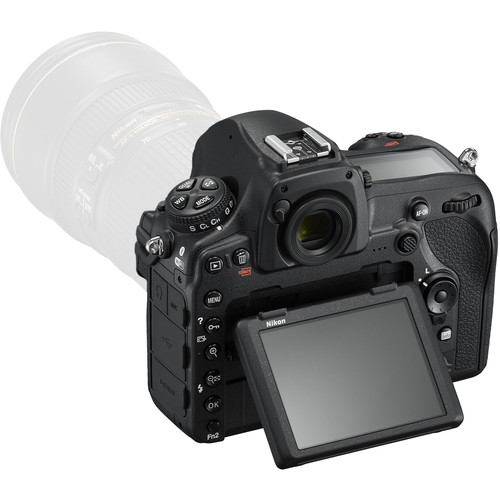
Nikon D850 – Buy from Amazon
Nikon D6 – The Professional Sports and Wildlife Flagship
While most photographers will never need or be able to justify a Nikon D6, it deserves a mention for context. The D6 was Nikon’s ultimate professional DSLR, the camera used by sports and wildlife photographers at the highest levels before the Z9 took over that mantle. It launched at around $6,500 new, a price that reflected its extraordinary build quality, speed, and reliability under the most demanding professional conditions. Used D6 bodies are now available at significantly lower prices as professional photographers upgrade to the Z9.
The D6 features continuous high-speed shooting up to 14 frames per second for freezing fast-moving action, a 105-point autofocus system for rapid, precise autofocusing, even in low light. That 105-point array isn’t just fast. It holds onto erratic subjects like birds in flight or a sprinting predator with a tenacity that’s hard to find outside Nikon’s flagship line. It’s rugged and durable, with a weather-resistant design for shooting outdoors. Paired with the D6’s buffer depth, you can hold down the shutter through an entire burst of action. A bear lunging for a fish, an eagle’s talons hitting the water, without worrying about the camera stalling out mid-sequence. For anyone chasing fast, unpredictable wildlife in tough conditions, it’s the kind of tool that disappears in your hands and lets you focus entirely on the moment in front of you.
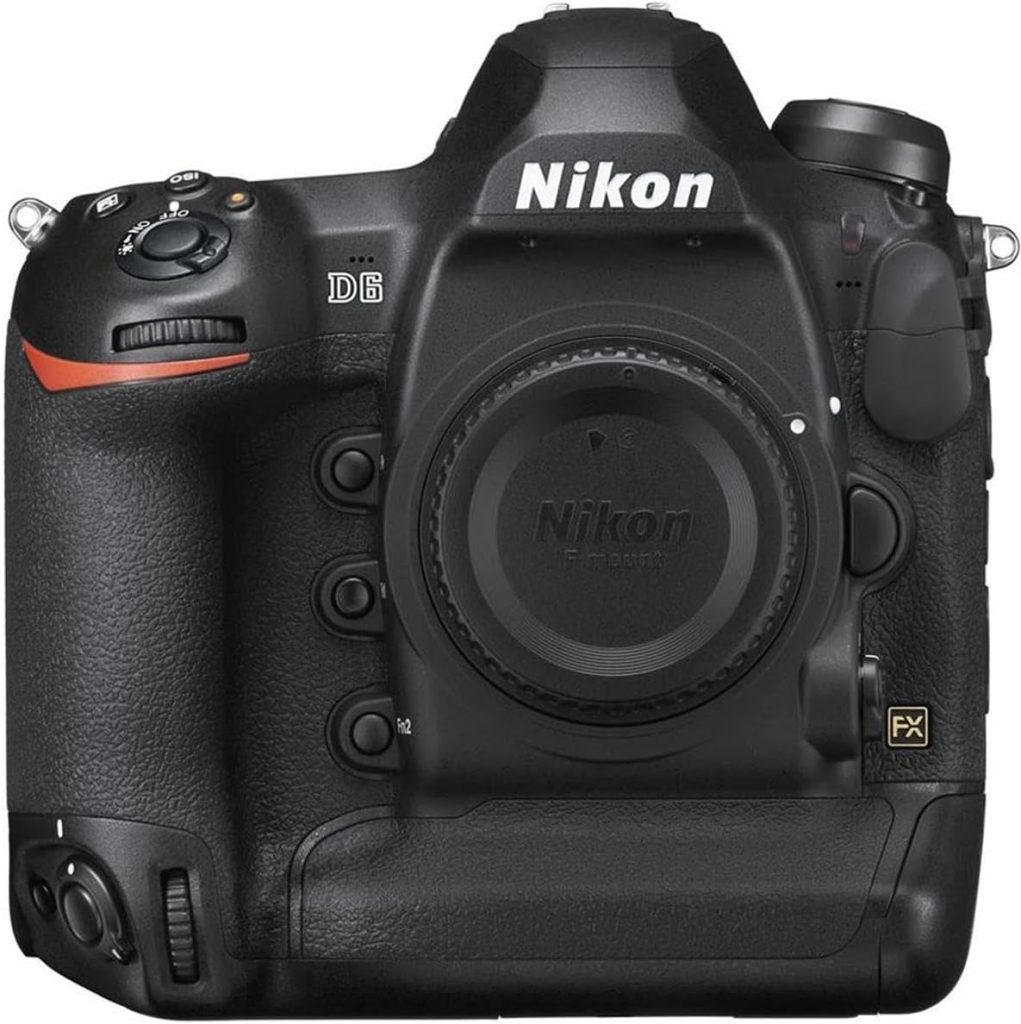
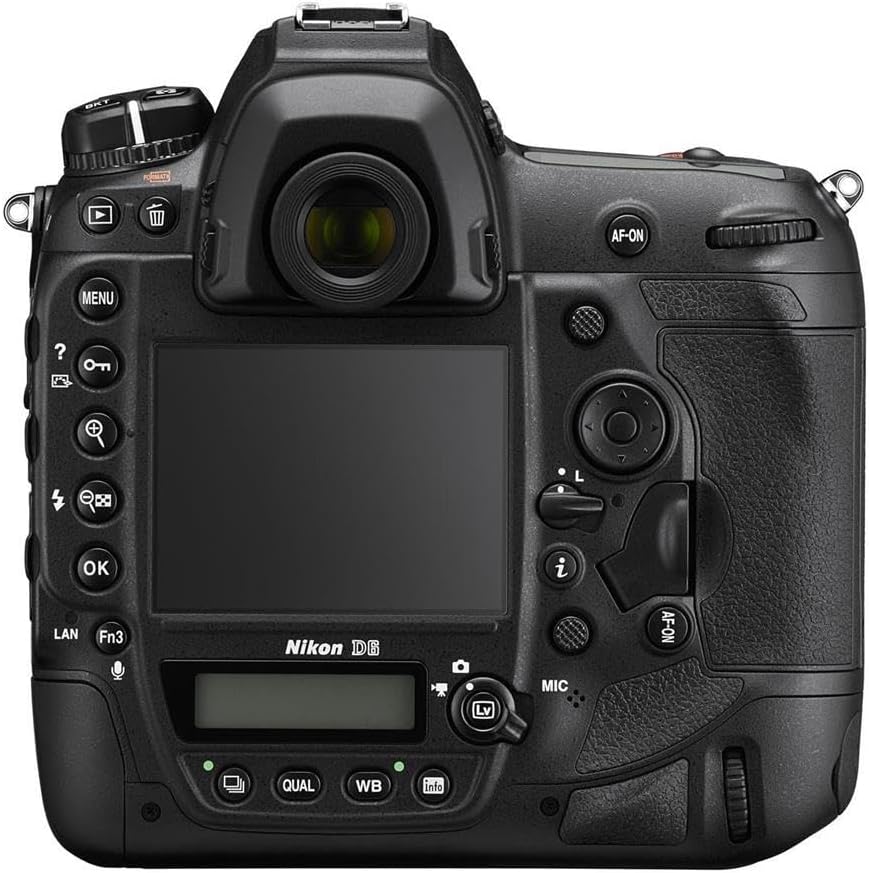
Nikon D6 – Buy from Amazon
Canon – The Professional’s Choice with Extraordinary Autofocus
Canon has been synonymous with professional photography since 1937. Their transition to mirrorless has been nothing short of extraordinary. Canon cameras have genuinely raised the bar for what wildlife photographers can achieve in the field. Canon’s RF lens ecosystem is now among the strongest in the industry, giving wildlife photographers access to some of the finest telephoto glass ever made.
Canon’s subject-detection autofocus can automatically identify and lock onto people, animals, and vehicles. It’s quite frankly astonishing at tracking fast-moving wildlife. Canon has also added Eye Control AF to its top-tier bodies. This feature lets you direct autofocus simply by looking at your subject through the viewfinder. Tracking a bird in flight becomes almost instinctive rather than mechanical.
Canon EOS R1 – The Flagship
Let’s just say it: the R1 is the camera Canon builds when price is no longer a factor. At around $6,799 body-only, it’s the most expensive camera on this list, and Canon didn’t cut corners to get there. Released in November 2020and actively supported with firmware as recently as May 2026, this Canon isn’t treated as a finished product. No successor rumors yet, which is typical for a body this new at the top of the lineup.
The 24.2MP stacked sensor isn’t chasing megapixels. It’s chasing speed and light-gathering ability, and it delivers both. You get 40fps electronic shooting with essentially no rolling shutter distortion, a 9.44-million-dot viewfinder that stays blackout-free even during the fastest bursts, and autofocus tracking that’s arguably the best Canon has ever shipped. Pre-continuous shooting even buffers frames before you fully press the shutter, so a bird’s takeoff you reacted a beat too late to is still sitting on your card.
Is it overkill for most wildlife photographers? Honestly, yes. If you’re not shooting professionally under real deadlines or reliability pressure, a missed autofocus lock costing you the only shot of the day, the R5 Mark II or R3 will get you 90% of the way there for much less money. But if you’re the person who needs the shot, every time, in whatever light or chaos shows up, the R1 is built for exactly that job.
Best for: Professional wildlife and sports photographers who need flagship reliability and can’t afford a missed frame.
Key Specs:
- 40fps burst shooting – Canon’s fastest
- Powerful Auto-focus upgrades such as the “Cross-type AF” at the imaging sensor, a first for Canon.
- New Canon-designed 24.2MP full-frame back-illuminated stacked CMOS sensor (with Dual Pixel AF).
- Built-in neural upscaling feature can double horizontal and vertical image size to create a 96MP JPEG in about 10 seconds.
- Pre-continuous shooting to capture the previous 1/2-second of images prior to a full shutter release.
- The new DIGIC Accelerator works in tandem with the DIGIC X Image Processor to handle tasks such as eye control, metering, and more, delivering better, faster overall performance.
- The EOS R1 offers three stabilization methods (in-body, optical, and independently activated movie digital IS) for spectacular stabilization performance, especially when recording video.
- Improved Image Stabilization
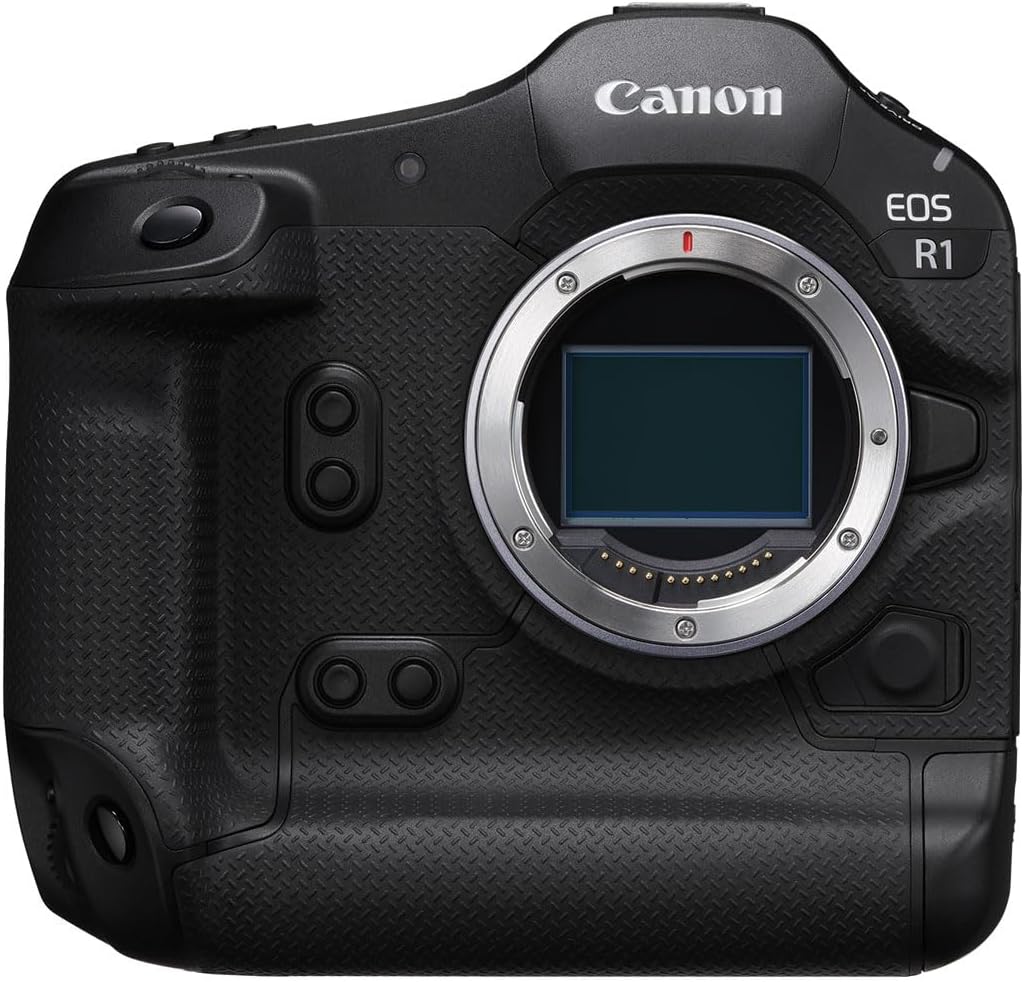
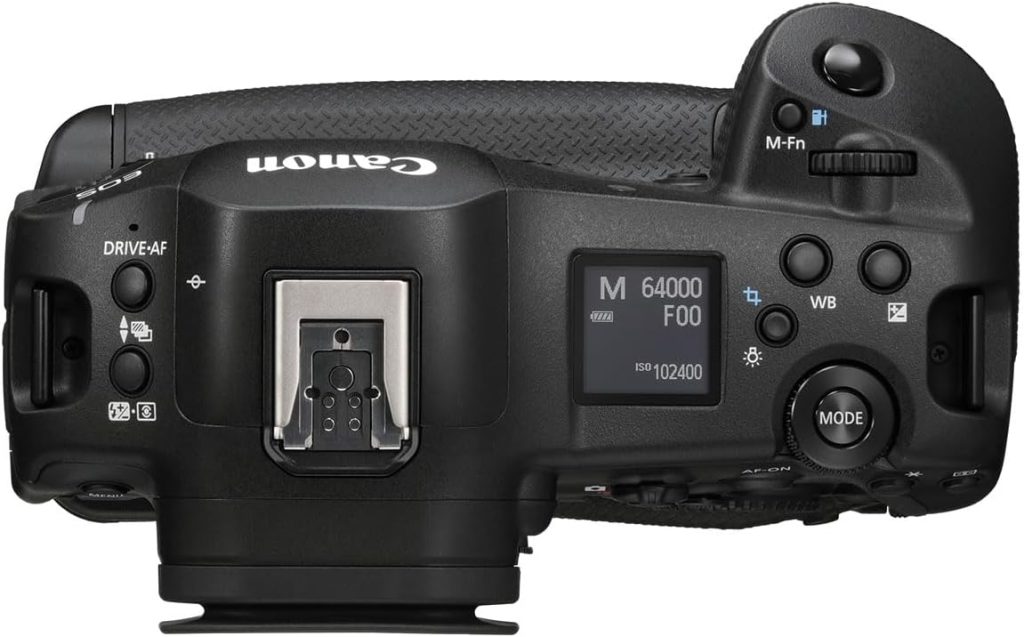
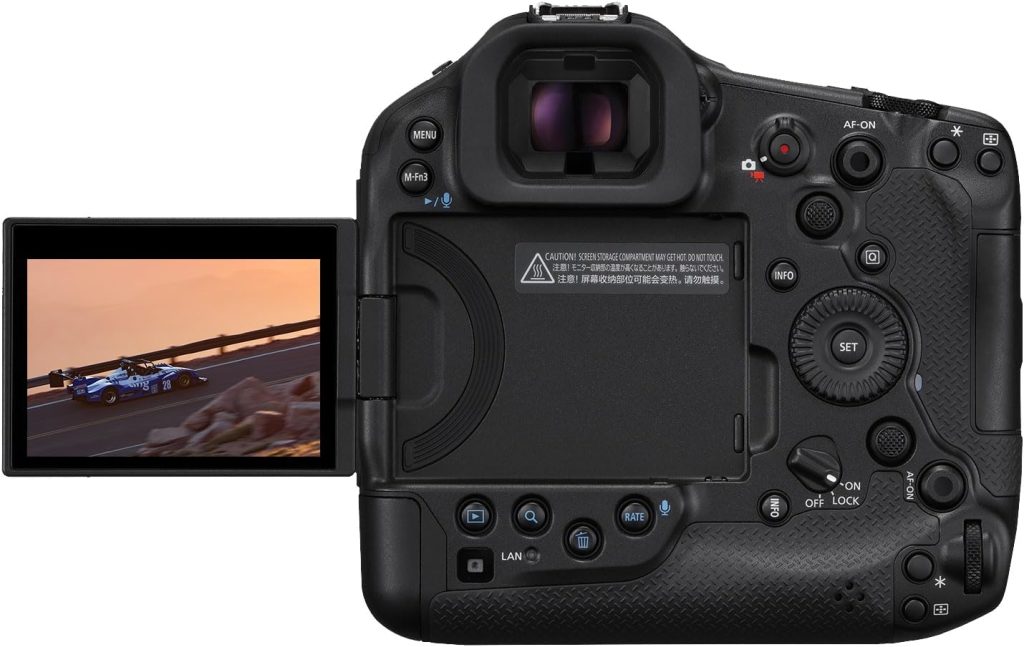
Canon EOS R1 Buy from Amazon
Canon EOS R3 – The Flagship Alternative
The Canon EOS R3 sits at the very top of Canon’s wildlife and sports lineup. A professional flagship built without compromise and without apology for its price tag. It was the camera that brought Eye Control AF back to the world, a feature Canon hadn’t offered since 2004 and proved that Canon’s innovation hadn’t slowed down one bit in the mirrorless era.
The Canon EOS R3 is CIPA-rated for 760 shots per charge, though real-world use often exceeds 1,300 shots. It offers outstanding battery life for a mirrorless flagship, paired with extraordinary low-light autofocus performance that makes it particularly well-suited to wildlife shooting at dawn and dusk. Its 24.1MP stacked BSI sensor prioritizes speed over resolution, delivering 30fps bursts with virtually no rolling shutter and extraordinarily fast subject acquisition.
For professional wildlife photographers who prioritize absolute reliability and speed above all else, the R3 is Canon’s answer. At around $4,399, it still represents a significant investment, and most photographers will find that the R5 Mark II adequately meets their needs at a lower price point.
Key specs:
- 24.1MP stacked BSI CMOS sensor
- 30fps burst shooting
- Eye Control AF – first introduced on this body
- Outstanding low-light performance
- Professional weather sealing
- Built-in battery grip
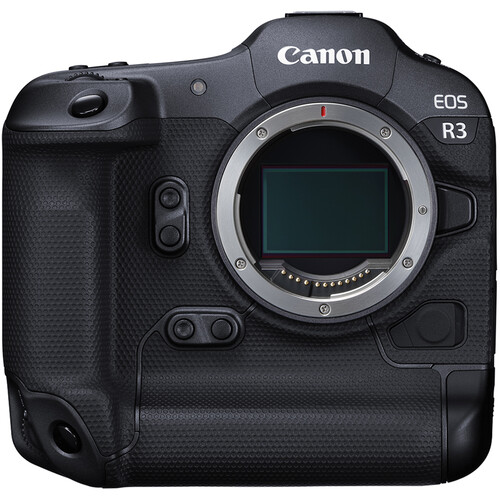
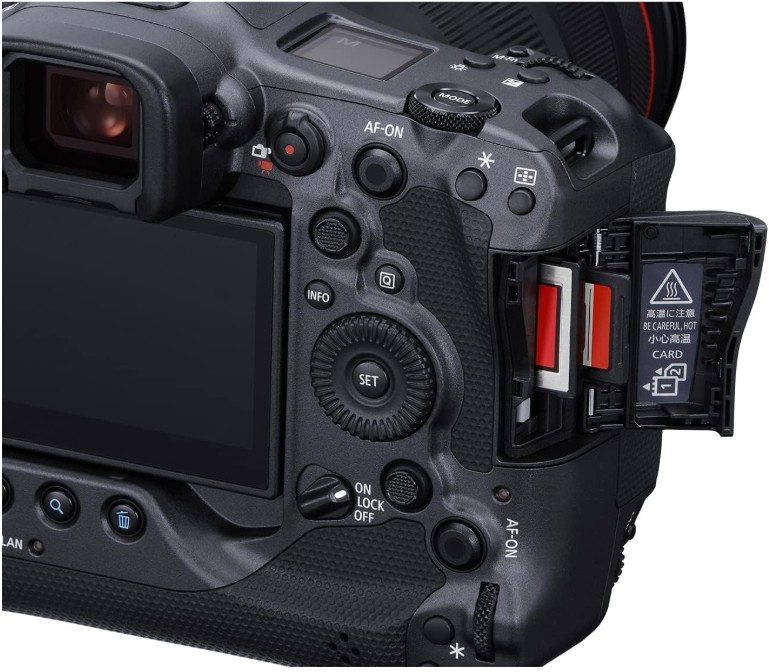
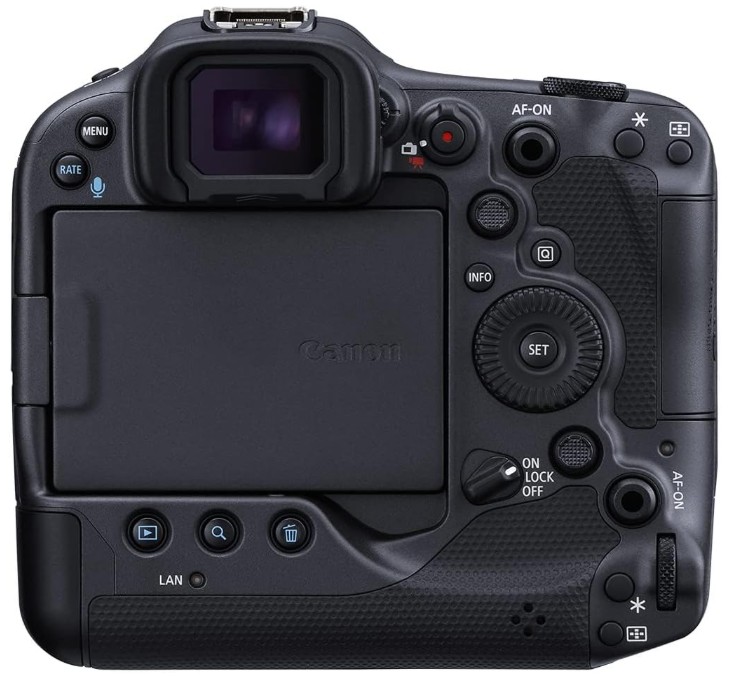
Canon EOS R3 – Buy from Amazon
Canon EOS R5 Mark II – The Wildlife Powerhouse
The Canon EOS R5 Mark II is fast, reliable, and incredibly capable. Perfect for wildlife and action shooters. One of its standout features is the blackout-free, continuous 30 fps burst rate. Using the electronic shutter, you can fire off full-resolution RAWs at lightning speed without any viewfinder lag, which is a huge advantage when tracking wildlife.
Furthermore, the R5 Mark II finally includes a pre-capture mode. With the shutter button half-depressed, the camera records up to 15 frames before you press the shutter. This is outstanding for birds that suddenly take flight. Moments you thought you’d missed are captured by pre-capture. Additionally, Canon claims 8.5 stops of image stabilization when combined with a compatible lens. Every bit of added stabilization is beneficial, especially with long telephoto lenses, which are essential for wildlife photography.
The R5 Mark II excels in the most demanding scenarios, including high-level action sports and wildlife photography. Consequently, it is the best all-round Canon body for serious wildlife photographers in 2026.
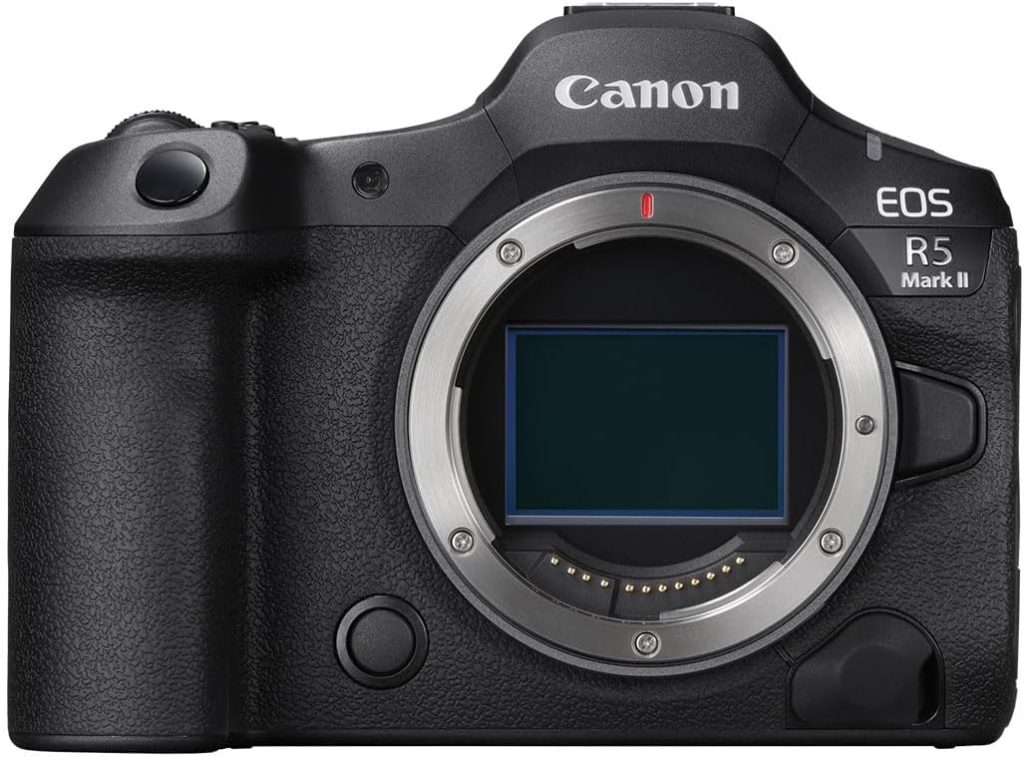
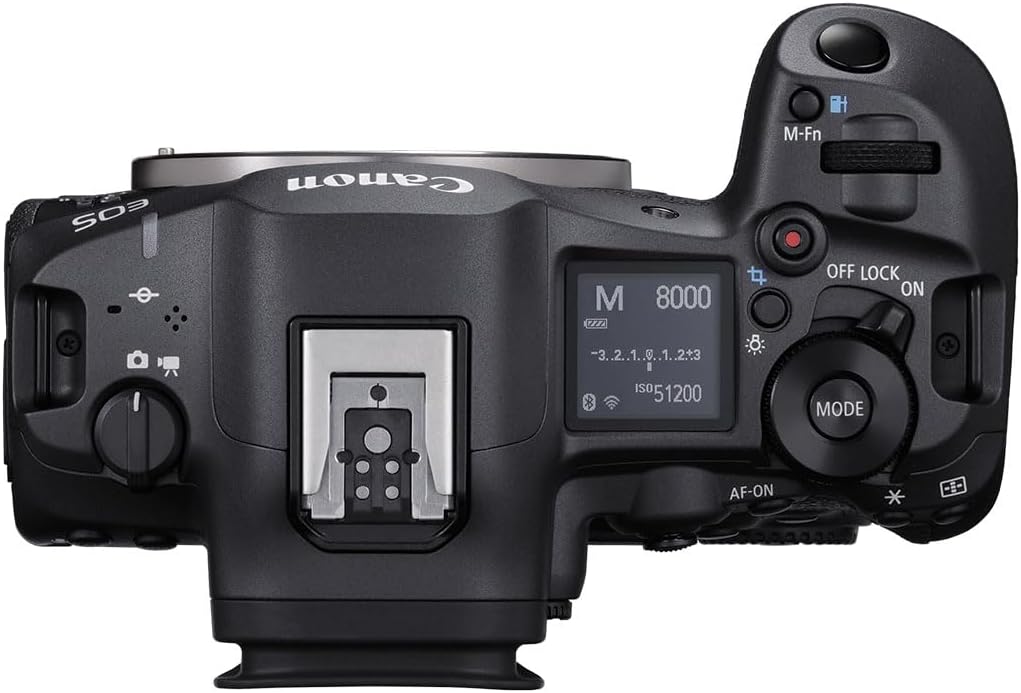
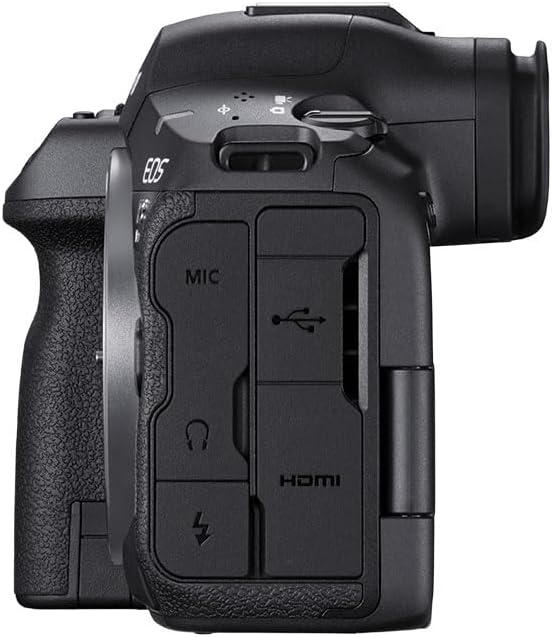
EOS R5 Mark II – Buy from Amazon
Key specs:
- 45MP stacked CMOS sensor
- 30fps blackout-free burst shooting
- Pre-capture up to 15 frames
- Eye Control AF and animal subject detection
- 8.5 stops IBIS
- Weather sealed body
- Dual card slots – CFexpress and UHS-II SD
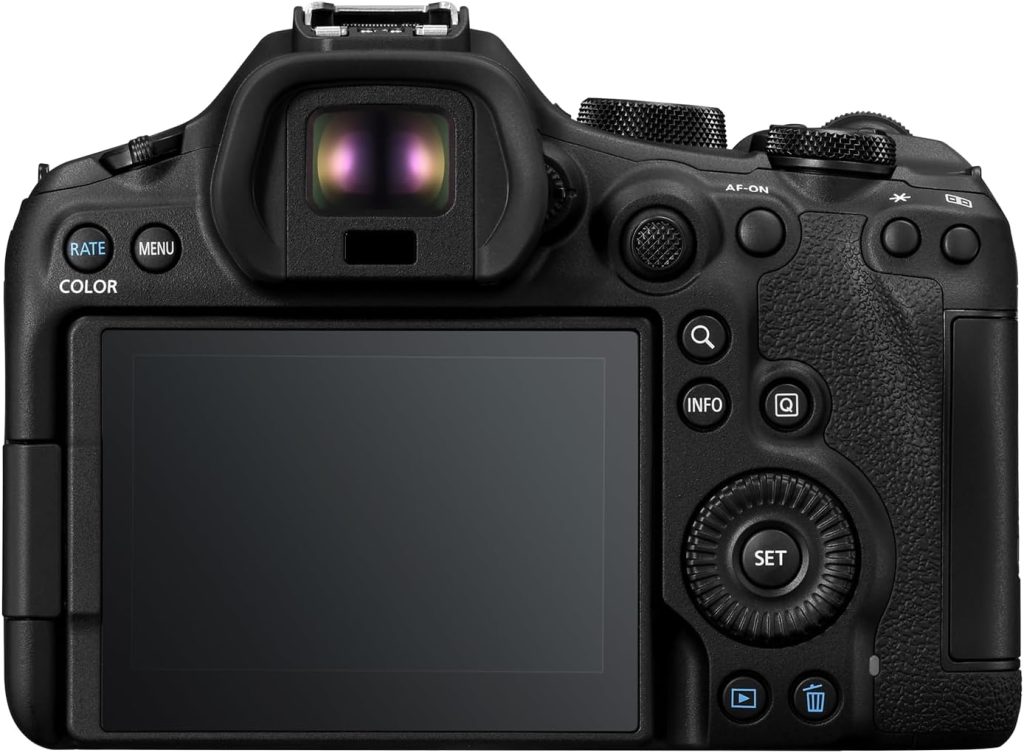
Canon EOS R6 Mark III – The Low-Light Specialist, Refreshed
Three years after the well-loved R6 Mark II, Canon released the R6 Mark III in late 2025. It closes much of the gap that once separated the R6 line from the flagship R5 Mark II. The headline change is a new 32.5MP full-frame sensor, up from the Mark II’s 24.2MP, giving wildlife and bird photographers meaningful room to crop without sacrificing detail.
Autofocus borrows directly from the R5 Mark II and flagship R3, with Dual Pixel CMOS AF II tracking humans, animals (dogs, cats, birds, horses), and vehicles, plus a new Register People Priority mode. Subject detection remains reliable down to -6.5 EV, which matters enormously for dawn and dusk wildlife shooting when light is at its worst.
Burst shooting reaches 40fps electronically, with pre-capture now recording up to half a second before you fully press the shutter. Enough to catch a bird breaking from a branch before you’ve consciously reacted. In-body stabilization has also improved slightly, now rated at 8.5 stops at the center of the frame, edging out the R6 Mark II’s already-impressive 8 stops.
If the light is good; grab the R5 Mark II. In low-light conditions, the R6 Mark III is the smarter choice.
Still have or find a good deal on the R6 Mark II? It remains a very capable body at a lower price point if the Mark III’s extra resolution and video specs aren’t essential to your wildlife work.
Key specs:
- 32.5MP full-frame CMOS sensor
- 40fps electronic burst shooting
- Pre-capture up to 0.5 seconds
- Subject detection AF for people, animals, and vehicles (borrowed from R5 Mark II / R3)
- 8.5 stops IBIS
- Weather sealed body
- Dual card slots – CFexpress Type B and UHS-II SD
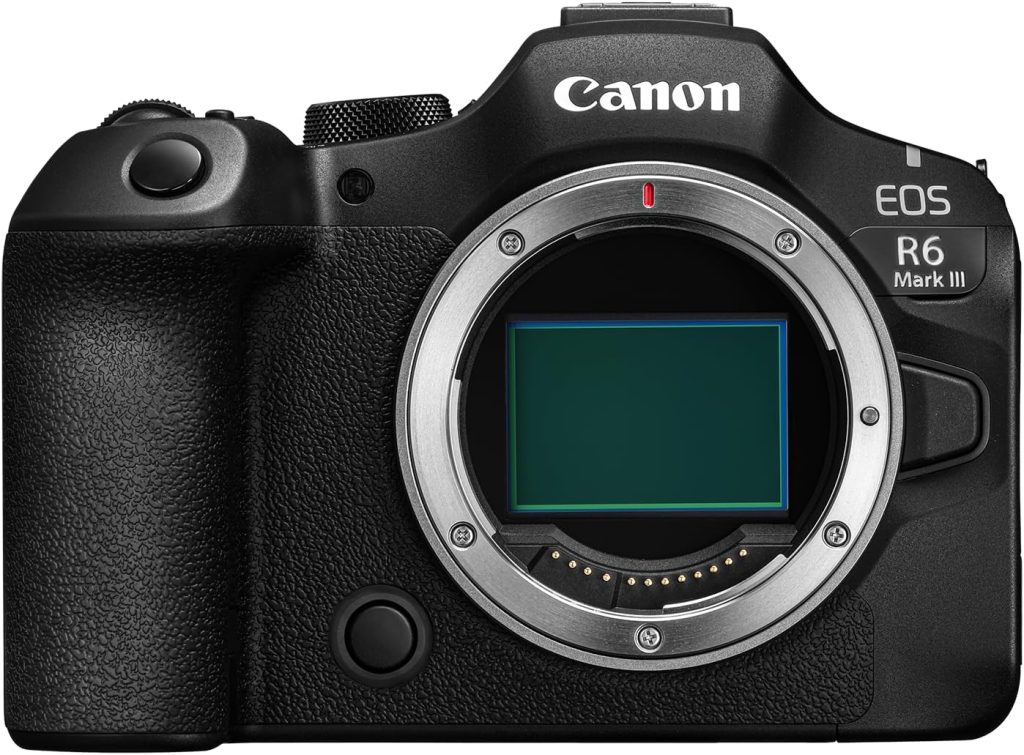
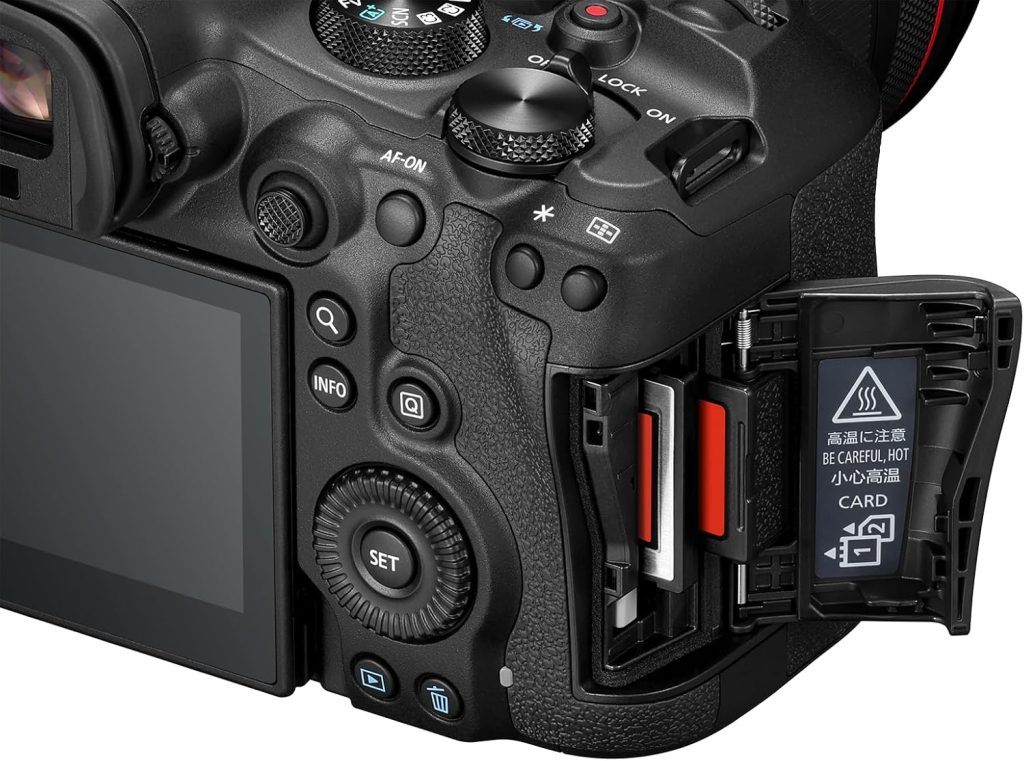
Canon EOS R6 Mark III – Buy from Amazon
Canon EOS R7 – The APS-C Champion for Birds and Wildlife
Don’t let the APS-C sensor put you off. The Canon EOS R7 is understandably popular given its higher pixel density and lower price. The crop factor gives it a significant reach advantage for birds and smaller wildlife without investing in super-telephoto glass.
The R7 also offers a fast 30 fps burst rate, a fully articulating touchscreen, in-body image stabilization, and the same autofocus system as the R5, with subject detection. Bird photographers get flagship-level autofocus performance at a fraction of the flagship price, which is exactly why the R7 is consistently one of our top recommendations for photographers entering wildlife photography who want Canon’s ecosystem without the full-frame price tag.
Key specs:
- 32.5MP APS-C sensor – 1.6x crop factor
- 30fps burst shooting
- Same subject detection AF as R5
- 7 stops IBIS
- Weather sealed body
- Significantly more affordable than full-frame options
What About Used Canon DSLRs?
As with Nikon, the used Canon DSLR market offers compelling value in 2026. The Canon 5D Mark IV and Canon 7D Mark II remain capable wildlife cameras, available at excellent prices as photographers upgrade to mirrorless. A used 5D Mark IV in good condition typically sells for $700-1,400, depending on shutter count and condition, a significant discount off its original $3,499 launch price. Canon has officially discontinued the 5D Mark IV, so the used market is now the only way to find one.
If you already own Canon EF lenses (the glass that fits Canon DSLRs), the good news is that Canon’s EF-EOS R adapter works seamlessly with all current Canon mirrorless bodies. You can transition to mirrorless while keeping your existing lens investment intact. As one Canon community member noted, use only the Canon adapter rather than third-party alternatives; Canon’s adapter consistently outperforms third-party options in autofocus speed.
Sony – The Autofocus King
Sony has become the leader in the mirrorless market, with professionals across wedding, sports, wildlife, and commercial photography using Sony Alpha cameras. The extensive lens ecosystem and advanced autofocus technology have won over many photographers who previously shot with Canon or Nikon. In 2026, Sony’s AI-powered subject recognition sets a standard that other manufacturers are still chasing.
The a1 II brings an Auto subject recognition mode to the Alpha line. Sony claims human and animal eye recognition should be about 30% better than on the original a1, and bird eye recognition should be 50% better. The Animal and Bird modes have also been merged. This means you won’t have to switch between subject recognition modes when moving from shooting animals to birds, or vice versa. For wildlife photographers who shoot a wide variety of subjects throughout a single day, this seamless subject switching is genuinely transformative.
Sony also offers a camera for every photographer in 2026, ranging from entry-level enthusiast models to professional flagships. The A7 V remains a top recommendation for most people, striking the perfect balance between photo and video performance at a reasonable price. Professionals who need maximum capability should consider the A1 II or the A9 III, depending on their specialty.
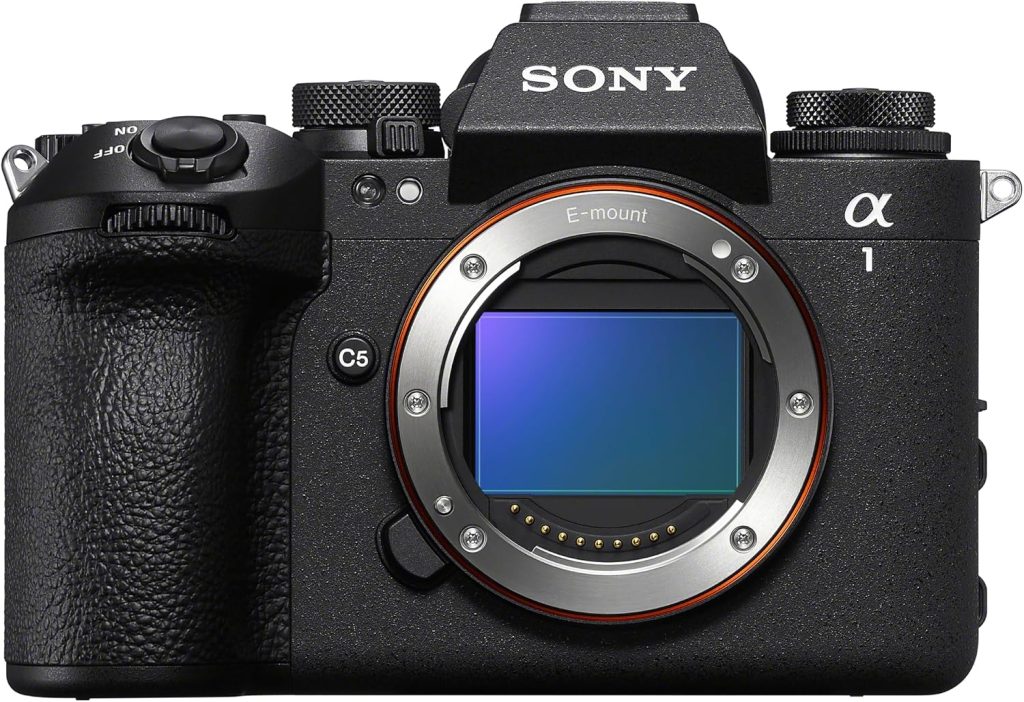
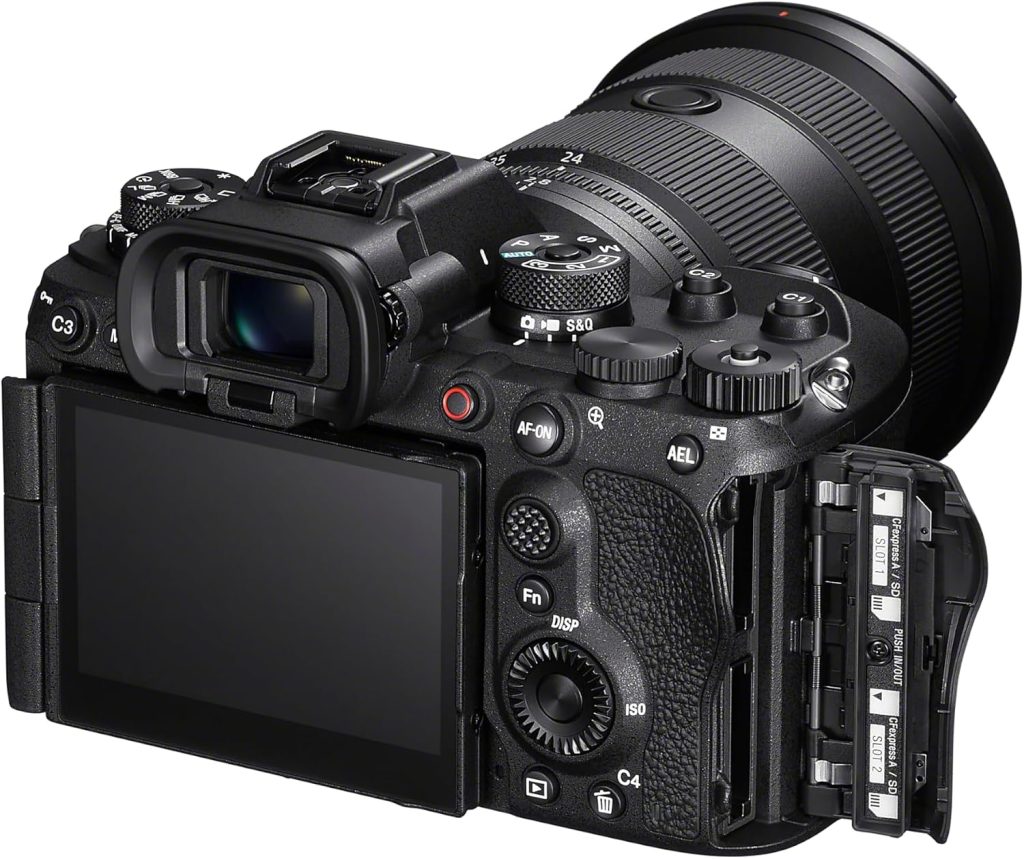
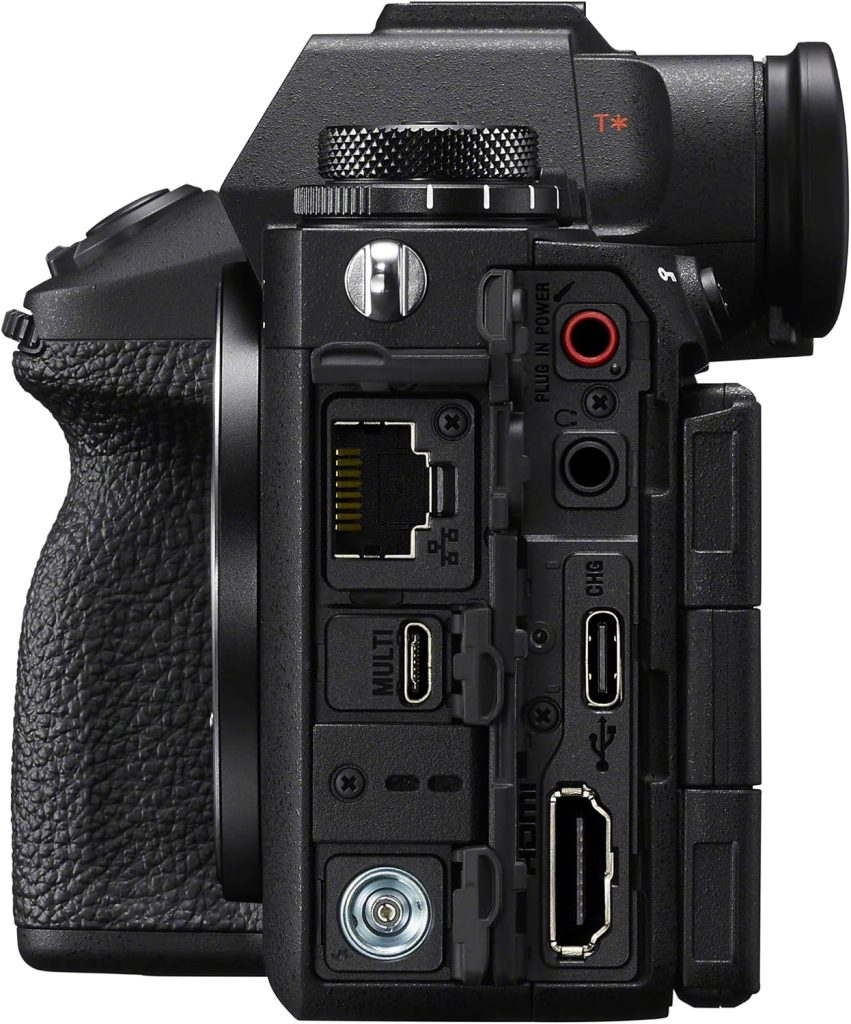
Sony Alpha 1 II – The Ultimate Wildlife Camera
The Sony Alpha 1 II is described as the best all-round camera available, like a Swiss army knife. AI autofocus, a 4-way screen, 8.5 stops of IBIS, slightly cleaner high ISO, pre-capture capability, an extra custom button, and a better grip. At the same price as its predecessor, it delivers significantly more capability.
The autofocus is among its strongest features, especially the Eye-AF system for birds, which is impressive. However, in complex scenes with a lot of foreground or overlap, the system sometimes loses tracking even when the subject remains clearly visible. It’s an honest limitation worth noting, and one Sony will likely address through firmware updates. Nevertheless, for most wildlife scenarios, the Alpha 1 II’s autofocus is simply extraordinary.
The a1 II has the joint fastest shooting rate among its competitors, and its sensor readout. At 3.8ms versus 6.3ms on the Canon EOS R5 Mark II is meaningfully quicker, making it the speed benchmark in the current wildlife camera market.
Key specs:
- 50.1MP stacked CMOS sensor
- AI processing unit – dedicated separate from main processor
- 30fps burst shooting
- Pre-capture capability
- 8.5 stops IBIS
- Recognizes 7 subject types automatically
- Animal eye recognition – 30% improved over the original A1; bird eye recognition – 50% improved
Sony Alpha 9 III – The Speed Specialist
Sony’s a9 series cameras have long targeted sports, wildlife, event and other fast action photographers. With the Sony a9 III update, anchored by a global shutter, dramatically extends the capabilities sought by this niche. With 120fps, incredible AF performance, and a blackout-free viewfinder, when your career depends on bringing home the perfect shot, the a9 III has your back.
The global shutter is genuinely revolutionary for wildlife photography. It reads all pixels simultaneously, eliminating the rolling shutter effect that happens when you photograph a fast-moving subject at high shutter speeds and the subject looks warped. Birds in flight, running mammals, and any fast-moving subject are rendered perfectly without the distortion that can affect other cameras at high shutter speeds.
However, for wildlife photography, 24 megapixels simply isn’t enough for most situations. Wildlife photographers often can’t get close to subjects and need to crop later. With a higher-resolution camera, you can crop more than 50-60% of the photo and still have a very large image to share or print. With 24MP, that ability is significantly limited. For photographers who need to crop aggressively, the Alpha 1 II is the smarter wildlife investment despite the higher price.
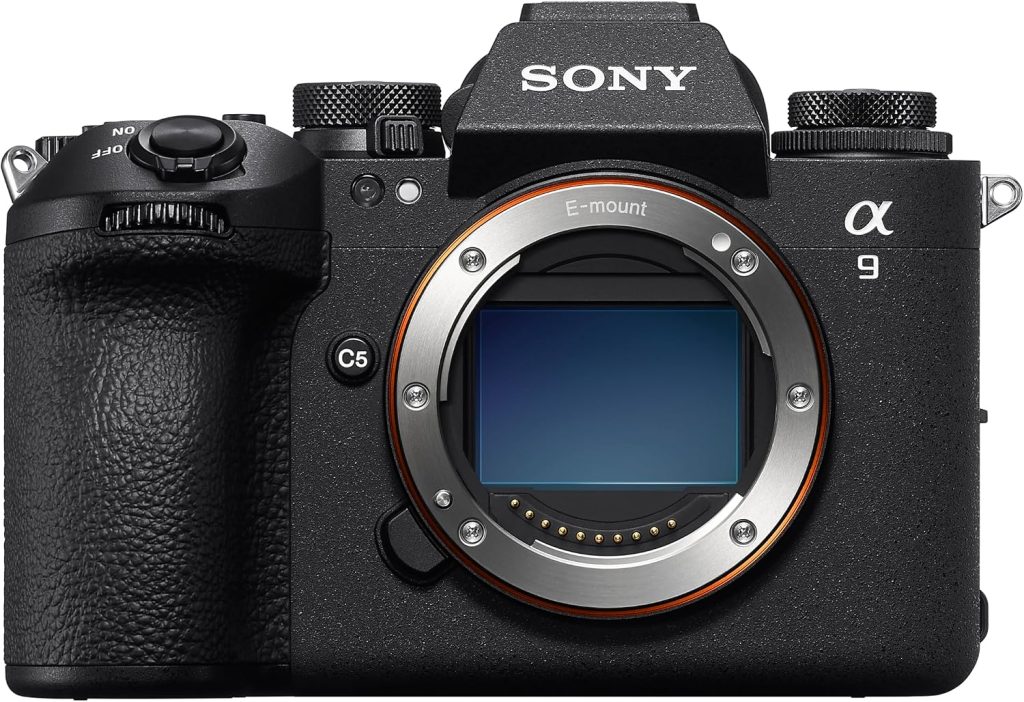
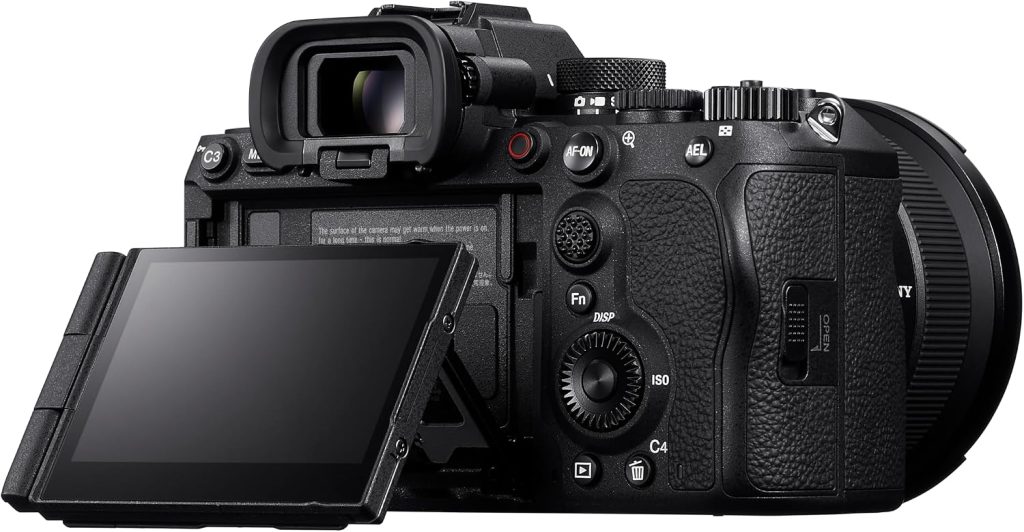
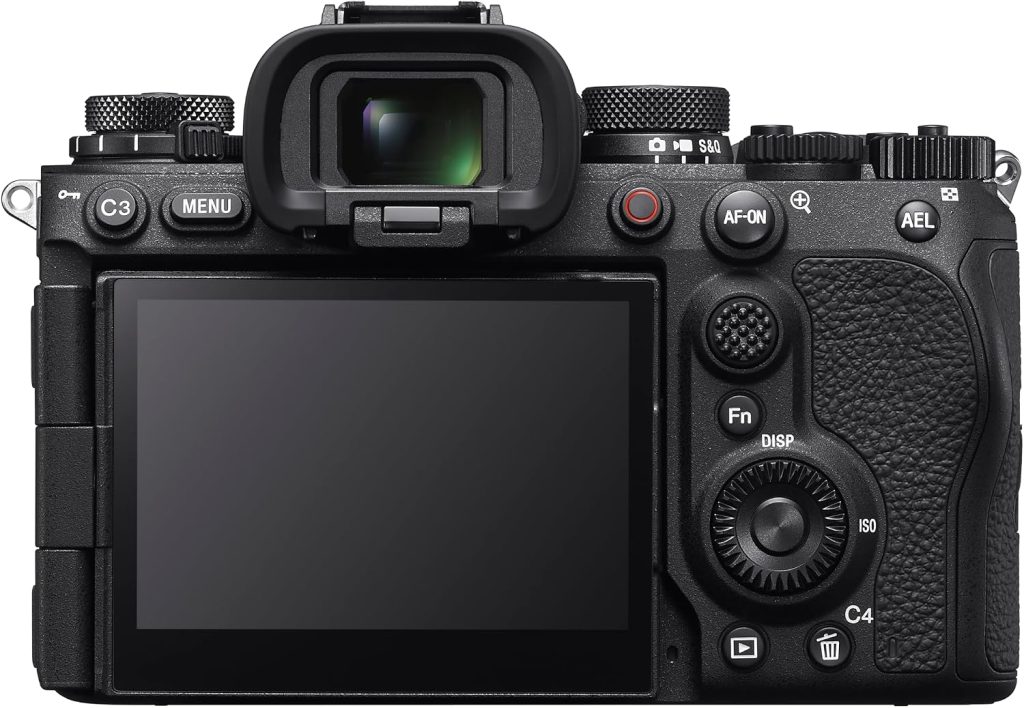
Key specs:
- 24.6MP full-frame global shutter sensor
- 120fps burst shooting
- Blackout-free viewfinder
- Same AI AF processor as Alpha 1 II
- 8 stops IBIS
- Weather sealed body
Sony a9 III – Buy from Amazon
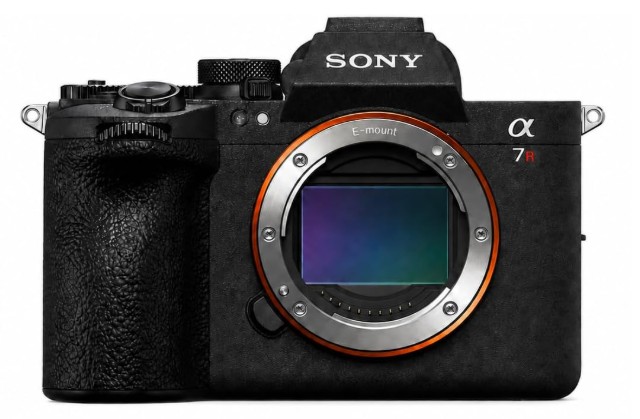
Sony A7R VI – The Resolution Powerhouse
The Sony A7R VI arrived in May 2026 as the successor to the A7R V. It solves the exact limitation that used to hold Sony’s resolution flagship back for wildlife photography: speed. Where the A7R V’s burst rate topped out at 10fps, the A7R VI hits 30fps with full AF/AE tracking, matching the flagship Alpha 1 II’s speed. This no longer forces wildlife photographers to choose between maximum resolution and the burst performance fast action demands.
The headline upgrade is the sensor itself: a stacked 66.8MP chip, up from the A7R V’s already impressive 61MP. For wildlife photographers who can’t always get physically close to their subjects, that resolution enables aggressive cropping without sacrificing detail or print quality. Tiny feather structures, fine fur textures, and distant subjects all hold up remarkably well after a significant crop.
Beyond resolution and speed, the A7R VI offers significantly stronger video specs and improved handling compared with its predecessor, making it a genuinely capable hybrid tool for photographers who shoot both stills and video.
Key specs:
- 66.8MP full-frame stacked CMOS sensor
- 30fps burst shooting with full AF/AE tracking
- AI-powered subject recognition
- Improved video specifications over A7R V
- Weather sealed body
- Released May 2026
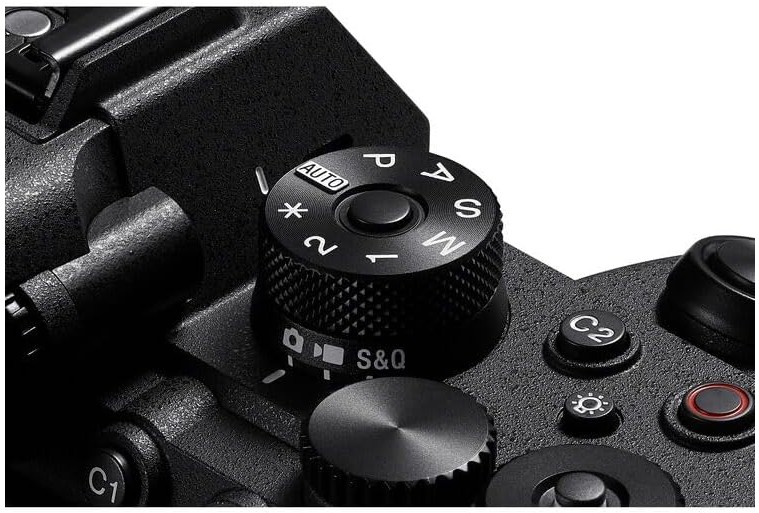
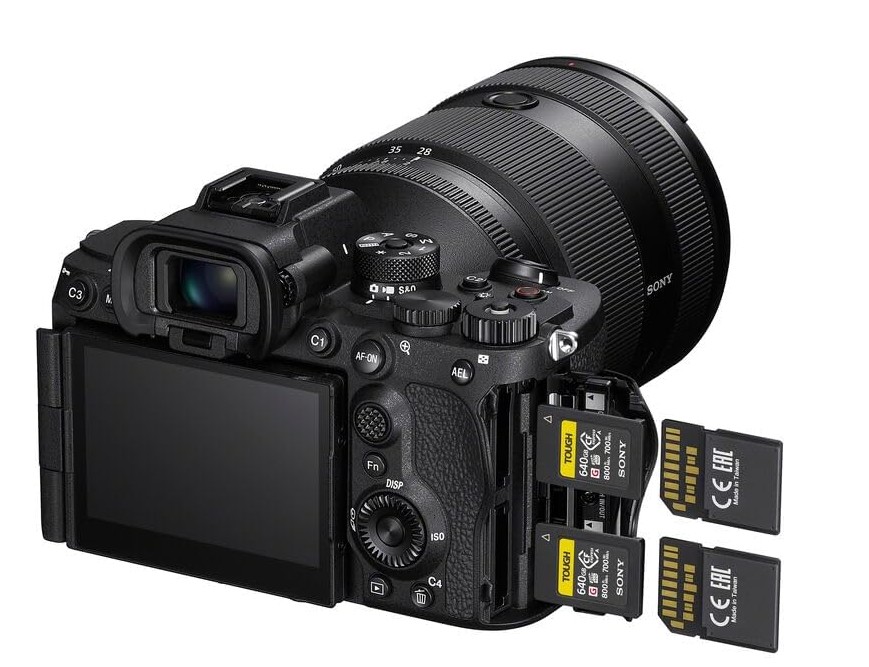
Sony A7R VI – Buy from Amazon
Sony A7R V – The Resolution Alternative
The Sony A7R V (Sony A7R V – buy from Amazon) 61MP full-frame sensor was, for a long time, the standout choice for wildlife photographers who needed maximum cropping flexibility. Birds are elusive and fast-moving, and getting physically close is often not an option. With 61 megapixels, you could comfortably crop bird images without sacrificing detail or print quality, with fine feather structures and subtle fur textures retaining their integrity even after significant cropping.
That said, the A7R V has now been succeeded by the A7R VI, released in May 2026, which solves the exact limitation that used to hold the A7R V back for wildlife: burst speed. Where the A7R V’s 10fps burst rate lagged noticeably behind the A1 II and a9 III, the A7R VI closes that gap entirely with 30fps and full AF/AE tracking. If you’re buying new in 2026, the A7R VI is the smarter choice for wildlife, specifically. See the entry below.
The A7R V remains a genuinely capable camera, though, and worth considering on the used market at a lower price point if resolution matters more to you than burst speed.
Key specs:
- 61MP full-frame BSI CMOS sensor
- AI processing unit
- 10fps burst rate, slower than A1 II and A9 III
- 8 stops IBIS
- Outstanding cropping flexibility
- Weather sealed body
Sony A7 V – The Smart All-Rounder
The Sony A7 V (Sony A7 V – buy from Amazon) launched in December 2025, represents an impressive upgrade to an already outstanding camera. Serving up great responsiveness, useful features, and exceptional image quality. If you’re an aspiring wildlife, event, or travel photographer, you’ll fall in love with it.
The A7 V gains the pre-burst capture system that first appeared in the A9 III, letting you capture images for up to one second before you fully press the shutter button. You get fine-grained control over the period of time retained, tunable to match your personal reaction time rather than always capturing a full second of images. For wildlife photographers on a budget who want pre-capture capability without the flagship price tag, the A7 V is a compelling 2026 option.
The A7 IV was a fantastic all-rounder in its own right, but the A7 V fixes its two biggest limitations. Slow sensor readout and a burst rate capped at 10fps, making it the clear recommendation for most people going forward.
Key specs:
- 33MP partially stacked CMOS sensor
- 30fps burst shooting
- Pre-capture up to 1 second
- Dual-hinged articulating LCD
- 7.5 stops IBIS
- Launched December 2025, fully current
The Sony Lens Ecosystem – Worth Knowing
One final consideration for Sony shooters. The E-mount lens ecosystem is among the most extensive available in 2026, with excellent options from both Sony and third-party manufacturers like Sigma and Tamron. These manufacturers offer affordable telephoto options that work seamlessly with Sony’s autofocus system, so building a capable Sony wildlife kit doesn’t necessarily require investing in Sony’s premium G Master glass from day one. When budget allows, though, G Master telephoto glass is extraordinary.
One important caveat for anyone chasing top burst speed: Sony caps third-party lenses at 15 fps, even on bodies capable of 30 fps or more. If you’ve invested in an Alpha 1 II or a9 III for their blistering burst rates, you’ll only unlock the camera’s full speed with native Sony glass. For photographers who prioritize speed above all else, that’s a real reason to budget for G Master glass sooner rather than later. For everyone else, the savings from third-party lenses are still well worth considering.
OM System – The Compact Wildlife Specialist
OM System, formerly Olympus, occupies a unique and genuinely compelling position in the wildlife photography market. While Nikon, Canon, and Sony battle for full-frame supremacy, OM System has quietly built what many field photographers consider the most practical wildlife camera system on the market. In 2026, their flagship is earning extraordinary praise.
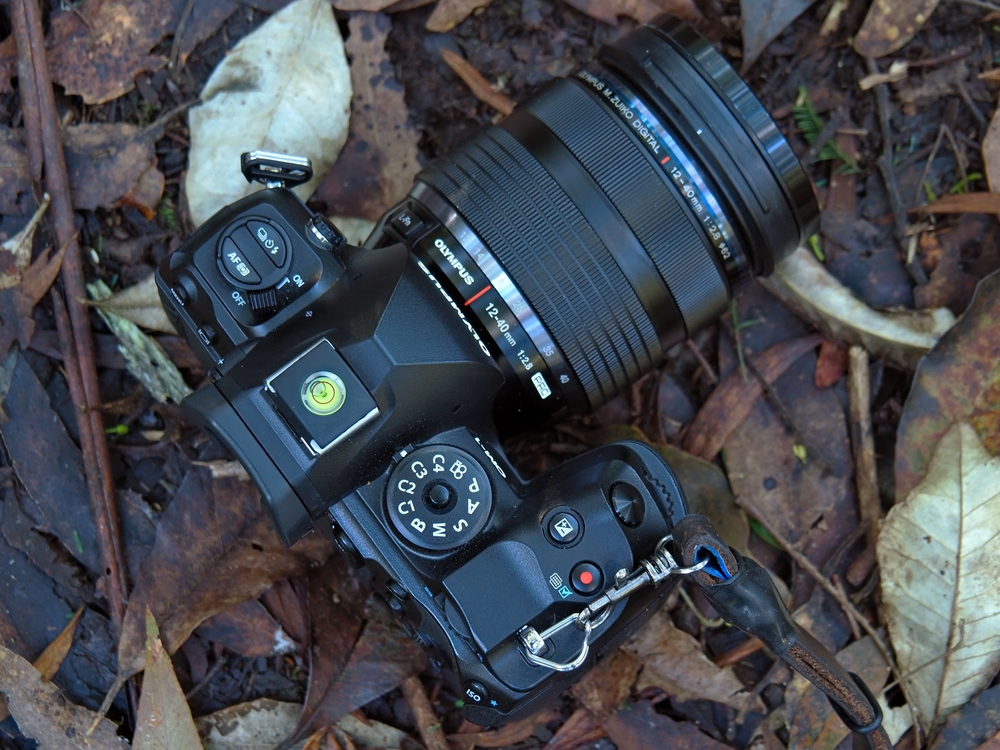
The OM-1 Mark II comes remarkably close to full-frame sensors for noise and dynamic range. This is an impressive feat for a Micro Four Thirds sensor, even if full-frame still holds a real edge in the most demanding low-light situations. Where the OM-1 Mark II genuinely pulls ahead is in the field: the 2x crop factor is a secret weapon for wildlife reach, and the weather sealing is astonishing. For most wildlife shooters, hikers, and outdoor photographers, OM System wins where it counts most.
The system is built around the Micro Four Thirds sensor format, smaller than full-frame or APS-C, but with a 2x crop factor that turns every lens into a reach monster. A 400mm lens on an OM System body becomes an 800mm equivalent, genuinely valuable for bird and wildlife photography. Affordable telephoto glass becomes serious wildlife reach without the weight or cost of full-frame super-telephoto lenses.
OM System OM-1 Mark II – The Wildlife King
Packing a maximum 120fps blackout-free burst rate, a peerless autofocus system, 8.5 stops of IBIS, and robust IP53 waterproofing, the OM-1 Mark II is exceptional. It’s also the best IBIS performance in its class. Canon’s R6 II hits around 8 stops, Nikon’s Z8 and Z9 around 6 stops. If you shoot handheld in tough light or with long glass, the OM-1 Mark II will genuinely spoil you.
Pro Capture starts buffering images when you half-press the shutter, so when you fully press it, you capture images from before that moment. This is incredible for wildlife, where timing is critical. A bird launching from a branch, a predator breaking into a sprint. Moments you thought you’d missed, captured.
After two years in the field, the OM-1 Mark II has significantly better subject detection than the original. The improved AI can lock onto a single bird out of eight in the frame, even finding subjects amongst twigs and branches and maintaining tracking through complex backgrounds. For bird photographers specifically, this is extraordinary performance.
The OM-1 Mark II is priced at around $2,599, significantly lower than comparable full-frame flagships, yet delivers performance that genuinely rivals them in most wildlife scenarios.
Key specs:
- 20.4MP stacked BSI Micro Four Thirds sensor
- 2x crop factor – 400mm becomes 800mm equivalent
- 120fps blackout-free burst shooting
- Pre-capture capability
- 8.5 stops IBIS – class leading
- IP53 weather sealing – dust tight and rain resistant
- TruePic X processor – 2-2.5x faster than previous generation
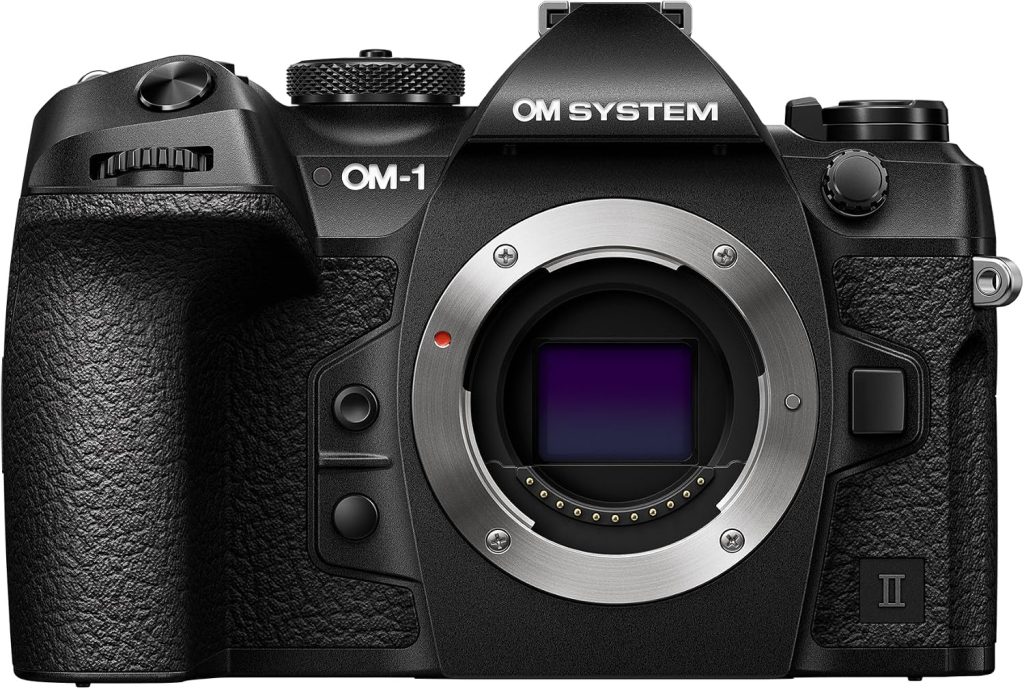
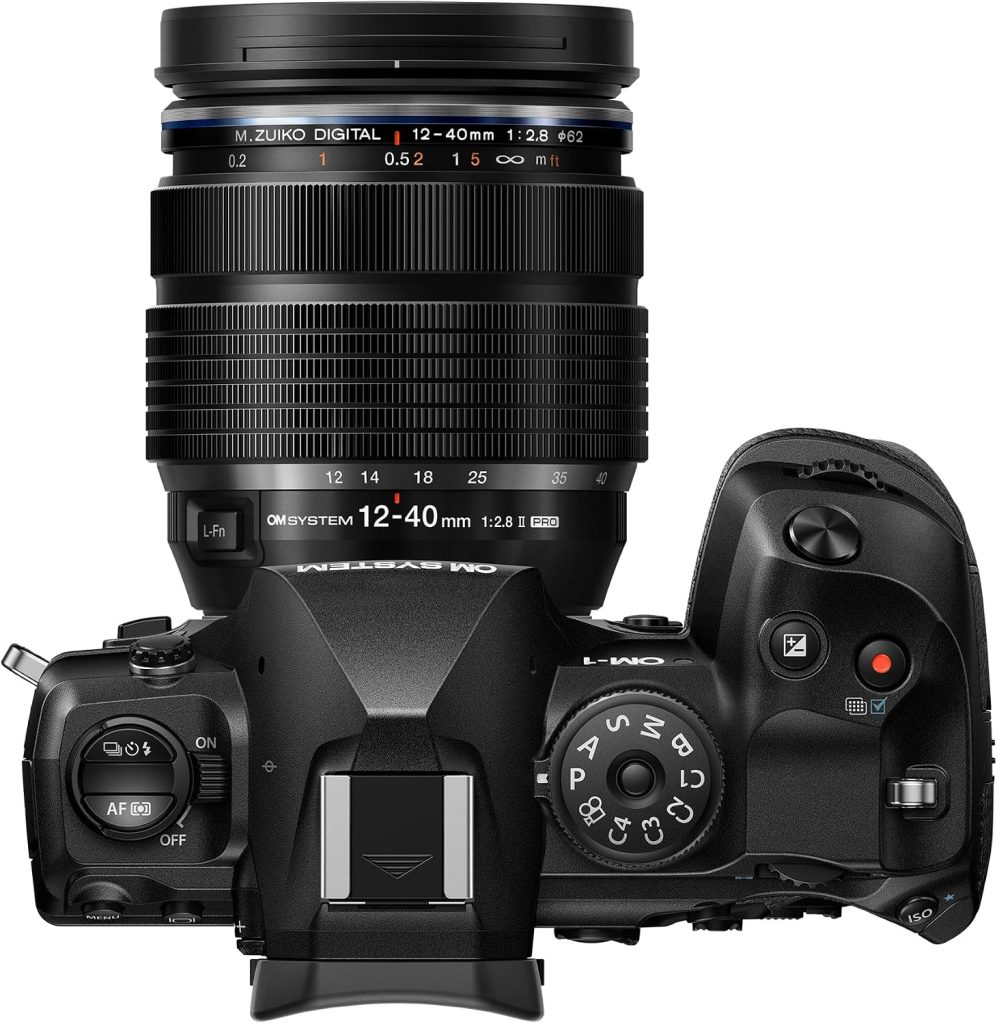
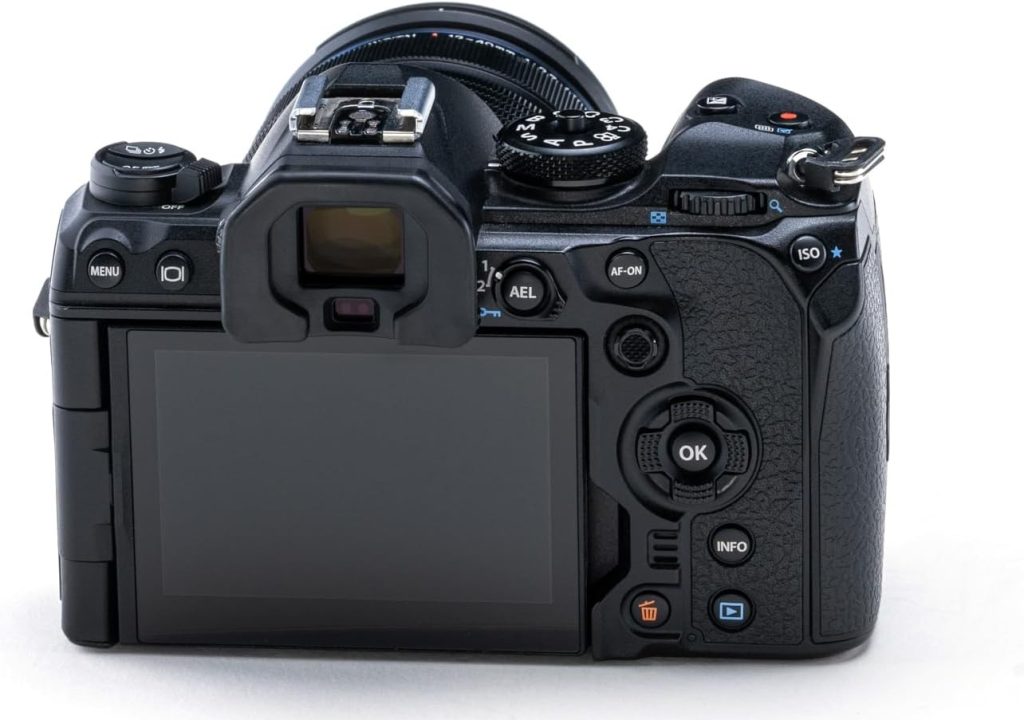
OM SYSTEM Olympus OM-1 Mark II Micro Four Thirds System Camera – buy from Amazon
OM System OM-5 Mark II – The Lightweight Adventure Camera
The OM-5 Mark II occupies an interesting niche in the OM System lineup, sitting between a serious wildlife camera and a compact travel companion. For photographers who want professional capabilities in the smallest possible package, it’s generating genuinely enthusiastic reviews from those who have used it extensively in the field.
IP53 weather sealing gives you confidence to shoot in rain, snow, dust, and extreme cold, at a significantly lower price point than the OM-1 Mark II body-only pricing starts around $1,200. Its compact size and light weight (around 418g) make it particularly appealing for photographers who cover serious distances on foot or long backcountry hikes, where every gram in the pack is felt by the end of the day.
Interestingly, the OM-5 Mark II has developed a strong following among macro photographers as well. The Micro Four Thirds format, combined with OM System’s excellent macro lens selection, makes it a compelling choice for insect, plant, and close-up nature photography. A natural companion to wildlife shooting in the field.
That said, for fast-moving wildlife tracking, the OM-1 Mark II is the stronger dedicated choice, its 120fps burst outpaces the OM-5 Mark II’s 30fps electronic-shutter ceiling. The OM-5 Mark II is best positioned as either a lightweight primary camera for hiking-focused photographers, a capable backup to the OM-1 Mark II, or a specialist macro and travel companion.
Key specs:
- 20.4MP Micro Four Thirds sensor
- 30fps electronic shutter burst (10fps mechanical) – slower ceiling than OM-1
- IP53 weather sealing
- Pro Capture mode
- Significantly lighter and more compact than OM-1 Mark II
- Starting around $1,200 body-only
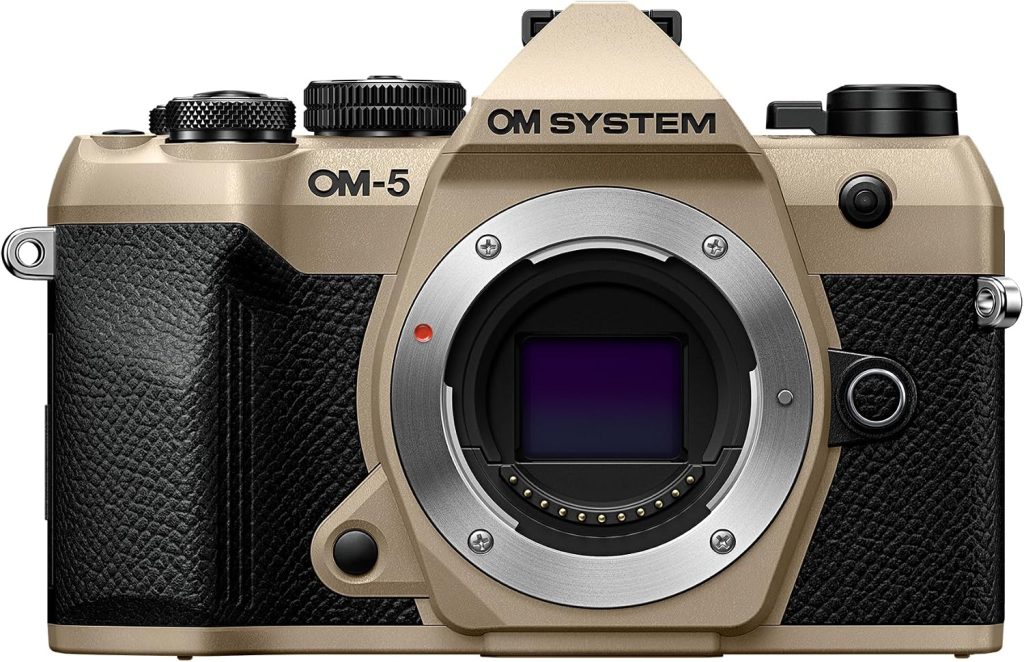
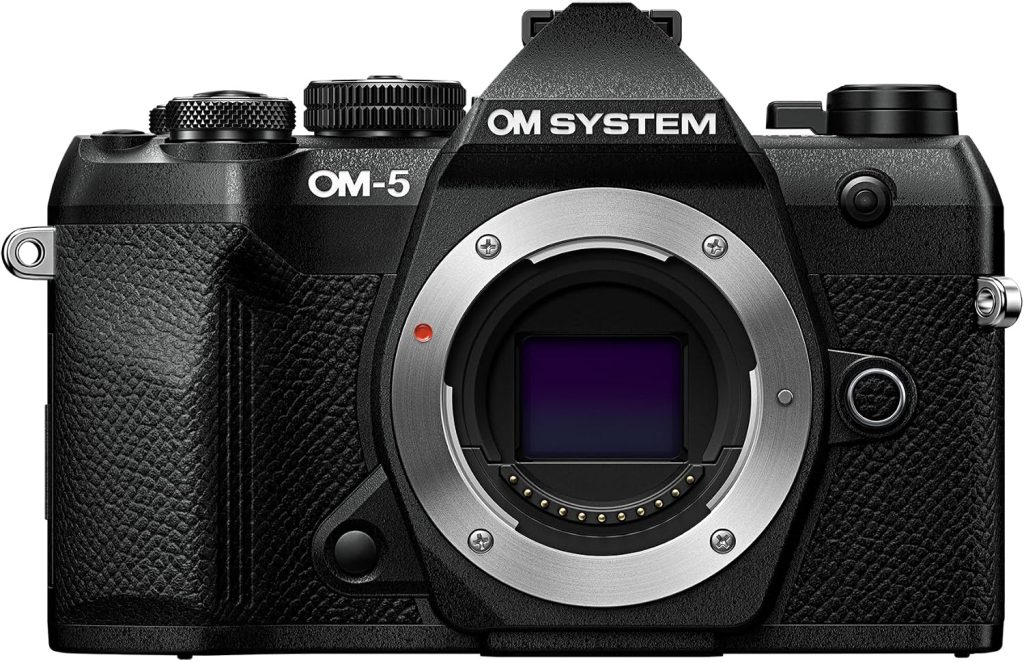
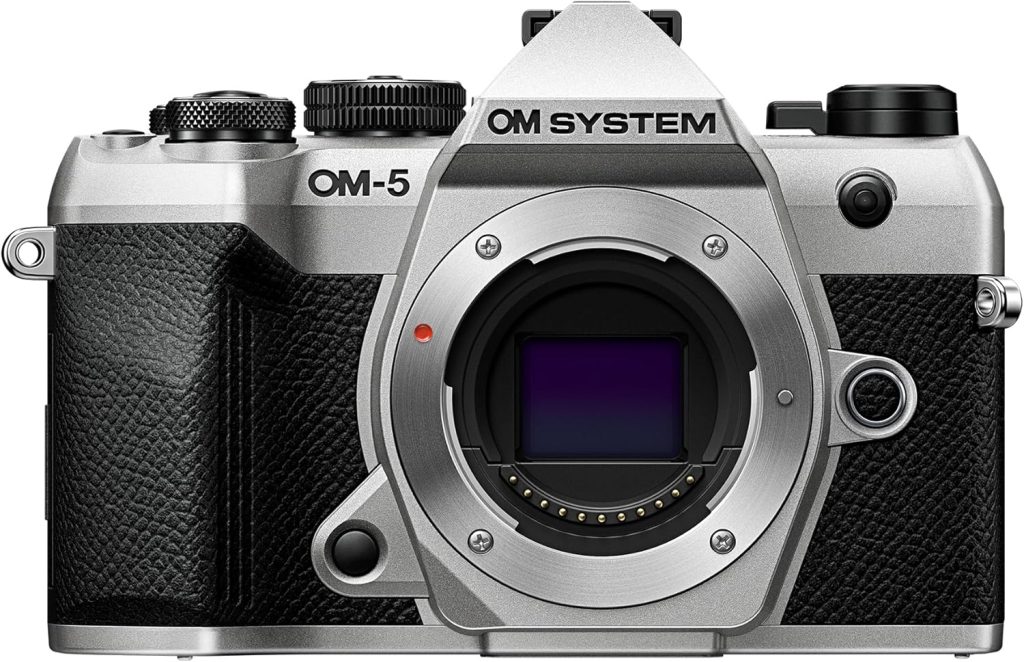
OM System OM-5 Mark II – Buy from Amazon
The OM System Lens Ecosystem – A Hidden Advantage
One of the most compelling reasons to choose OM System is its lens ecosystem. The M.Zuiko Digital lens lineup includes compact high-quality optics that perfectly match the compact camera bodies. Since all Micro Four Thirds lenses are compatible across brands, you can also use Panasonic lenses on OM System bodies, giving you access to an even larger selection of optics.
Furthermore, because of the 2x crop factor, OM System lenses are physically smaller and lighter than their full-frame equivalents. A 300mm f/4 lens on an OM System body delivers the equivalent reach of 600mm, and is a fraction of the size and weight of a 600mm full-frame prime. Consequently, for wildlife photographers who prioritize mobility and backcountry access, this weight advantage is genuinely significant.
The Case for and Against OM System
Choose OM System if:
- Weight and compactness are your priority
- You shoot primarily in daylight or good light conditions
- Backcountry hiking with camera gear is part of your photography
- Budget is a consideration – reach per dollar is extraordinary
- Weather sealing is critical – IP53 is class leading
- Bird photography is your primary focus – the 2x crop factor is a genuine advantage
Think carefully if:
- You shoot primarily at dawn, dusk or in low light – full frame sensors handle low light better
- You crop aggressively – 20MP gives less cropping flexibility than 45MP full frame
- You need maximum resolution for large format printing
- AF performance in very cluttered environments can still be challenging for the system. The cheapest mirrorless AF from Nikon, Canon, or Sony will run circles around OM System in complex tracking scenarios.
The bottom line: With its stacked BSI sensor, the OM-1 Mark II delivers excellent results up to ISO 6400. Modern noise reduction tools narrow the gap with full-frame even further. Unless you’re pixel peeping, nobody will see the difference. And most of us aren’t hauling 600mm f/4 lenses worth over $10,000.
Medium Format for Wildlife Photography – A Niche Worth Exploring
Medium format has long been the domain of studio photographers, landscape artists, and commercial shooters who prize absolute image quality above all else. However, in 2026, something genuinely interesting is happening. Fujifilm has announced it will focus on sports and wildlife photography with its medium-format GFX system. Furthermore, with the release of the Fujifilm GFX100 II and a dedicated Fujifilm Fujinon 500mm wildlife lens, medium format for wildlife photography has moved from theoretical curiosity to a genuine practical option.
The Fujifilm GFX100 II now sits comfortably alongside high-end full-frame systems in demanding professional environments. With this camera, Fujifilm deliberately challenges the long-standing perception that medium format cameras are slow and restrictive. Additionally, the AI-based subject detection autofocus covers a wide range of subjects, from human faces and eyes to animals, birds, automobiles, and trains, and even prioritizes animal and bird eyes. Once the camera recognizes a subject, it locks on quickly. Consequently, the primary limitation that made medium format impractical for wildlife — slow, unreliable autofocus — has been significantly addressed.
The Image Quality Advantage – Why Medium Format Is Tempting
Fujifilm’s GFX cameras have a sensor that’s around 1.7x the size of a full-frame sensor, delivering smoother tonal transitions, richer color depth, better subject separation, and smoother bokeh that’s ideal for creating an immersive sense of depth in wildlife shots.
Furthermore, medium format cameras have some significant image quality advantages over full-frame and smaller sensors. At base ISO they usually have better dynamic range, color depth and resolution. In recent years even high ISO performance has favored medium format over full-frame.
The cropping advantage is genuinely extraordinary for wildlife photography. Cropping the GFX 100S II down to a full-frame area still offers 61 megapixels remaining. This means you can actually put more pixels on a distant subject with a 100-megapixel medium format sensor compared to a 45-megapixel full-frame sensor, given two lenses of the same focal length. Consequently, for wildlife photographers who frequently can’t get close enough to fill the frame, 102 megapixels of cropping flexibility is genuinely transformative.
Wildlife-Specific Limitations
However, medium format for wildlife photography comes with real practical challenges that deserve honest assessment.
Burst rate
the GFX100 II achieves 8fps and the GFX100S II achieves 7fps. This is significantly slower than the 20-30fps available on full-frame mirrorless flagships. Furthermore, for fast-moving wildlife, birds in flight, charging bison, running predators, 7-8fps may not be enough to guarantee the decisive frame.
The crop factor works against you
with a 0.79x crop factor camera like the GFX 100S II, Fujifilm’s 500mm f/5.6 is equivalent to a 400mm f/4.5 lens on full-frame. This isn’t bad but there is currently no way to achieve longer focal lengths if you need it. Additionally, the 0.79x crop factor actually reduces effective reach compared to full-frame, the opposite of what most wildlife photographers need.
File sizes
uncompressed RAW files from the GFX 100S II are around 200MB and compressed ones around 150MB. This places huge demands on the size and speed of memory cards, storage and computer power. Furthermore, culling and editing a full day’s 102MP RAW files requires serious computing power that many photographers’ current setups won’t handle comfortably.
Cost
the GFX system represents a significant financial commitment. The GFX 100S II sells for around $5,000. This is less than a full-frame flagship like the Nikon Z9 or Sony A1 II. However, the GF 250mm f/4 plus 1.4x teleconverter enables wildlife photography at 350mm equivalent, and the new GF 500mm f/5.6 adds $3,500 to that investment. Consequently, building a complete medium-format wildlife kit requires a substantial budget.
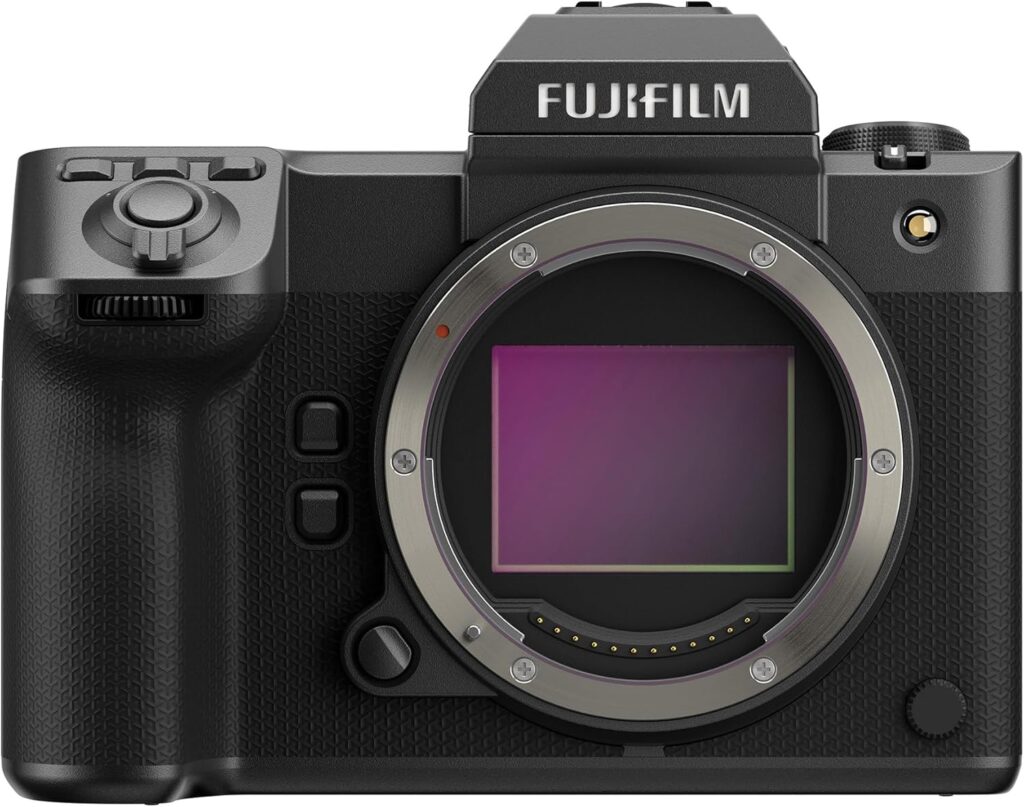
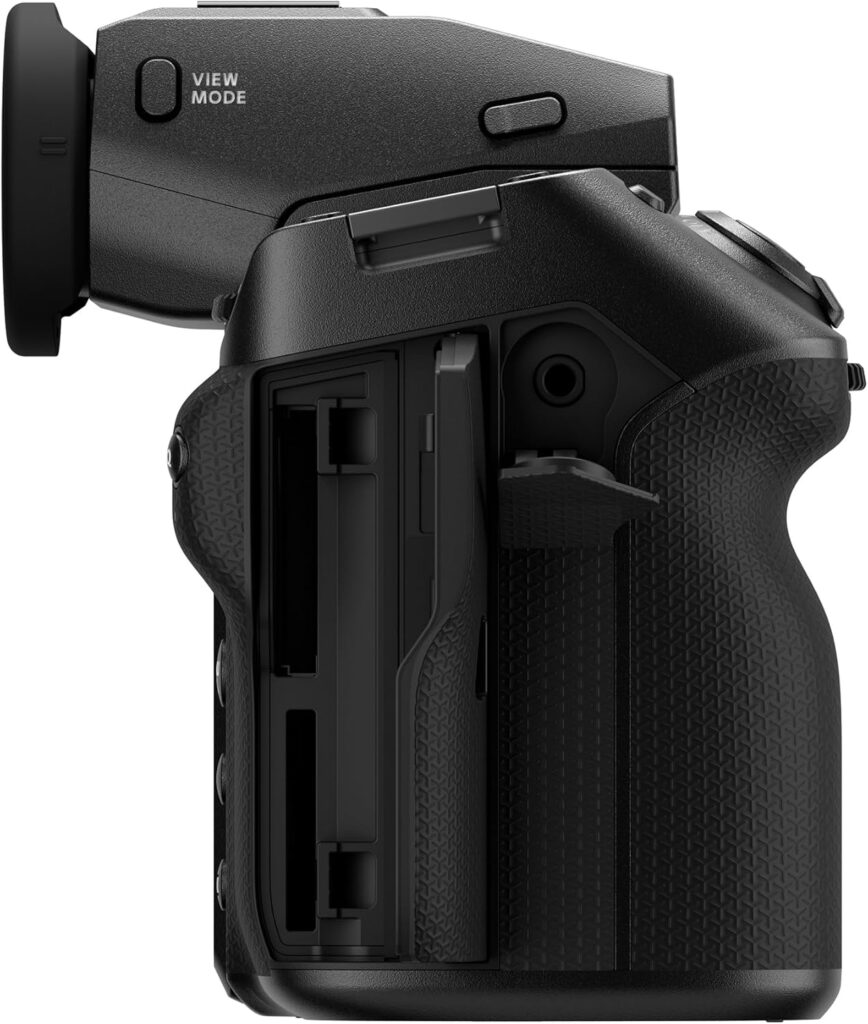
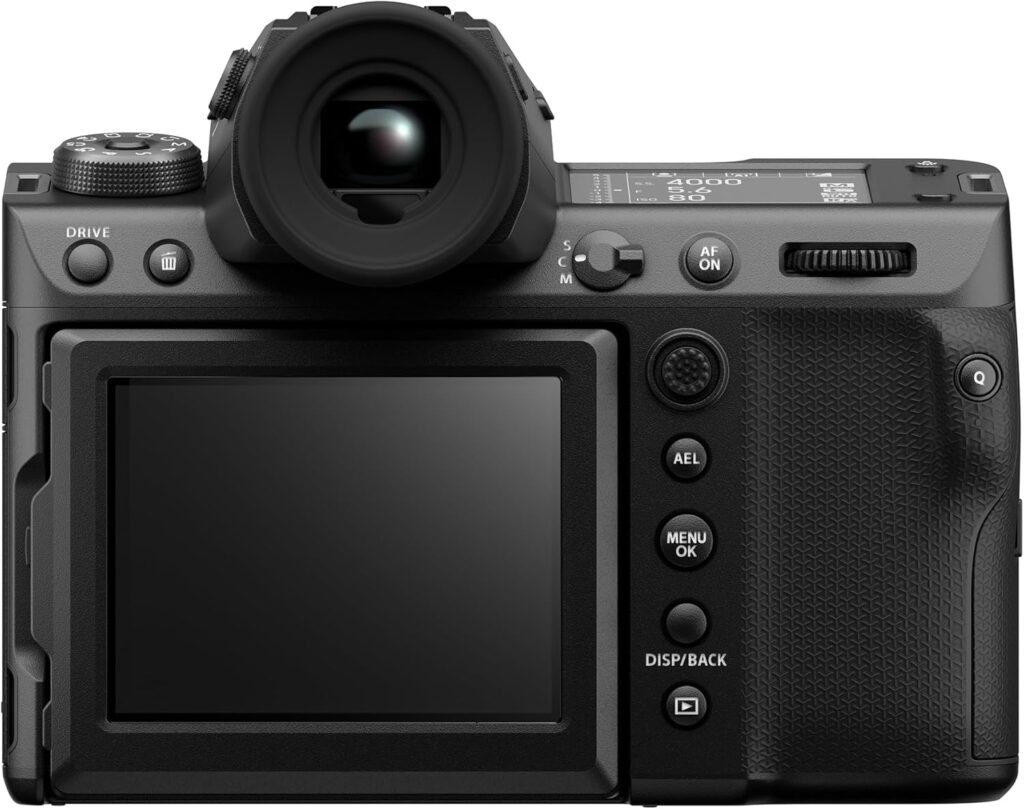
FujiGFX100 II Medium Format Camera – Buy from Amazon
The 2026 Medium Format Wildlife Verdict
Pair the GFX 100 II with the GF 500mm f/5.6 that was just released and it’s a truly viable option for wildlife photography. Furthermore, Fujifilm’s 2026 roadmap suggests meaningful expansion in wildlife-oriented lenses, particularly the GF 100-200mm f/5.6 ideal for wildlife, landscape and sports.
However, for most wildlife photographers the honest recommendation remains full-frame mirrorless. In fact, if your work depends on speed, portability or rapid turnaround, full-frame systems remain the more practical choice. But if your photography rewards patience and precision, GFX offers something few systems can match.
Choose medium format for wildlife if:
- You shoot large, approachable subjects – bears at salmon runs, elk during the rut, bison herds
- Exhibition quality prints are your goal – nobody matches 102MP for large format output
- You shoot landscapes and wildlife equally – GFX excels at both
- Budget is not a primary constraint
- You’re comfortable with 7-8fps for your shooting style
Stick with full-frame if:
- Birds in flight are your primary subject
- Fast-moving, unpredictable wildlife is your focus
- Budget is a consideration
- Weight and portability matter on long backcountry hikes
- You need maximum reach from your lenses
In a world where cameras are becoming faster and smarter, Fujifilm GFX chooses to become better, not louder. That philosophy is genuinely compelling. And as technology continues to evolve, medium format wildlife photography will only become more practical.
Leica – The Luxury Outlier
Leica isn’t a brand most wildlife guides mention. There’s a reason for that: it’s expensive, and the brand has built its reputation on rangefinder street photography and old-world craftsmanship rather than chasing eagles through a blizzard. But it’s worth a quick mention because Leica has quietly become more capable in this space than people give it credit for.
The SL3-P, released in 2026, packs 819 autofocus points that can recognize and track people, animals, cars, and vehicle components. It shoots up to 40 fps with autofocus, fast enough to hold its own against mainstream flagships. The standard SL3 pairs a 60MP sensor with solid subject-detection autofocus and weather sealing rated for real-world field use.
The lens situation is worth understanding before you consider it. Leica’s lineup is thin on long telephoto glass, but through the L-Mount Alliance, Sigma offers several genuine wildlife-capable options for the mount. These include a 500mm f/5.6 and lenses up to 600mm. So a Leica body paired with Sigma glass can absolutely deliver the reach you need. This approach makes the most sense for photographers already invested in the L-mount system for other genres who want one camera that can also handle wildlife, rather than starting from scratch with wildlife as the primary focus. If wildlife is your main genre and you’re building a kit from zero, Nikon, Canon, or Sony will get you there with a deeper, more purpose-built lens selection.
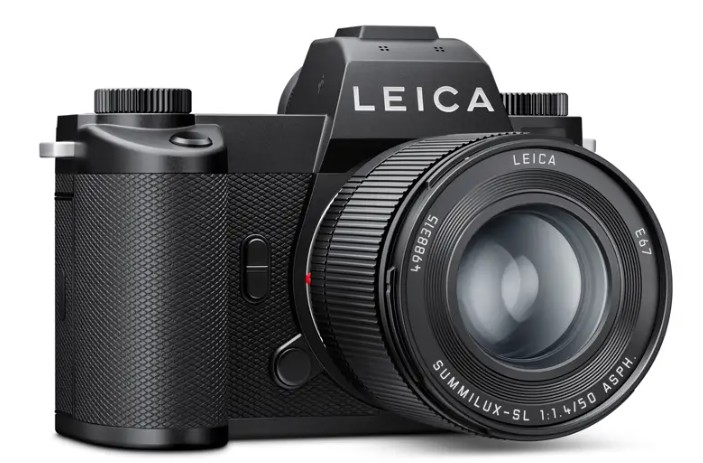
Leica SL3 – Buy from Amazon:
Finding Your Level – Pro, Enthusiast or Beginner?
One of the most practical questions when buying a wildlife camera is simply this: where are you right now, and where are you headed? Buying too far above your current skill level wastes money on features you won’t use. Buying too conservatively means outgrowing your kit faster than you’d like. Understanding which tier genuinely fits your situation saves both money and frustration.
Beginner – Just Starting Out
You’re learning the fundamentals. Exposure, composition, animal behavior, and fieldcraft. You don’t yet know which focal lengths you use most, which features matter to you, or what your primary wildlife subjects will be. Do your due diligence before investing in a camera and lens, so you’re sure they’re what you really want.
If everything in this guide so far feels like a lot, take a breath. Nobody starts out knowing all of this, and you don’t need to memorize it. You just need to ask better questions than I did.
Do Your Research First
When I walked into a camera store years ago, knowing I wanted to shoot wildlife, I had my mind set on a Nikon D750. I walked out with a Nikon D7500 instead. The assistant looked at me, knowing I was a beginner (in digital, anyway), and steered me toward something I could “grow into.” I likely would have realized the D850 was the camera I actually needed, not the D7500 I left with.
I didn’t even understand that the D7500 was a crop-sensor camera until later. Yes, I should have asked more questions myself, but I was focused on just figuring out how the thing worked. I learned the hard way what I wish someone had told me before I spent a cent. Needless to say, I did grow to love that D7500, and I learned that crop sensor was actually just fine. I had many good years shooting wildlife with it before eventually moving up to a Nikon Z8. Now I use the D7500 for macro photography.
Before you buy anything
- Research thoroughly: Read guides like this one, watch reviews, and check camera and lens reviews before you decide.
- Understand sensor size: Full-frame, crop sensor, Micro Four Thirds, these aren’t just spec-sheet terms, they change what you’re actually getting. I remember walking into my first camera purchase, assuming everything was full-frame and having no idea what “crop sensor” even meant. It took me a while to realize the trade-off: a crop sensor gives you more reach with the same lens, but the image itself is smaller. Know what you’re looking at before you buy, not after.
- Ask questions: Find a camera store with knowledgeable staff who actually ask what you’re going to shoot before recommending anything.
- Test before you buy: Handle the camera, put a telephoto lens on it, and see how it feels in your hands.
- Rent before you buy: Many camera stores and online services let you rent bodies and lenses, so you can test a 500mm, 600mm, or 800mm telephoto for a weekend before committing thousands of dollars to one.
- Attend a workshop: Even a one-day wildlife photography workshop will teach you more about what gear you actually need than any spec sheet.
- Talk to other wildlife photographers: In the field, in communities like the Journal of Wildlife Photography (JOWP) or the Society of International Nature and Wildlife Photographers (SINWP). This link takes you to a list of the clubs around the USA, and there may well be one in your area. Facebook groups and Instagram communities are full of experienced photographers who love sharing what they know. Many of these communities also run workshops and photo walks where you can see firsthand what gear other photographers actually carry, not just what they recommend online
Don’t overlook the used market either but do your research first and only buy from reputable sellers. A quality used body from any major brand lets you spend more on glass, and glass matters more than the body anyway. Many experienced photographers recommend allocating roughly 70% of your budget to lenses and 30% to the body.
The worst outcome in wildlife photography isn’t buying an entry-level camera. It’s buying the wrong camera entirely and wishing you’d asked more questions before pulling out your credit card, something I learned firsthand. Take your time, ask questions, don’t be pressured, and then you will be in the right place to make an informed decision. Your future self will thank you.
Best choices for beginners in 2026:
- Nikon Z5 II – full frame performance at an accessible price. Same autofocus system as the Z8 and Z9. Check current price of the Nikon Z5 II on Amazon.
- Canon EOS R7 – outstanding APS-C body with flagship AF performance and great reach. Check current price of the Canon EOS R7 on Amazon.
- Sony A7 V – Sony’s latest all-rounder with pre-capture capability launched December 2025. Check current price of the Sony A7 V on Amazon.
- OM System OM-5 Mark II – the lightest, most affordable option here, with genuine weather sealing and Pro Capture built in. Check current price of the OM System OM-5 Mark II on Amazon.
Enthusiast – Serious but Not Professional
You know your gear. You know your subjects. You’re consistently coming home with strong images and you’re starting to feel the limitations of your current kit. Furthermore, you’re shooting regularly enough to justify a meaningful investment. Consequently, this is where the sweet spot cameras live — serious performance without professional price tags.
Best choices in 2026:
- Nikon Z6 III – pre-capture at 120fps, same AF as Z8/Z9, excellent value. Check current price of the Nikon Z6 III on Amazon.
- Canon EOS R6 Mark III – outstanding low-light performance, 40fps burst, refreshed sensor and pre-capture. Check current price of the Canon EOS R6 Mark III on Amazon.
- Sony A7R V — a genuine step up in resolution, with a 61MP sensor built for photographers who need maximum cropping flexibility and fine detail. No longer the flagship following the A7R VI’s release, which means it’s now available at a more accessible price. Still a very capable enthusiast-tier body. Check the current price of the Sony A7R V on Amazon.
- OM System OM-1 Mark II – extraordinary reach, class-leading weather sealing, compact system. Check current price of the OM System OM-1 Mark II on Amazon.
Professional
Image quality, reliability, and speed are non-negotiable. Your camera needs to perform flawlessly in the most demanding conditions, because missing the shot has real consequences. You also need a system backed by a professional support infrastructure.
At this level, you’re not just capturing stills. Many professional wildlife photographers are also producing cinematic video content. The line between wildlife photography and wildlife filmmaking has never been thinner. The cameras at this tier need to deliver both extraordinary still-image performance and professional video capabilities suitable for broadcast, streaming, and large-format exhibition.
Best choices for stills in 2026:
- Nikon Z8 – our personal choice. The sweet spot of the professional lineup. Check current price of the Nikon Z8 on Amazon.
- Nikon Z9 – the ultimate Nikon. Unlimited buffer, uncompromising performance. Check current price of the Nikon Z9 on Amazon.
- Canon EOS R1 – Canon’s true flagship. 40fps, best-in-class autofocus, pre-continuous shooting for moments you react to a beat too late. Check the current price of the Canon EOS R1 on Amazon.
- Canon EOS R5 Mark II – 30fps, pre-capture, Eye Control AF, extraordinary all-rounder. Check current price of the Canon EOS R5 Mark II on Amazon.
- Canon EOS R3 – Canon’s speed specialist. Built for the most demanding action. Check current price of the Canon EOS R3 on Amazon.
- Sony Alpha 1 II – the autofocus king. AI subject recognition in a class of its own. Check current price of the Sony Alpha 1 II on Amazon.
- Sony Alpha 9 III – global shutter specialist. 120fps, zero rolling shutter distortion. Check current price of the Sony Alpha 9 III on Amazon.
- Sony A7R VI – the resolution flagship, now with flagship speed to match. 66.8MP with 30fps burst and full AF/AE tracking. Check current price of the Sony A7R VI on Amazon.
Best choices for video and cinematography in 2026:
For photographers who produce cinematic wildlife content alongside their stills work, the camera choice expands into dedicated video territory. The gear required for professional wildlife cinematography deserves its own dedicated guide, one we’ll be covering in detail very soon.
Here’s a taste of what the top cinematography-focused wildlife cameras offer:
- Sony FX3 – Sony’s cinema line in a compact body. Extraordinary video performance with full E-mount lens compatibility. Beloved by wildlife videographers for its size, low-light capability and 4K 120fps. Check current price of the Sony FX3 on Amazon.
- Canon EOS R5 Mark II – does double duty brilliantly. 8K RAW video alongside 30fps stills makes it the ultimate hybrid for serious wildlife content creators. Check current price of the Canon EOS R5 Mark II on Amazon.
- Nikon Z8 – shoots 12-bit RAW N-Log internally. Extraordinary dynamic range for wildlife footage that needs to hold detail in both bright sky and dark shadow simultaneously. Check current price of the Nikon Z8 on Amazon.
- DJI Ronin 4D – for photographers moving into cinematic gimbal work. The setup Mark Smith and professional wildlife filmmakers use for fluid, stabilized tracking shots of moving animals. Check the current price of the DJI Ronin 4D on Amazon.
- Nikon ZR – Nikon’s first Z Cinema camera, born from their 2024 acquisition of RED Digital Cinema. It brings genuine RED color science and REDCODE RAW into an ultra-compact, 540g body for around $2,199 — a fraction of what RED cinema quality used to cost. With 15+ stops of dynamic range and deep-learning autofocus that tracks people, animals, and vehicles, it’s a genuinely exciting option for wildlife photographers moving into serious video work. Check current price of the Nikon ZR on Amazon.
Coming soon to PhotoWild Gear:
We’ll be dedicating a full guide to wildlife videography and cinematography equipment. The guide will include gimbals, cinema lenses, audio gear, drones and the complete professional wildlife filmmaker’s kit. Stay tuned.
Choosing the Right Camera for Wildlife – Essential Features
Spec sheets can be overwhelming. Furthermore, manufacturers have a talent for making every feature sound equally essential. In reality, some matter enormously for wildlife photography and others barely matter at all. Therefore, here’s an honest breakdown of exactly what to look for and why when evaluating cameras for the field.
Autofocus – The Single Most Important Feature
If there is one feature that defines a great wildlife camera in 2026 it is autofocus. Not resolution, not burst rate, not video specs. Just autofocus. Nothing else comes close.
Many newer mirrorless cameras have AI-powered autofocus that detects animals and tracks them in real time. They can even detect the animal’s eyes. Consequently, the gap between brands has narrowed significantly; all three major manufacturers now offer extraordinary animal and bird eye detection.
Why Autofocus Makes or Breaks the Shot
Wildlife is unpredictable. Sometimes you only have seconds before the animal disappears, and some cameras have tracking and eye AF features that make them especially useful in that kind of situation. Bird eye AF isn’t a niche feature anymore, either; by 2026, it’s standard across every major manufacturer, not a nice-to-have on flagship bodies only.
In practice, here’s what this means. A bald eagle banking over a river moves fast, unpredictably, and against complex backgrounds. An autofocus system without subject detection constantly fights to separate the bird from the sky, the treeline, the water. An AI-powered system with bird detection, on the other hand, locks onto the eye, tracks it through branches and foliage, and holds focus through the entire sequence. Your hit rate goes from frustrating to extraordinary.
Worth keeping in perspective, though: the real shift AI autofocus has brought isn’t just speed, it’s accessibility. These systems let even beginners come home with sharp, well-exposed images that used to take years of manual-focus practice to achieve reliably. That’s genuinely great news if you’re just starting out, but it’s still not a substitute for understanding your subject, anticipating movement, and being patient enough to wait for the moment. The camera handles the mechanics. You still have to know when to press the shutter.
What to look for:
- Animal and bird eye detection – non-negotiable in 2026
- Subject tracking that holds through complex backgrounds
- Fast acquisition speed – how quickly it locks on initially
- Low light autofocus performance – rated in EV, lower is better
Burst Rate – How Many Frames Per Second Do You Actually Need?
Burst rate is very important in wildlife photography. The burst rate is the number of shots the camera can capture per second, measured in frames per second. The more frames your camera can shoot, the more chance you have of capturing those blink-and-you’ll-miss-it wildlife moments — a bird coming into land, or an animal pouncing on its prey.
However, more isn’t always better. The sweet spot for wildlife is right around 15-20fps. Any more, and you have a lot more culling to do. Any less, and you may miss the decisive moment.
Sustained burst performance matters more than peak burst rate, too. A camera that claims 30fps but fills its buffer in two seconds and then crawls is far less useful than one that shoots 20fps and keeps going. You want high frame rates, but more importantly, you want the camera to keep shooting without freezing.
A short burst is fine for portraits. Wildlife needs sustained performance.
Pre-Capture – The Feature That Changes Everything
Pre-capture is a genuinely revolutionary feature for wildlife photography, and worth knowing by all its names, since every brand calls it something different. Canon calls it Pre-Continuous Shooting, Nikon calls it Pre-Release Capture, Sony calls it Pre-Capture, and OM System calls it Pro Capture.
They all work the same way: half-press the shutter and the camera buffers images before you even fully press it, so when the moment actually happens, you’ve already captured it. For unpredictable moments like a bird launching from a branch or an animal breaking into a sprint, this means you never miss the first frame again.
What to look for
- 15-20fps minimum for serious wildlife work
- Large buffer that sustains burst shooting
- Pre-capture capability (called different things by different brands, see above), increasingly standard on 2026 bodies
- CFexpress card slots for maximum write speed
Sensor Size and Resolution
Resolution matters for wildlife photography, but not in the way most people think. More megapixels mean more cropping flexibility when you can’t get close enough to fill the frame. However, too many megapixels create buffer issues that compromise burst performance.
The sweet spot for most wildlife work is still right around the 30–50-megapixel range, large enough to crop generously while maintaining high burst speeds without blackouts. That said, resolution has crept upward across the industry, and some current bodies, including the Leica SL3, now sit around 60 megapixels. That level of detail is genuinely impressive for fine feather and fur textures or for large-format prints, but it comes with real trade-offs: larger file sizes, slower burst rates in most cases, and memory cards that need to be fast enough to keep up. For the average wildlife shooter who prioritizes action and burst performance over maximum resolution, the 30-50MP range remains the more practical choice.
Sensor size also affects low-light performance. Full-frame sensors gather more light than APS-C sensors, delivering cleaner images at higher ISO settings. For dawn and dusk shooting, when wildlife is most active, this matters enormously. Balance your resolution needs against your low-light shooting requirements when making your decision.
Weather Sealing – Non-Negotiable for Serious Wildlife Photography
Wildlife photography happens in real weather. Rain, dust, mud, mist, snow, sea spray, your camera will face all of it eventually. And some of the most extraordinary wildlife images are captured in exactly these conditions: bison in driving rain, eagles hunting in snow, bears emerging into morning mist.
Weather sealing matters because you don’t always have the luxury of shooting from an open window or a hide. You’re going to be out in the field at the mercy of rain, snow, and dust, and having a weather-sealed camera puts your mind at ease.
The OM System OM-1 Mark II provides industry-leading dust, splash, and freeze-proofing to shoot in any and all weather. The Canon EOS R3 pairs weather sealing with exceptional low-light autofocus, which is important when you’re out in the rain trying to catch a shot of an elusive eagle. And on the Nikon side, both the Z8 and Z9 use 50+ sealing points throughout the body, along with a sensor shield and dust-resistant coating that protects the sensor itself during lens changes, not just the exterior housing.
In practice, all current flagship mirrorless bodies from Nikon, Canon, and Sony offer comprehensive weather sealing. But check your lenses too, a weather-sealed body paired with an unsealed lens is only as protected as its weakest point. Invest in weather-sealed glass alongside your weather-sealed body.
Image Stabilization – Your Handheld Safety Net
Wildlife photography often means long lenses, low light, and situations where a tripod simply isn’t practical. There are moments when the action is happening too fast to set up any support system at all. In these moments, image stabilization, whether built into the camera body, the lens, or both, is what saves the shot.
The Sony A7R V’s image stabilization is rated up to 8 stops of correction, letting you shoot handheld at shutter speeds that would produce blur on almost any other system. Modern in-body stabilization across all major brands has reached a level of performance that would have seemed impossible five years ago. The Nikon Z8’s IBIS system, rated at 6 stops, consistently delivers sharp handheld results at focal lengths and shutter speeds that previously required a tripod.
The most effective systems combine in-body stabilization with optical stabilization in the lens, working together for maximum correction. When evaluating cameras and lenses for wildlife photography, don’t overlook stabilization specifications. And in golden hour, when light is low and wildlife is most active, that extra margin of stabilization could be the difference between a sharp frame and a wasted opportunity.
What to look for:
- In-body image stabilization (IBIS) on the camera body
- Optical stabilization in the lens
- Coordinated IBIS + OIS for maximum performance
- Rated in stops of correction – 5+ stops is solid, 7-8+ is class-leading in 2026
Additional Considerations – The Gear That Completes the Kit
Your camera body is the heart of your wildlife photography kit, but it’s only one piece of the puzzle. The most expensive mirrorless body on the market will consistently underperform in the hands of a photographer who hasn’t thought carefully about the glass in front of it, the support system beneath it, and the cards inside it. Here’s what else deserves your attention before you head into the field.
Lenses – Where the Magic Actually Happens
Here’s something most camera guides won’t tell you upfront. For image quality, your lens matters more than your camera body. A great lens on a modest body will consistently outperform a modest lens on a great body. The lens is what actually gathers the light, shapes the perspective, and determines sharpness and color. Where the body still matters most is autofocus speed, burst rate, and low-light sensor performance, which is exactly why we’ve spent so much time on those specs above. But for the image itself? The glass does the heavy lifting. Lenses also hold their value far better than bodies, which makes investing in quality glass the smarter long-term financial decision, too.
Tip: For most photographers, prioritize a good lens first, then upgrade the body as your skills and needs grow. This approach maximizes creative potential and minimizes wasted spending.
For wildlife photography specifically, reach is everything. You need to fill the frame with your subject while maintaining enough distance to avoid disturbing natural behavior. You also need speed, a wide maximum aperture that gathers light efficiently in the low-light conditions where wildlife is most active.
Super-telephoto lenses of 500mm or more are the gold standard for serious wildlife photography. The good news is that zoom lenses have caught up significantly with prime lenses in optical quality, while offering far more flexibility in the field.
Bigger Isn’t Always Better – A Personal Lesson
As I’ve learned from personal experience, bigger isn’t always better. I packed an 800mm prime for a shoot expecting distant subjects and ended up with wildlife closer than expected and completely the wrong glass for the situation. The weight of super-telephoto prime lenses is genuinely punishing on long hikes, too. A versatile telephoto zoom in the 100-500mm or 200-600mm range is often the smarter, more practical choice for most wildlife photographers.
And always – always – double-check your bag before you leave. The wrong lens at the right moment is just as frustrating as no lens at all.
👉 Read our full guide: Choosing the Best Lenses for Wildlife Photography
Tripods and Support Systems – The Foundation of Sharp Images
The sharpest lens and the most sophisticated autofocus system in the world cannot compensate for camera shake. At the long focal length’s wildlife photography demands, 400mm, 500mm, 600mm, and beyond. Even the slightest movement translates directly into soft, unusable images.
A quality support system is non-negotiable for serious wildlife photography. But the right one depends entirely on how and where you shoot.
For planned stationary shoots, a sunrise over a misty meadow, a nesting pair of eagles, a bear at a salmon run, nothing beats a carbon fiber tripod. It’s lighter than aluminum yet stronger than steel, and it handles the punishment of backcountry terrain without punishing your back on the hike in. Pair it with a gimbal head for tracking fast-moving subjects like birds in flight by balancing your lens at its center of gravity. A gimbal lets even the heaviest telephoto glass float and swings effortlessly.
For fast-moving situations where mobility matters more than stability, a monopod is your best friend. For vehicle-based shooting in national parks, a bean bag draped over your window is often the single most effective support system available. Many serious wildlife photographers carry multiple support options and choose based on the situation.
👉 Read our full guide: Best Tripods for Wildlife Photographers 👉 Read our full guide: Best Tripod Heads for Wildlife Photography 👉 Read our full guide: Beyond Tripods — Camera Support Systems for Wildlife Photography
Memory Cards – Never, Ever Go Out with Just One
Mirrorless cameras are extraordinary, with fast burst rates, silent shooting, and exceptional autofocus. But that speed comes at a cost. Modern mirrorless bodies eat through memory cards at a rate that will genuinely surprise you the first time you experience it.
I learned this lesson the hard way, heading out confident that one card was enough, only to run out of space at exactly the wrong moment. Fortunately, I had my backup DSLR that day, but it wasn’t the same. That was the last time I ever left home without multiple cards.
Getting a fast memory card matters for wildlife photography, if your card is too slow, it won’t be able to keep up with the data your camera produces, which causes buffering and slows down your burst rate. For modern mirrorless bodies shooting CFexpress or UHS-II SD cards, the speed difference between budget and professional-grade cards is immediately noticeable in sustained burst performance.
The memory card rules – non-negotiable:
- Always carry at least two cards, minimum. Three is better.
- Format cards before every shoot, not delete, format.
- Invest in fast cards rated V60 or V90 minimum for mirrorless burst shooting.
- Keep a backup card in your wallet, always.
- Store used and unused cards in different pockets so you never accidentally reformat images you meant to keep.
One more worth investing in: a quality card reader for your computer. Fast cards deserve a fast reader. Import times drop dramatically, and you spend less time waiting and more time editing.
Conclusion – Gear Up. Get Wild. Leave No Trace.
Choosing a wildlife camera in 2026 has never been more exciting, and admittedly, never more overwhelming. But after everything covered in this guide, the decision should feel significantly clearer.
The technology available today is genuinely extraordinary. AI-powered autofocus that tracks animal eyes against complex backgrounds, silent electronic shutters that don’t announce your presence to wildlife, and burst rates that capture every frame of a bald eagle’s dive. This was the stuff of professional dreams just a few years ago. Now it’s available across a wide range of price points, making serious wildlife photography more accessible than ever.
Beyond the Gear – What Really Matters
Remember this above all else: the camera is the vehicle, not the destination. The most important qualities a wildlife photographer can develop have nothing to do with gear. Patience. Knowledge of animal behavior. Understanding of light. A willingness to arrive early, stay late, and sit in the cold waiting for a moment that may or may not come.
The ethical foundation matters just as much as the technical one. Stay at a respectful distance. Never bait or disturb wildlife for a better shot. Pack out everything you pack in. Respect the wild places that make this photography possible, because without them, no camera in the world matters.
So invest wisely. Choose the camera that matches your budget, your shooting style, and the wildlife you’re passionate about capturing. Learn it inside out. Then get out there.
The wild is waiting, and it has never looked better through a viewfinder.
Gear up. Get wild. Leave no trace.
FAQ’s
It depends on your budget and priorities, more than any single “best” answer. For most serious wildlife photographers, the Nikon Z8, Canon EOS R5 Mark II, and Sony Alpha 1 II are all excellent, closely matched options, with extraordinary autofocus, high resolution, fast burst rates, and weather sealing, each with its own strengths depending on brand preference and budget. For photographers starting out, the Canon EOS R7 and Nikon Z5 II offer exceptional performance at significantly more accessible price points.
In 2026, yes, largely. All major manufacturers have shifted their development entirely to mirrorless systems. That said, a quality used DSLR remains a perfectly viable entry point for budget-conscious photographers just starting out. The silent electronic shutter on mirrorless cameras is a genuine game-changer for wildlife photography — animals and other photographers simply don’t know you’re shooting.
More than you might think, but less than you might want. The sweet spot for most wildlife work is 30-50 megapixels — enough resolution to crop aggressively when you couldn’t get close enough, while still maintaining the burst performance fast-moving wildlife demands. More megapixels also means larger files and faster card filling, so balance resolution against your storage and processing capacity.
Animal and bird eye detection is non-negotiable in 2026. Every serious wildlife camera should have it. Subject tracking that holds through complex backgrounds, fast initial acquisition speed, and strong low-light autofocus performance are all essential too. Pre-capture capability, which records frames before you press the shutter, is increasingly available and genuinely revolutionary for unpredictable wildlife moments.
Both are excellent choices, and the right answer depends on your situation. For bird photographers and anyone shooting small or distant subjects, the crop factor of an APS-C sensor effectively multiplies your focal length, bringing distant subjects closer without spending more on glass. Full-frame sensors, on the other hand, deliver superior low-light performance, which matters enormously at dawn and dusk when wildlife is most active. Consider what you shoot most, and choose accordingly.
Extremely important, and genuinely non-negotiable for serious wildlife photography. Some of the most dramatic wildlife images are captured in exactly the conditions that threaten unprotected gear — rain, dust, mist, snow, and sea spray are all part of the experience. Don’t forget your lenses, either: a weather-sealed body paired with an unsealed lens is only as protected as its weakest point.
Fast ones. In fact, this is one of the most overlooked aspects of building a wildlife camera kit. Modern mirrorless bodies shooting high-speed bursts produce data faster than budget cards can handle. Consequently, causing buffer slowdowns that make you miss critical frames. Therefore, invest in CFexpress Type B or UHS-II SD cards rated V60 minimum — V90 for serious burst shooting. Furthermore, always carry at least two cards. Running out of space at the decisive moment is a feeling you only experience once, after which it becomes a permanent habit to carry backups.
In 2026, you genuinely cannot go wrong with any of the major brands — brand loyalty matters far less than understanding what each does best. See the full brand breakdown above for how Nikon, Canon, Sony, and OM System each stack up. One tip that applies to whichever you choose: invest in that system’s native lenses. The autofocus performance of native glass versus adapted glass still isn’t close in 2026.
━━━━━━━━━━━━━━━━━━━ 📷 Up Next
Choosing the Best Lenses for Wildlife Photography
You’ve found your camera. Now it’s time for the glass that makes it sing.
In wildlife photography, your lens is arguably more important than your camera body. It determines how close you can get, how sharp your images are, and whether you come home with the shot or the near miss. It’s also where most photographers make their biggest mistakes, and their most rewarding investments.
Our complete guide to choosing the best lenses for wildlife photography covers everything: telephoto reach, aperture reality, prime versus zoom, budget options, flagship glass, and everything in between.
👉 Read next: Choosing the Best Lenses for Wildlife Photography